

MG Antibiotic Safety Checker
Antibiotic Safety Assessment Tool
Select your risk factors and the antibiotic you're considering to see if it's safe for you.
Risk Factors
Antibiotic Selection
When you have myasthenia gravis (MG), even a simple infection can become a serious problem. Your muscles are already struggling to respond to nerve signals because your immune system is attacking the connections between nerves and muscles. Now add antibiotics into the mix - drugs meant to fight infection - and suddenly you’re facing a tough choice: treat the infection, or risk making your weakness worse.
Why Antibiotics Can Make MG Worse
Myasthenia gravis isn’t just about tired muscles. It’s a breakdown in communication. Normally, your nerves release acetylcholine, a chemical that tells your muscles to contract. In MG, your body destroys some of the receptors that catch this signal. So even when nerves fire correctly, the message doesn’t get through well enough. That’s why you get drooping eyelids, trouble swallowing, or weak arms and legs. Some antibiotics don’t just kill bacteria - they interfere with that same nerve-to-muscle signal. They can block acetylcholine release, stop it from binding to receptors, or mess with calcium channels needed for muscle contraction. For someone without MG, this might not matter. But if you already have fewer receptors, even a small extra block can push you into crisis. The most dangerous antibiotics for MG are those that directly interfere with neuromuscular transmission. Aminoglycosides like gentamicin and tobramycin are known for this. Fluoroquinolones - such as ciprofloxacin and levofloxacin - and macrolides like azithromycin and clarithromycin also carry documented risks. In rare cases, these drugs have triggered myasthenic crisis, where breathing muscles fail and emergency ventilation is needed.Which Antibiotics Are Riskiest?
Not all antibiotics are created equal when you have MG. Here’s what the latest data shows:| Antibiotic Class | Examples | Risk Level | Exacerbation Rate (Based on 2023-2024 Studies) |
|---|---|---|---|
| Aminoglycosides | Gentamicin, tobramycin, neomycin | High | Up to 5% (historical data; rarely used systemically today) |
| Fluoroquinolones | Ciprofloxacin, levofloxacin, moxifloxacin | Moderate to High | 1.6%-2.4% |
| Macrolides | Azithromycin, clarithromycin, erythromycin | Moderate | 1.5% |
| Tetracyclines | Doxycycline, minocycline | Low to Moderate | 1.8% (limited data) |
| Penicillins | Amoxicillin, ampicillin, penicillin V | Low | 1.3% |
| Trimethoprim-sulfamethoxazole | Bactrim | Moderate | 1.7% |
| Linezolid | Zyvox | Moderate | 2.1% (case reports) |
Notice something? The penicillins - especially amoxicillin - consistently show the lowest risk. That’s not an accident. They don’t interfere with neuromuscular signals. They kill bacteria by breaking down cell walls. Simple. Safe. Effective for many common infections.
Fluoroquinolones and macrolides used to be labeled as absolute no-gos. The FDA even issued black box warnings for telithromycin (a macrolide) and ciprofloxacin in MG patients. But a major 2024 study from the Cleveland Clinic, tracking 365 patients over 20 years, found something surprising: the difference in risk between these drugs and penicillins wasn’t as big as once thought. The overall rate of worsening symptoms was just 2% for fluoroquinolones and macrolides - barely higher than amoxicillin’s 1.3%.
Who’s Most at Risk?
It’s not just the antibiotic that matters. Your personal health history plays a huge role. The Cleveland Clinic study pinpointed three red flags:- Recent hospitalization or ER visit for MG - if you’ve been in the hospital in the last six months, your body is already on edge. Adding an antibiotic can tip you over.
- Female sex - women with MG are more likely to have antibiotic-triggered worsening. Why? Possibly hormonal differences in immune response.
- Diabetes - this condition affects nerve function and healing. Combine it with MG, and your system has less room to handle stress.
If any of these apply to you, your doctor should think twice before prescribing fluoroquinolones or macrolides - even if the overall risk seems low. You’re not just a number in a study. You’re a person with a fragile balance.
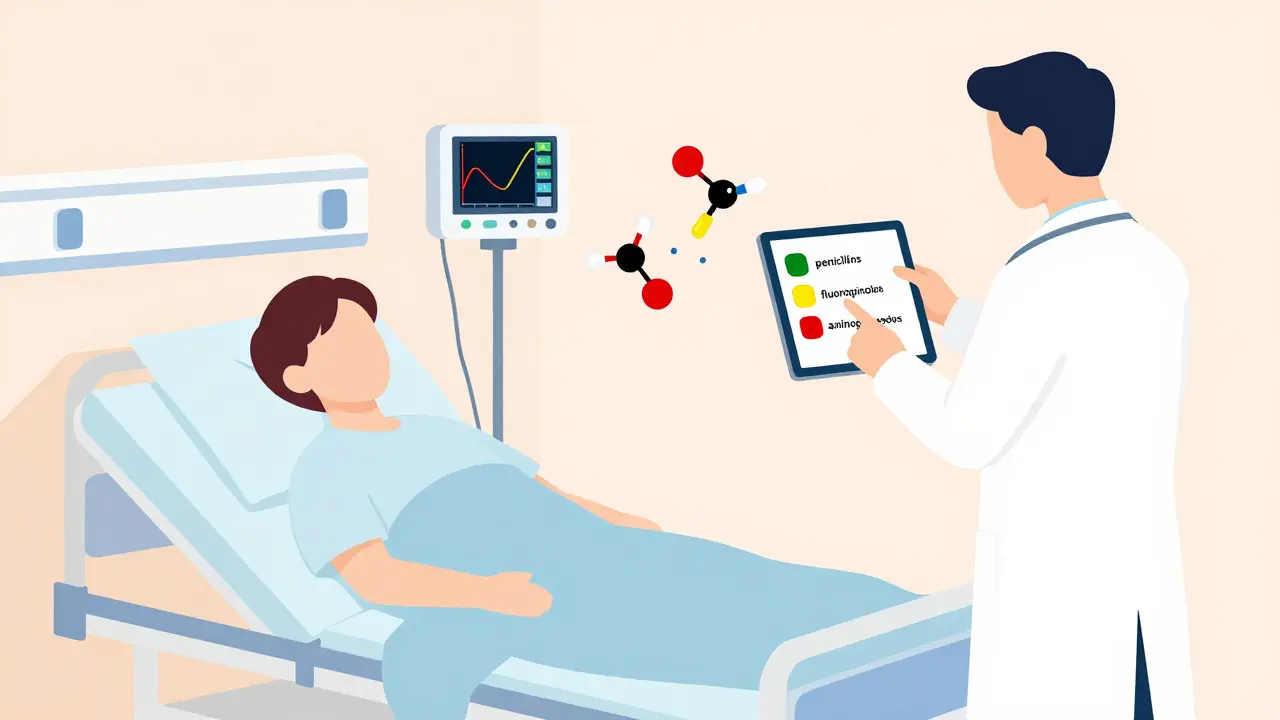
When Infection Is the Real Enemy
Here’s the twist: in 88% of cases where MG got worse after taking an antibiotic, the real cause wasn’t the drug - it was the infection itself.Flu-like symptoms, pneumonia, urinary tract infections - these can all trigger MG flares. Your immune system is already overactive. An infection makes it worse. So if you have a serious infection, not treating it can be more dangerous than the antibiotic.
That’s why doctors don’t just avoid all risky antibiotics. They weigh the risks. If you have a bad lung infection, and amoxicillin won’t touch it, you might need ciprofloxacin. But you’ll be watched closely. Your breathing, your swallowing, your strength - all checked daily. Sometimes, the benefit outweighs the risk.
What Should You Do?
If you have MG, here’s what works in real life:- Always tell every doctor, pharmacist, and ER staff you have MG. Write it on your phone, carry a card, say it loud. Many providers don’t know this connection.
- Ask: “Is there a safer alternative?” For common infections like sinusitis or strep throat, amoxicillin is usually fine. For UTIs, nitrofurantoin or fosfomycin are often safer than Bactrim or cipro.
- Never start a new antibiotic without talking to your neurologist or MG specialist. Even if your primary care doctor says it’s fine, your MG team knows your history.
- Watch for warning signs in the first 72 hours. New trouble swallowing, slurred speech, shortness of breath, or sudden weakness in your arms or legs? Call your doctor immediately. Don’t wait.
- Keep a list of safe and unsafe antibiotics. Update it yearly. Share it with your pharmacy.
Some patients are terrified of antibiotics. Others think they’re harmless. The truth is in the middle. You don’t need to avoid all antibiotics. You need to choose wisely - and be watched carefully.

The Bigger Picture
This isn’t just about one drug class. It’s about how we treat people with rare diseases. For years, guidelines told MG patients to avoid fluoroquinolones and macrolides entirely. That led to delays in treatment, unnecessary hospitalizations, and even worse outcomes when infections went untreated.The new data shows that blanket restrictions don’t help. Risk-stratified care does. If you’re stable, with no recent flares, and you need a strong antibiotic for a serious infection, you can probably take it - with monitoring. If you’ve been hospitalized recently? Avoid the higher-risk drugs unless there’s no other option.
Pharmacists are now playing a bigger role too. Many hospitals have MG-specific drug alerts in their systems. If a doctor tries to prescribe ciprofloxacin to someone with MG, the system pops up a warning. That’s progress.
What’s Next?
Researchers are looking into why some MG patients react badly to certain antibiotics while others don’t. Could it be genetics? Immune subtype? Gut microbiome? We don’t know yet. But studies are underway.In the meantime, the message is clear: don’t panic. Don’t avoid antibiotics entirely. Work with your team. Know your risks. Ask questions. And remember - treating an infection is often more important than avoiding a drug that might, just might, make things worse.
Can I take amoxicillin if I have myasthenia gravis?
Yes, amoxicillin is one of the safest antibiotic choices for people with myasthenia gravis. Studies show it has the lowest risk of triggering muscle weakness - around 1.3%. It doesn’t interfere with nerve-to-muscle signaling and is commonly used for infections like strep throat, sinusitis, and ear infections in MG patients. Always confirm with your neurologist, but it’s generally considered first-line.
Are fluoroquinolones like ciprofloxacin always dangerous for MG patients?
Not always - but they require caution. While older guidelines banned them outright, newer research shows the risk of worsening MG is low (about 2%) and similar to penicillins in stable patients. However, if you’ve had a recent MG flare, hospitalization, or have diabetes, avoid them unless no safer option exists. Always monitor for new weakness, especially in the first 3 days.
What should I do if I start feeling weaker after taking an antibiotic?
Stop the antibiotic and contact your neurologist or MG specialist immediately. If you have trouble breathing, swallowing, or speaking, go to the ER. These could be signs of myasthenic crisis. Don’t wait to see if it gets better. Early intervention can prevent life-threatening complications. Bring the antibiotic name with you.
Why are macrolides like azithromycin risky for MG?
Macrolides can block the release of acetylcholine at the neuromuscular junction and reduce the sensitivity of muscle receptors to it. In MG, where receptor numbers are already low, this can push the system past its limit. Case reports and studies show about 1.5% of MG patients experience worsening symptoms after taking azithromycin or clarithromycin. It’s not common, but it’s real - and avoidable with better alternatives.
Can I take over-the-counter antibiotics for a minor infection?
There are no FDA-approved over-the-counter antibiotics in the U.S. for systemic infections. If you’re considering something like topical creams or antiseptics, those are usually safe. But never take oral antibiotics without a prescription if you have MG. Even a simple UTI or sinus infection needs proper diagnosis. Self-treating with leftover antibiotics can be dangerous - and may mask a worsening condition.
Does my immunosuppressant medication make antibiotic risks worse?
Yes. Drugs like prednisone, azathioprine, or mycophenolate suppress your immune system, making you more prone to infections. That means you’re more likely to need antibiotics - but your body may also react more unpredictably to them. The combination of weakened immunity and neuromuscular vulnerability increases the chance of both infection-triggered flares and drug-induced weakness. Close coordination between your neurologist and infectious disease specialist is key.
Final Thoughts
You don’t have to live in fear of every antibiotic. But you do need to be smart. Myasthenia gravis is complex. Infections are real. Antibiotics are tools - not villains. The goal isn’t to avoid them. It’s to use them with awareness, with support, and with the right information.Your health team is there to help you navigate this. Keep them updated. Ask questions. And remember: the best treatment isn’t always the safest drug - it’s the right drug, for you, at the right time.


Sandeep Jain
December 26, 2025 AT 06:18man i had a flare last year after some cipro for a UTI. thought it was just stress or bad sleep. turned out the antibiotic did it. took me 3 weeks to get back to normal. now i carry a card that says "MG - avoid fluoroquinolones". my pcp didn’t even know what MG stood for. sad.
roger dalomba
December 27, 2025 AT 16:19Wow. A whole article about antibiotics and MG. Next up: "The Shocking Truth About Water and Breathing."
Brittany Fuhs
December 29, 2025 AT 12:46It’s pathetic how we’ve let pharmaceutical companies dictate medical guidelines. In my day, doctors knew what was safe. Now? We’re told to "ask your neurologist" like we’re all 12-year-olds with a smartphone. Penicillin’s been around since 1928. Maybe stop chasing trends and start using common sense.
Sophia Daniels
December 29, 2025 AT 22:41Okay but let’s be real - fluoroquinolones are basically the Voldemort of antibiotics for MG patients. 🤢 I had a friend who took Levaquin for a sinus infection and woke up unable to lift her head. Like, full-on myasthenic crisis. ICU. Ventilator. 3 months of rehab. And the doctor just shrugged and said "it’s rare." Rare doesn’t mean "not you." It means "you’re the unlucky one."
Amoxicillin? Yeah. That’s the MVP. Safe. Cheap. Works. Why are we even having this conversation?
And don’t get me started on how some docs still prescribe azithromycin like it’s candy. Bro, it’s not a probiotic. It’s a neuromuscular landmine.
Also - why is everyone acting like this is new info? My neuro in 2018 gave me a laminated list of safe vs. dangerous antibiotics. It’s 2024. We’re still fighting this battle?
And yes, the infection is usually the real enemy. But you don’t need to burn down the house to put out the candle.
Fabio Raphael
December 30, 2025 AT 03:01This is super helpful. I’ve been on amoxicillin for a sinus infection and was terrified to even take it. I thought all antibiotics were risky. Hearing that it’s actually one of the safest is a huge relief. Do you think it’s safe for long-term use if I need it for 10+ days? I’ve got a chronic sinus issue.
Amy Lesleighter (Wales)
December 31, 2025 AT 17:50Amoxicillin is fine. Don't panic. Infection is worse. Know your triggers. Talk to your neuro. That's it. No magic. Just common sense.
Rajni Jain
January 2, 2026 AT 14:22thank you for writing this. i’ve been living with mg for 8 years and this is the first time i’ve seen a post that didn’t just say "avoid all antibiotics" or scare me to death. i’ve been using amoxicillin for years and my neurologist always says "you’re doing great." this gives me hope. i’m sharing this with my mg support group in india. 💙
Steven Destiny
January 3, 2026 AT 04:17Listen. If you’re scared of antibiotics, you’re letting fear control your life. I’ve got MG too. I’ve taken cipro. I took azithromycin. I didn’t die. I got better. Stop being a victim. Your body can handle it - if you’re stable. Don’t let doctors treat you like glass. Fight back. Take the meds. Monitor. Adapt. Survive.
Becky Baker
January 3, 2026 AT 14:40Why are we even letting foreign drug manufacturers dictate our treatment? Amoxicillin is made in the USA. Penicillin was discovered here. But now we’re all scared of our own medicine because some European study says "maybe." We need American-made antibiotics with American standards. Not this global nonsense.
Natasha Sandra
January 5, 2026 AT 11:25OMG I’m so glad I found this! 😭 I took azithromycin last year and thought I was dying. My arms just gave out. I thought it was my MG getting worse… turns out it was the drug. Now I have a note in my phone: "NO MACROLIDES. AMOXICILLIN ONLY." 🙏❤️ I’m telling everyone I know now!