
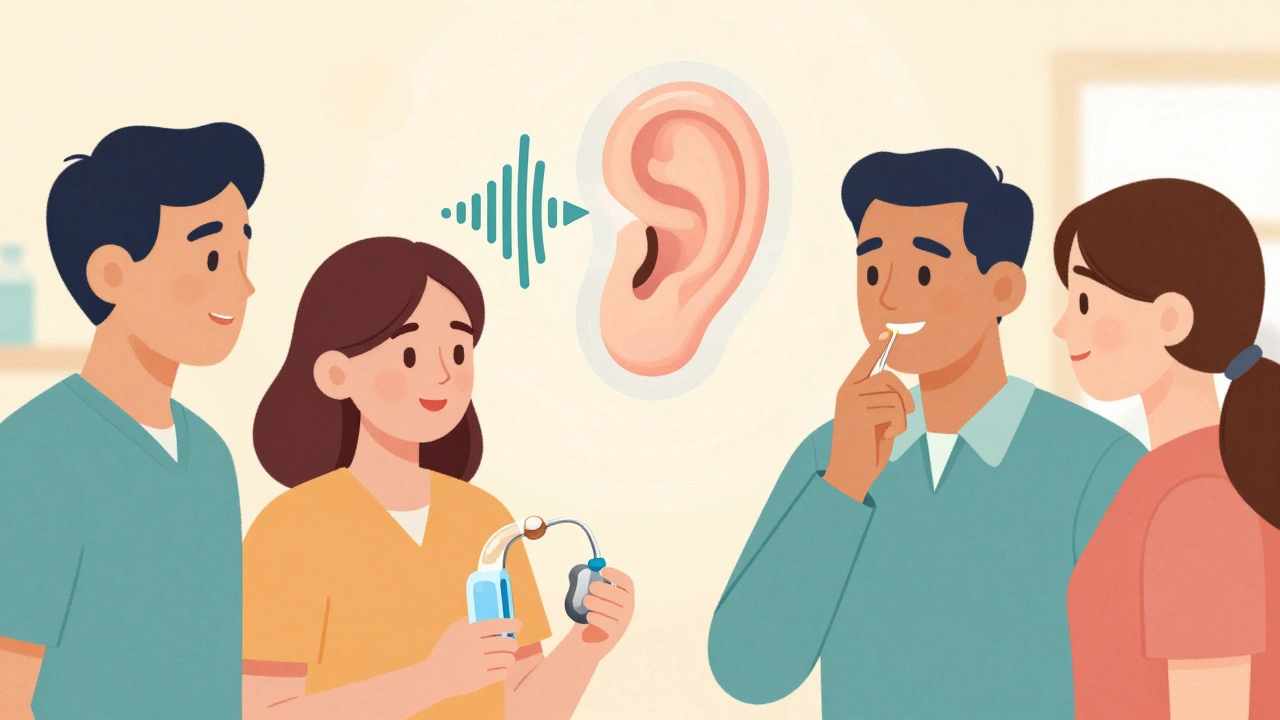
What Does It Really Mean to Be a Candidate for a Cochlear Implant?
Most people think cochlear implants are only for those who are completely deaf. That’s not true anymore. If you’re struggling to understand conversations even with hearing aids, you might be a candidate - even if you still hear some sounds. The old rule was clear: wait until you can’t hear anything at all. But today’s guidelines, updated in 2023 by the American Cochlear Implant Alliance, say something different: if you’re not getting enough benefit from hearing aids, it’s time to consider an implant.
The shift is simple: don’t wait for total hearing loss. By then, the auditory nerve may have started to weaken from lack of use. Early intervention helps preserve your brain’s ability to process sound. Studies show people who get implants sooner recover speech understanding faster and report better quality of life. One 2022 study of over 1,200 recipients found that most improved their sentence recognition by nearly 50 percentage points after surgery. That’s not a small gain - it’s the difference between guessing at dinner conversations and actually joining them.
How Do You Know If You’re a Candidate?
The evaluation isn’t just about how loud you can hear - it’s about how clearly you understand. The current standard is called the “60/60 rule”: if your best-aided word recognition score is 60% or lower, you should be referred for a cochlear implant assessment. This applies even if your hearing loss isn’t profound. You don’t need to be deaf to qualify.
Here’s what the process looks like:
- Hearing aid check: Your audiologist will verify your hearing aids are properly fitted using real-ear measurements. Many people are turned away because their aids aren’t working right - not because they’re not candidates.
- Speech testing: You’ll listen to words and sentences in quiet and noisy rooms. The gold standard is the AzBio sentence test. If you get less than 50% correct while wearing your aids, you’re likely a candidate.
- Medical imaging: A CT or MRI scan checks the structure of your inner ear. This ensures the implant can be safely placed.
- Functional assessment: Tools like the SSQ (Speech, Spatial and Qualities of Hearing Scale) measure how well you communicate in real life - at restaurants, in cars, with family. Some people score well in quiet testing rooms but struggle everywhere else. That’s a red flag.
- Psychological and motivation check: Are you motivated to learn how to use the device? Do you have support at home? Recovery isn’t just surgical - it’s about rehabilitation.
Age doesn’t matter. Neither does how long you’ve had hearing loss. A 2021 study found that people implanted after 15 years of deafness did just as well as those implanted after five - as long as they were willing to do the work afterward.
What About Single-Sided Deafness or Asymmetrical Hearing Loss?
For years, people with hearing loss in only one ear were told they didn’t qualify. That’s changed. The 2023 guidelines now explicitly include single-sided deafness and asymmetric hearing loss as valid reasons for evaluation. About 8.3% of people with hearing loss fall into this category - and many don’t even know they could benefit from an implant.
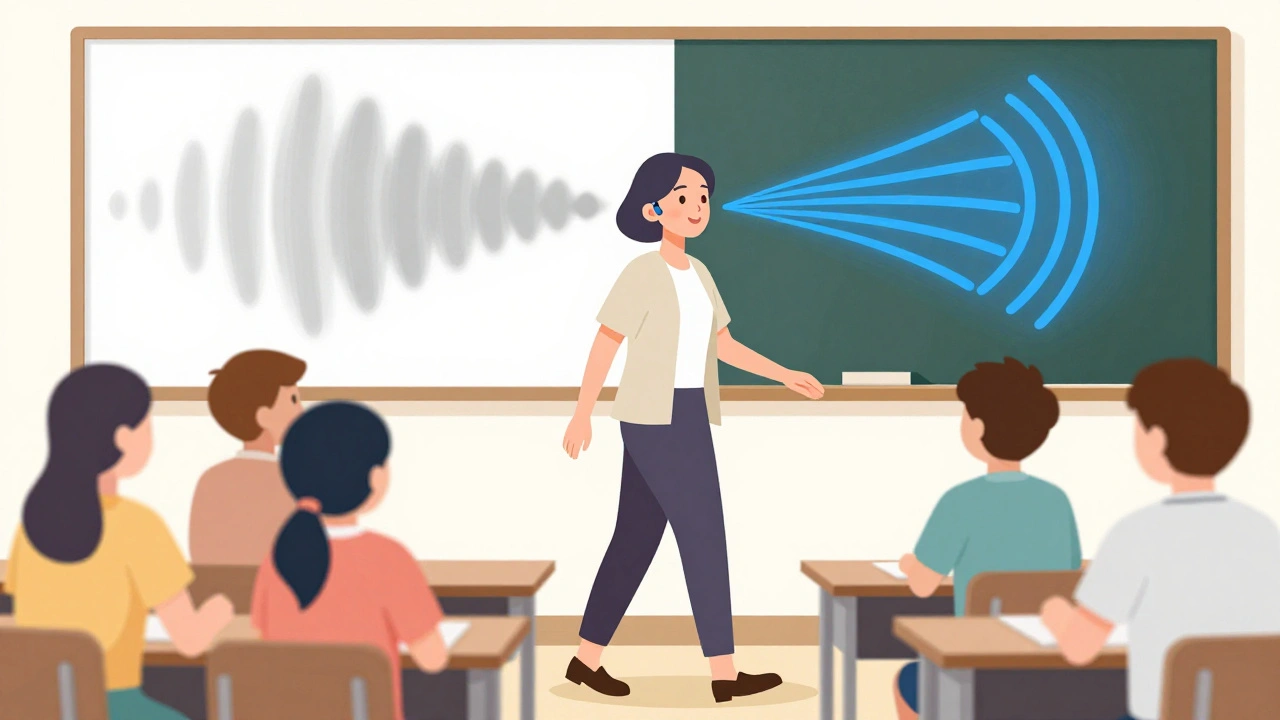
Why? Because hearing with one ear makes it hard to tell where sounds come from, and noisy places become overwhelming. A cochlear implant in the poorer ear can restore balance and make listening less exhausting. One patient, a 58-year-old teacher, said: “I used to have to sit at the front of the room so I could hear my students. After the implant, I could walk around and still follow the conversation.”
What Happens After the Surgery?
Getting the implant is just the start. The device doesn’t work right away. It takes weeks to activate, then months to adjust. The first few sessions with your audiologist are about mapping - fine-tuning the electrical signals the implant sends to your nerve. You’ll need to wear the external processor daily and practice listening exercises.
Rehabilitation is non-negotiable. Patients who attend regular therapy sessions improve 2-3 times faster than those who don’t. Many clinics offer group sessions where you practice conversations with other recipients. That’s where real progress happens - not in a testing booth, but in a coffee shop with background chatter.
Outcomes vary, but most people report:
- 89% say they have better communication with family
- 92% can use the phone more easily
- 87% feel less tired after social events
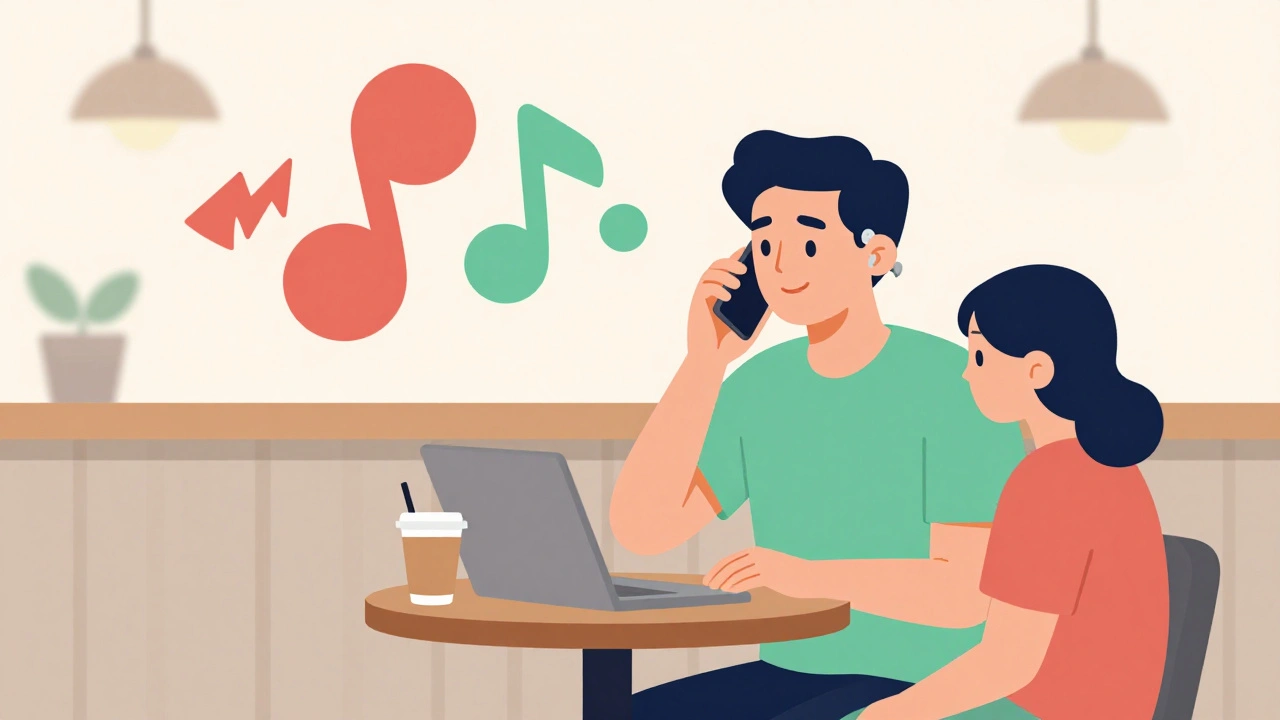
Some challenges remain. Music often sounds robotic or unnatural. Background noise is still hard, though better than before. Don’t expect perfect hearing - expect meaningful hearing.
Why Are So Few People Getting Cochlear Implants?
There are an estimated 38 million American adults with disabling hearing loss. Only 128,000 cochlear implants were done in 2022. That’s less than 1%. Why?
Primary care doctors often don’t know the updated criteria. A 2021 survey found only 32% could correctly identify when to refer a patient. Many still think: “Wait until they can’t hear at all.” But that’s outdated. The new guidelines say: “Refer early, refer often.” There’s no such thing as a bad referral.
Cost and access are also barriers. While Medicare and most private insurers now cover implants for expanded criteria, not all clinics have the right staff. You need an audiologist trained in cochlear implants and a surgeon with neurotology expertise. Only about 1,200 audiologists in the U.S. have that certification.
And there’s a disparity: only 18% of implant recipients in 2022 were from minority groups, even though they make up 40% of people with hearing loss. Language barriers, lack of awareness, and mistrust in the medical system all play a role.
What’s Next for Cochlear Implants?
The FDA is reviewing new labeling that would officially recognize the 50% word recognition threshold as a qualifying criterion. That’s expected by mid-2026. Research is also moving toward objective testing - like measuring brain responses to sound - to predict who will benefit most. This could make evaluations faster and more accurate.
By 2030, experts predict cochlear implants will be standard care for anyone with bilateral hearing loss over 55 dB and speech understanding below 60% with hearing aids. That could open the door for millions more people.
But the biggest change isn’t technological - it’s cultural. Cochlear implants are no longer a last resort. They’re a tool for staying connected. For keeping your job. For hearing your grandchild’s laugh. For not having to choose between silence and social life.
What If You’re Not a Candidate?
Even if you don’t qualify for an implant, the evaluation is still valuable. You’ll get a full hearing assessment, a check on your hearing aids, and a baseline for future monitoring. Many people discover their hearing aids need adjusting, or that they have an underlying condition like earwax buildup or fluid in the middle ear. Sometimes, the biggest benefit is knowing what your options are - and that you didn’t miss your chance.
Can you get a cochlear implant if you still have some hearing?
Yes. Many people with residual hearing qualify, especially if their speech understanding is poor despite using hearing aids. Newer devices like hybrid implants combine amplification with electrical stimulation, allowing you to keep some natural hearing while improving clarity.
Is there an age limit for cochlear implants?
No. People in their 80s and 90s have successfully received implants and reported major improvements in communication and quality of life. The key factor is overall health and motivation to participate in rehabilitation, not age.
How long does it take to get results after surgery?
The implant is activated about 2-6 weeks after surgery. Most people notice improvements in speech understanding within the first few months, but full adaptation can take 6-12 months. Consistent listening practice and therapy speed up progress.
Do cochlear implants restore normal hearing?
No. They don’t restore natural hearing. Instead, they bypass damaged parts of the ear and directly stimulate the auditory nerve. Users learn to interpret these electrical signals as sound. Many describe it as “mechanical” at first, but with time, the brain adapts and speech becomes clearer.
Are cochlear implants covered by insurance?
Yes. Medicare, Medicaid, and most private insurers cover cochlear implants for adults who meet current criteria, including the expanded 2023 guidelines. Coverage includes surgery, device, and follow-up care. Always confirm with your provider, but most people pay little to nothing out-of-pocket.
What if I live in a rural area without a cochlear implant center?
Many clinics now offer telehealth evaluations for initial screening. You can get your hearing tests done locally and send results to a specialized center. If you qualify, you’ll travel once or twice for surgery and activation. Follow-up appointments can often be done remotely.
Can children get cochlear implants too?
Yes. Children as young as 12 months can receive implants if they have severe to profound hearing loss and don’t benefit from hearing aids. Early implantation is critical for speech and language development. The same 2023 guidelines apply to pediatric candidates, with added focus on family support and educational planning.
What are the risks of cochlear implant surgery?
The surgery is generally safe, with a complication rate under 5%. Risks include infection, dizziness, facial nerve injury (rare), and loss of residual hearing. Most people experience no major issues. The benefits - improved communication, safety, and social connection - far outweigh the risks for qualified candidates.

James Kerr
December 3, 2025 AT 13:36shalini vaishnav
December 4, 2025 AT 10:35vinoth kumar
December 4, 2025 AT 11:57bobby chandra
December 5, 2025 AT 08:14Archie singh
December 6, 2025 AT 20:04Gene Linetsky
December 7, 2025 AT 16:11Kidar Saleh
December 7, 2025 AT 20:33Chloe Madison
December 9, 2025 AT 12:04