
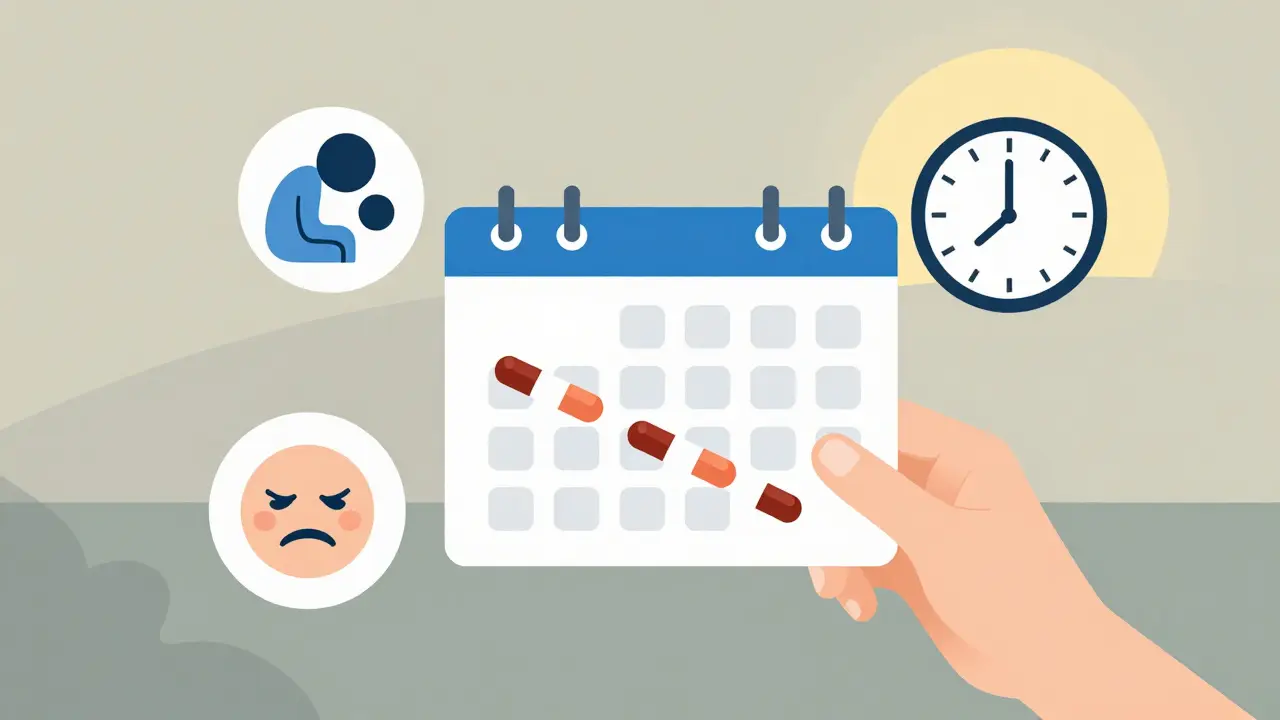
Corticosteroid Tapering Calculator
This tool helps you create a safe corticosteroid tapering schedule based on clinical guidelines. Always consult your doctor before making changes to your medication.
Your personalized tapering schedule based on clinical guidelines:
| Week | Dose (mg) | Notes |
|---|
When to stop tapering or increase dose
- Feel dizzy when standing up
- Severe fatigue or muscle pain
- Nausea that won't go away
- Low blood pressure
- Confusion or extreme weakness
Do not reduce dose if: You have fever, infection, surgery, or major injury. In these cases, your body needs more cortisol.
Withdrawal symptoms typically begin 1-3 days after reducing dose. Common symptoms include:
- Fatigue
- Muscle aches
- Nausea
- Dizziness
- Mood swings
Stopping corticosteroids like prednisone suddenly isn’t just risky-it can land you in the hospital. If you’ve been on these drugs for more than a few weeks, your body has stopped making its own cortisol. When you cut the dose too fast, your adrenal glands can’t catch up. The result? Crushing fatigue, muscle aches, nausea, dizziness, and even low blood pressure. This isn’t just discomfort. It’s your body screaming for help.
Why Tapering Isn’t Optional
Corticosteroids mimic cortisol, the hormone your adrenal glands naturally produce. When you take them daily for more than two to four weeks-especially at doses above 7.5 mg of prednisone-you suppress your body’s own production. That’s normal. But when you stop abruptly, your adrenal glands don’t magically restart. They need time. Without a slow taper, up to 78% of patients develop withdrawal symptoms, according to clinical studies in the Journal of Clinical Endocrinology & Metabolism.How Fast Should You Taper?
There’s no one-size-fits-all schedule. It depends on how long you’ve been on steroids, your dose, and what condition you’re treating. But here’s what works in practice:- If you’re on more than 20 mg of prednisone daily, start by dropping 5 mg every 3 to 7 days until you hit 15 mg.
- Once you’re below 15 mg, slow down. Drop by 1 mg every 1 to 2 weeks.
- At 5-7.5 mg, go even slower-some people need 1 mg every 3 weeks.
- Never drop below 5 mg without monitoring. That’s when your body is closest to its natural cortisol level.
Short-acting or intermediate-acting steroids like prednisolone or hydrocortisone are preferred during tapering. Take them in the morning to match your body’s natural rhythm. Nighttime dosing throws off your cortisol cycle and makes withdrawal worse.
Patients on steroids for less than three weeks usually recover their adrenal function in 1-2 weeks. But if you’ve been on them for over a year? Recovery can take six to twelve months. Rushing this part is the #1 mistake doctors and patients make.
Withdrawal vs. Flare vs. Adrenal Insufficiency
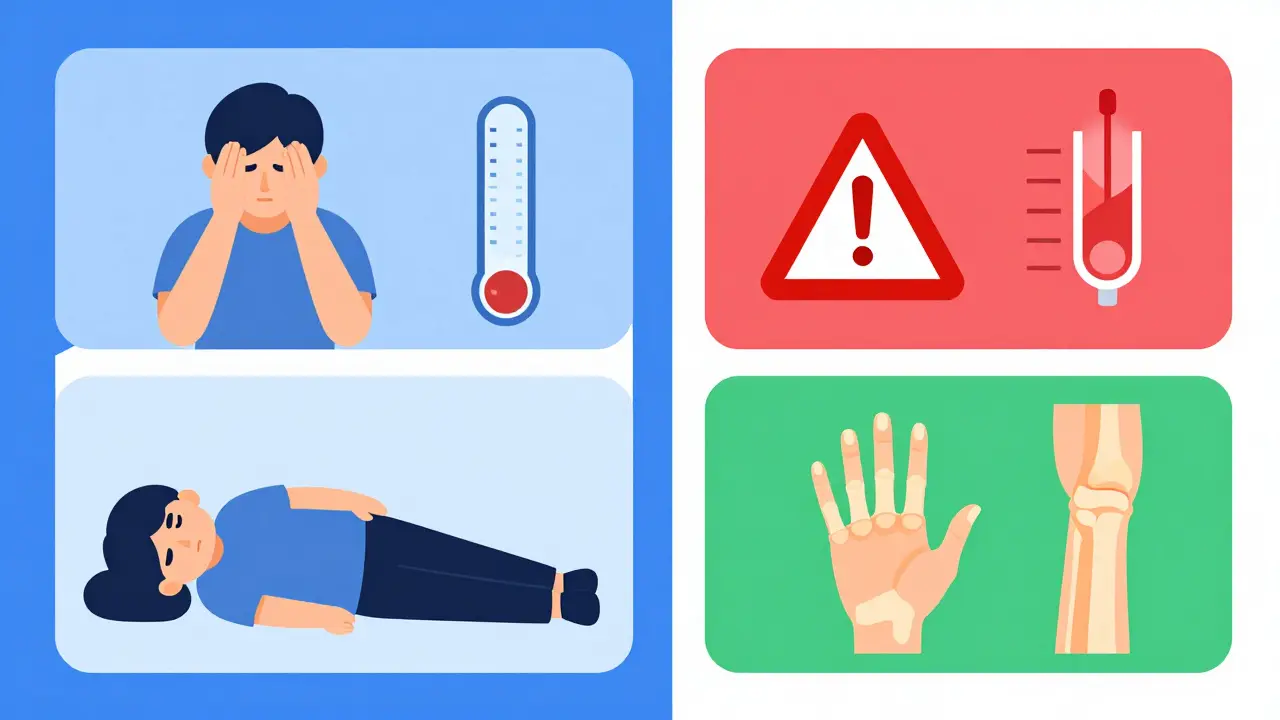
Not all symptoms mean the same thing. Misreading them leads to dangerous mistakes.- Withdrawal syndrome: General fatigue, body aches, joint pain, nausea, trouble sleeping, mood swings. No swelling, no fever, no lab markers of inflammation.
- Disease flare: Your original condition comes back-joints swell in rheumatoid arthritis, bowel inflammation returns in Crohn’s. Labs show inflammation markers rising.
- Adrenal insufficiency: This is an emergency. You’ll feel dizzy when standing, have low blood pressure, low sodium, low blood sugar, and possibly vomiting or confusion.
Doctors use a cosyntropin (ACTH) stimulation test to check adrenal function. A cortisol level above 400-500 nmol/L after the test means your adrenals are working. Below that? You need more time on steroids or a different approach.
Here’s the scary part: 34% of people who think they’re having a flare are actually experiencing withdrawal. They get more steroids, which delays recovery and traps them in a cycle.

What Helps With Symptoms?
You can’t speed up your adrenal glands-but you can make the ride smoother.- Movement: Daily 20-minute walks or warm-water pool exercises reduce muscle and joint pain by 42%, according to a 2022 study in Rheumatology. Physical therapy cut pain scores from 7.2 to 3.1 on a 10-point scale in just four weeks.
- Sleep: Aim for 7-9 hours. Poor sleep worsens fatigue and brain fog. No caffeine after noon.
- Diet: Mediterranean-style eating-lots of veggies, fish, olive oil, nuts-reduced symptom severity by 55% in a Mayo Clinic study of over 1,200 patients.
- Mental health: Cognitive behavioral therapy (CBT) cut anxiety and depression symptoms by 68% in a trial by the American Addiction Centers. Withdrawal isn’t just physical-it’s psychological.
Even with all this, 22% of people need to temporarily increase their dose because symptoms get too intense. That’s not failure. It’s smart management.
What Patients Are Really Saying
Reddit’s r/Prednisone community has over 12,500 members. A recent survey showed 68% still got withdrawal symptoms even when following their doctor’s taper. 41% described “crushing fatigue” lasting 3-8 weeks. On Drugs.com, 18% of users had symptoms longer than 60 days.The biggest complaints? Doctors didn’t explain the plan clearly (76% of negative reviews), tapering schedules changed between specialists (63%), and no one talked about mental health (52%).
Those who did well? They had a written plan, stuck to it, and got support from physical therapists and counselors. One 45-year-old with rheumatoid arthritis tapered from 40 mg to zero over 26 weeks using a strict European protocol-and had zero symptoms.
What You Need to Do Right Now
If you’re tapering-or about to start-here’s your checklist:- Get a written tapering schedule from your doctor. Don’t rely on memory.
- Carry a steroid emergency card. It should list your max physiological dose (equivalent to 20-30 mg hydrocortisone) in case of injury, infection, or surgery.
- Learn to check your orthostatic blood pressure. If your systolic drops more than 20 mmHg when you stand up, that’s a red flag.
- Track your symptoms daily. Note fatigue, pain, sleep, mood. This helps your doctor adjust your plan.
- Don’t skip follow-ups. Weekly checks during rapid tapering, biweekly below 15 mg.
Most successful tapers involve a team: your primary care doctor, an endocrinologist, and your specialist (rheumatologist, gastroenterologist, etc.). Patients with coordinated care have 58% fewer complications.
What’s New in 2025
The game is changing. In March 2024, Mayo Clinic rolled out a digital tapering assistant that reduced complications by 37% in a pilot study. It uses your symptoms, lab results, and dose history to suggest personalized adjustments.Researchers are now testing salivary cortisol awakening response-a simple at-home test-to predict how fast your HPA axis will recover. Early results show 82% accuracy.
AI-driven tapering protocols are in phase 2 trials at Johns Hopkins. And new drugs aimed at speeding up adrenal recovery without triggering disease flares are in preclinical testing.
But here’s the reality: 43% of primary care doctors still don’t follow evidence-based tapering guidelines. Rural patients are 2.3 times more likely to have complications because they can’t access specialists. This isn’t just a medical issue-it’s a systemic one.
Don’t Let Your Taper Fail
Corticosteroid withdrawal isn’t weakness. It’s biology. Your body needs time to heal. Rushing it doesn’t make you stronger-it makes you sicker.Ask your doctor: “What’s my exact taper schedule? When will we check my cortisol? What should I do if symptoms get worse?” If they can’t answer clearly, get a second opinion.
Stick to your plan. Move every day. Sleep well. Eat real food. Talk to someone about how you’re feeling. You’re not alone. And you don’t have to suffer through this alone.
Can I stop prednisone cold turkey if I’ve only been on it for a week?
If you’ve been on prednisone for less than two weeks and at a low dose (under 7.5 mg daily), your adrenal glands likely haven’t shut down. Stopping suddenly is usually safe. But if you were on higher doses-even for a short time-or have other health conditions, talk to your doctor first. It’s never worth the risk.
How do I know if my symptoms are withdrawal or my original disease coming back?
Withdrawal symptoms are general: fatigue, aches, nausea, mood swings. No swelling, no fever, no lab changes. A disease flare is specific: joint swelling in arthritis, diarrhea and cramps in Crohn’s, rash in lupus. If you’re unsure, get a blood test for inflammation markers (CRP, ESR) and ask about a cosyntropin test to check adrenal function. Don’t guess.
Why do some people need to go back up on steroids during tapering?
It happens in about 22% of cases. Symptoms like severe fatigue or joint pain can mean your body isn’t ready to go lower yet. Going back up temporarily isn’t failure-it’s adjusting the plan. The goal isn’t speed. It’s safety. Once symptoms settle, you can try tapering again, slower this time.
Is it safe to exercise while tapering?
Yes-but start gentle. Walking, swimming, yoga, and light strength training help reduce muscle pain and improve energy. Avoid intense workouts or long runs until you’re fully recovered. Exercise doesn’t speed up adrenal recovery, but it reduces how bad you feel while waiting for it.
What should I do if I get sick during my taper?
If you have a fever, infection, surgery, or major injury, your body needs more cortisol. You’re at risk for adrenal crisis. Increase your dose immediately-usually double your current dose or take your emergency dose (20-30 mg hydrocortisone equivalent). Call your doctor right away. Never skip your steroid emergency card. It’s your lifeline.
How long does it take to feel normal after stopping steroids?
It varies. Most people feel better within 4-8 weeks after finishing the taper. But full HPA axis recovery can take months-even up to a year if you were on high doses for over a year. Fatigue and low energy are common for weeks. Don’t compare yourself to others. Your timeline is yours.
Can I use supplements to help with withdrawal?
No supplement has been proven to restore adrenal function or speed up cortisol production. Avoid “adrenal support” blends-they’re not regulated and can be harmful. Focus on proven strategies: sleep, nutrition, movement, and mental health support. Your body heals itself. You just need to give it the right conditions.
Will I gain weight during tapering?
Weight gain from steroids comes from fluid retention and increased appetite. As you taper, you’ll lose the extra water weight quickly. Appetite may stay high for a while, but it will normalize. Focus on protein and fiber-rich foods to stay full. Don’t panic if the scale doesn’t drop fast-it’s not your fault. Your metabolism is resetting.
What if my doctor won’t give me a tapering plan?
Ask for a referral to an endocrinologist or a rheumatologist who specializes in steroid management. Many primary care doctors aren’t trained in tapering protocols. You deserve a clear, safe plan. If your doctor refuses, get a second opinion. Your health is too important to leave to guesswork.
Is it possible to taper without any symptoms at all?
Yes. It’s not common, but it happens. Patients who taper slowly, follow a structured plan, get support from therapists, and manage stress report minimal to no symptoms. One case study in Case Reports in Rheumatology showed a patient tapering from 40 mg to zero over 26 weeks with zero withdrawal. It’s not luck-it’s careful planning.

anthony epps
December 17, 2025 AT 02:34I didn’t know stopping prednisone cold turkey could wreck your adrenals. I thought it was just like quitting caffeine. Guess I was wrong.
Now I’m scared to even think about dropping my dose.
Andrew Sychev
December 17, 2025 AT 07:39People treat this like it’s a yoga retreat. ‘Just take it slow, dude.’ No. This isn’t ‘feel-good advice’ territory. This is your body shutting down like a dying server.
Doctors give you a sheet of paper and say ‘good luck.’ Meanwhile, you’re crying in the shower because you can’t get off the couch. And they wonder why people relapse.
This isn’t weakness. It’s betrayal by the system.
Dan Padgett
December 19, 2025 AT 01:18There’s a quiet kind of suffering here that no lab test can catch. You’re not just losing cortisol-you’re losing the rhythm of your own life.
It’s like your body forgot how to breathe on its own, and now it’s learning again, one shaky step at a time.
I’ve seen men who fought in wars cry over a 5 mg pill. Not because they’re weak-but because they finally understand how fragile we are.
Our medicine fixes symptoms but forgets to heal the silence between them.
This post? It doesn’t just give a schedule. It gives dignity back to people who’ve been told they’re ‘just being dramatic.’
Thank you for naming the invisible.
Hadi Santoso
December 20, 2025 AT 03:33Just wanna say-this is the most useful thing i’ve read all year. thanks for writing this.
my cousin went through this last year and no one told her about the orthostatic BP thing. she passed out at the grocery store. scary stuff.
also-mexican food is the best during tapering. trust me. beans, avocado, lime. it’s like medicine with flavor.
and yes, cbt helped her way more than anyone expected. she started journaling and it changed everything.
also-why do docs always say ‘just exercise’ like it’s a magic wand? walking is fine, but don’t make me do 10k steps when i can barely stand.
also also-i’m gonna print this and give it to my doctor. maybe he’ll finally stop acting like it’s a 2010 blog post.
Arun ana
December 21, 2025 AT 03:53👏 so many good points here. i’ve been tapering for 14 weeks now and the diet change made the biggest difference.
cut out sugar, added salmon 3x a week, and suddenly i stopped feeling like a zombie.
also-sleep is non-negotiable. no exceptions.
and yes, the 22% who need to go back up? totally normal. no shame.
you’re not failing. you’re listening.
also, emoji time 🙏❤️🫶
Kayleigh Campbell
December 23, 2025 AT 01:06So let me get this straight-we’ve got AI tools, salivary cortisol tests, and Mayo Clinic apps… but 43% of doctors still treat tapering like it’s a game of Russian roulette?
And we wonder why people end up in the ER?
Meanwhile, my doctor said ‘just take a vacation’ when I asked about my fatigue.
Thanks, Doc. I’ll go lie on a beach while my adrenals scream into the void.
Dave Alponvyr
December 23, 2025 AT 03:1522% need to go back up? Good. That’s not failure. That’s intelligence.
Trying to tough it out is what kills people.
Listen to your body. Not your ego. Not your doctor’s schedule. Your body.
Done.
Joanna Ebizie
December 23, 2025 AT 13:10Ugh. I tapered for 8 months and still felt like garbage. My doctor said ‘you’re just lazy.’
Yeah. Right. I’ll go work two jobs now. Thanks for the diagnosis, Dr. Obvious.