
DOAC Dose Calculator for Kidney Impairment
Dose Calculation
Enter your kidney function parameters to determine the appropriate apixaban dose
Results
Enter your values to see recommendations
Why DOACs Need Special Care in Kidney Problems
Direct Oral Anticoagulants, or DOACs, are the go-to blood thinners for millions of people with atrial fibrillation. They’re easier than warfarin-no weekly blood tests, fewer food interactions. But if your kidneys aren’t working well, these drugs can turn dangerous. That’s because DOACs like apixaban, rivaroxaban, dabigatran, and edoxaban leave your body mostly through your kidneys. When kidney function drops, the drug builds up. Too much? Risk of bleeding. Too little? Risk of stroke. It’s a tightrope walk.
Here’s the reality: nearly 1 in 3 people with atrial fibrillation also have chronic kidney disease. And in those patients, dosing mistakes are shockingly common. A 2022 study in JAMA Internal Medicine found that over one-third of DOAC prescriptions in kidney patients were wrong. That’s not a small error. That’s a life-threatening one.
How Kidney Function Is Measured (It’s Not What You Think)
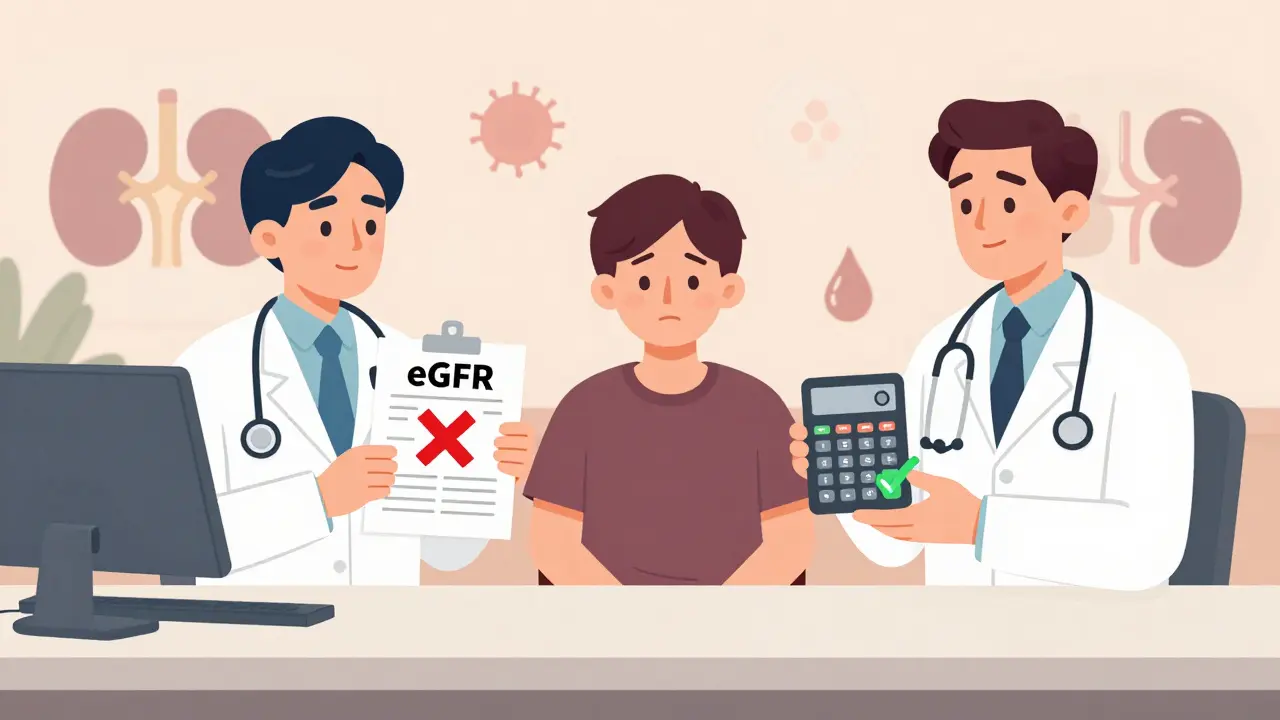
Doctors often look at eGFR to check kidney health. But for DOACs, that number won’t cut it. The FDA and every major guideline since 1998 say: use the Cockcroft-Gault formula. Why? Because it factors in age, weight, and sex-things that affect how your body clears these drugs. eGFR doesn’t. So if you’re 82, weigh 55 kg, and your doctor uses eGFR to decide your dose, you could be getting too much medication.
The Cockcroft-Gault formula looks like this:
CrCl (mL/min) = [(140 - age) × weight (kg) × (0.85 if female)] / (72 × serum creatinine)
It’s messy to calculate by hand. That’s why most clinics use apps or electronic health record tools. But if you’re managing your own meds, ask your pharmacist to run the numbers. Don’t assume your last eGFR result is enough.
Apixaban: The Safest Choice for Poor Kidneys
Among all DOACs, apixaban (Eliquis) stands out. It’s the only one with strong data showing it’s safe even in end-stage kidney disease. Studies show it causes less bleeding than warfarin in patients on dialysis. The FDA doesn’t require a dose change just because your kidneys are failing-but there’s a catch.
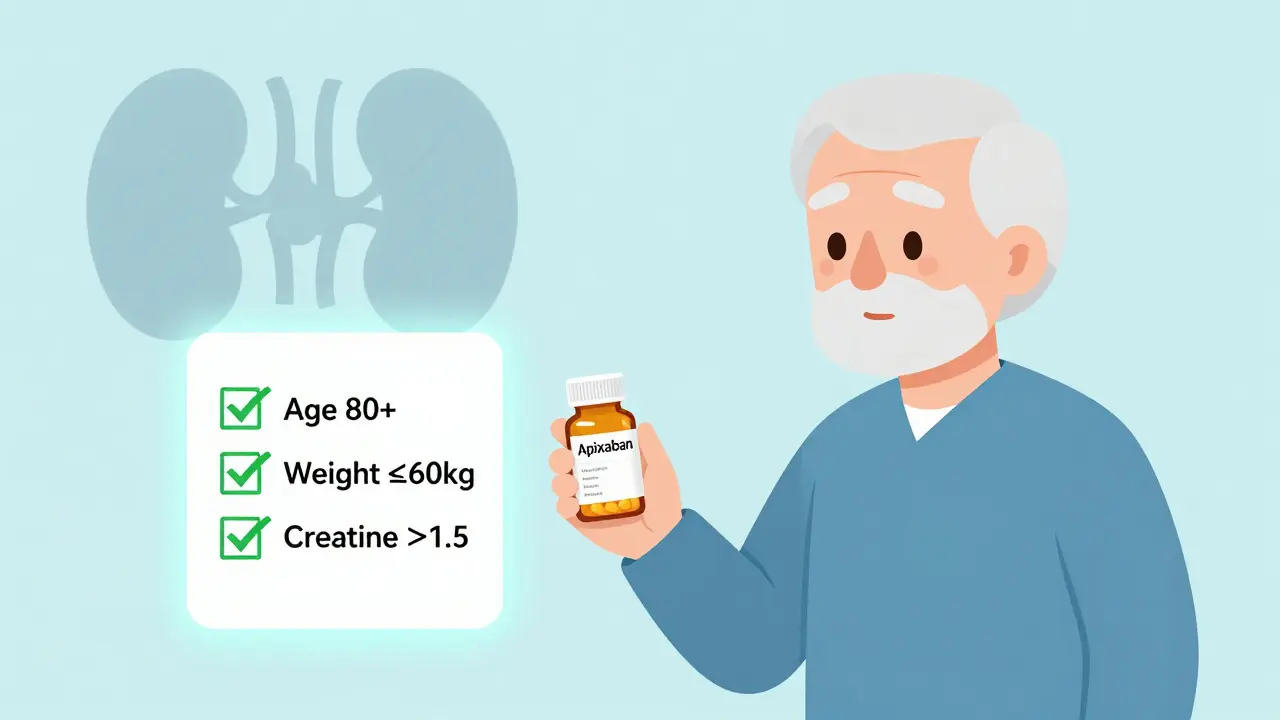
Apixaban’s standard dose is 5 mg twice daily. But you drop to 2.5 mg twice daily if you meet any two of these three criteria:
- Age 80 or older
- Weight 60 kg (132 lbs) or less
- Serum creatinine 133 μmol/L (1.5 mg/dL) or higher
That’s not optional. If you’re 81, weigh 58 kg, and have a creatinine of 1.4, you’re already on the lower dose. Skipping this step is a major risk. A 2023 case report from a U.S. nephrology forum described a 78-year-old man on dialysis who took the full dose-then suffered a life-threatening gut bleed. He didn’t meet the criteria for dose reduction? He did. His weight and age were enough.
Other DOACs: When to Avoid Them
Rivaroxaban (Xarelto) is off-limits if your CrCl is below 15 mL/min. That’s end-stage kidney disease. No exceptions. Even if your doctor says, “It’s fine,” they’re going against guidelines.
Dabigatran (Pradaxa) needs a dose drop to 75 mg twice daily if your CrCl is between 15 and 30 mL/min. Below 15? Don’t use it. It’s too risky.
Edoxaban (Savaysa) can be cut to 30 mg once daily if CrCl is 15-50 mL/min. But if you’re on dialysis, it’s not recommended. The data is weak. The bleeding risk goes up without clear benefit.
And warfarin? It’s not the safe fallback many think. In dialysis patients, it’s linked to more brain bleeds and calcium buildup in blood vessels. DOACs, when dosed right, are better.
Real-World Mistakes and How to Avoid Them
Here’s what goes wrong in clinics every day:
- Using eGFR instead of CrCl
- Forgetting to check weight or age
- Prescribing rivaroxaban to someone on dialysis
- Not rechecking creatinine after a hospital stay
One pharmacy study found that nearly 3 out of 10 elderly patients had their CrCl miscalculated because their muscle mass was low. A frail 85-year-old woman might have a normal creatinine level-but her kidneys are failing. Her muscle mass is gone. The formula still works if you plug in her real weight. But if the system auto-fills 70 kg because she’s “average,” she gets the wrong dose.
Pro tip: Use the “ABC” rule for apixaban. If you’re Age 80+, Body weight ≤60 kg, or Creatinine ≥1.5 mg/dL-check if you meet two. If yes, reduce the dose. Write it down. Tell your pharmacist.
What to Do If You’re on Dialysis
There’s no perfect answer yet. But the best data we have points to apixaban. A 2023 study of 127 dialysis patients showed apixaban at 2.5 mg twice daily had a major bleeding rate of just 1.8% over 18 months. Warfarin? 3.7%. That’s a big difference.
But here’s the catch: no DOAC is officially approved for dialysis patients in the U.S. or Europe. So doctors prescribe them off-label. That’s not illegal-it’s common. But it means you need to be extra careful. Your nephrologist and cardiologist must agree on the plan. No guessing.
Watch for signs of bleeding: unusual bruising, dark stools, headaches, dizziness. Call your doctor immediately if you notice any. And get your creatinine checked every 3 months-even if you feel fine.
What’s Coming Next
Two major trials are wrapping up. The RENAL-AF trial is comparing apixaban to adjusted warfarin in patients with severe kidney disease. Results are due in 2025. The AXIOS trial, though small, will release data on how apixaban behaves in dialysis patients later this year.
By 2026, guidelines will likely be clearer. But right now, the best advice is simple: know your CrCl. Use Cockcroft-Gault. Reduce apixaban if you meet two of the three criteria. Avoid the others in advanced kidney disease. Don’t rely on eGFR. Don’t assume your doctor did the math. Ask.
Bottom Line: Three Rules to Live By
- Always use Cockcroft-Gault to calculate creatinine clearance-not eGFR.
- For apixaban, drop to 2.5 mg twice daily if you’re over 80, under 60 kg, or have creatinine ≥1.5 mg/dL-if two apply.
- Never use rivaroxaban, dabigatran, or edoxaban if your CrCl is below 15 mL/min. Apixaban is your best bet.
If you’re on a DOAC and have kidney disease, this isn’t just about pills. It’s about survival. Get the numbers right. Ask questions. Keep a copy of your CrCl calculation in your wallet. Your life might depend on it.

Alisa Silvia Bila
December 20, 2025 AT 08:54Carolyn Benson
December 20, 2025 AT 11:42Chris porto
December 20, 2025 AT 14:15Aadil Munshi
December 21, 2025 AT 21:15Erica Vest
December 22, 2025 AT 09:05Kinnaird Lynsey
December 23, 2025 AT 12:28Glen Arreglo
December 23, 2025 AT 20:06shivam seo
December 25, 2025 AT 05:59benchidelle rivera
December 26, 2025 AT 17:44Anna Sedervay
December 28, 2025 AT 02:28