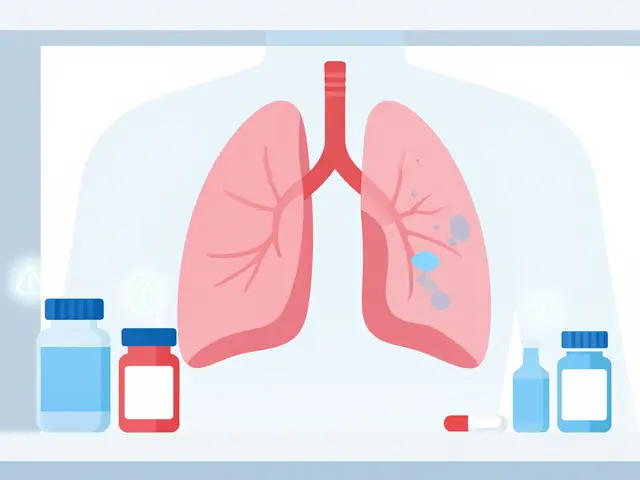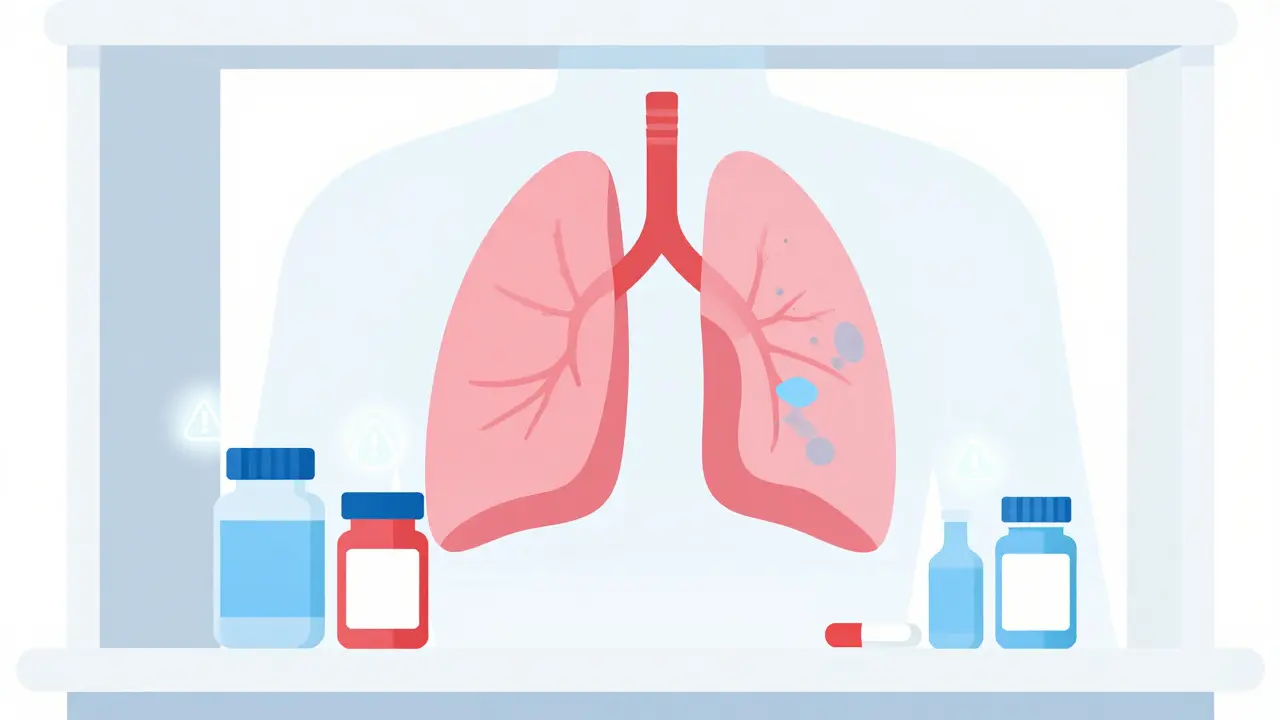
Medication Lung-Risk Checker
Instructions: Select a medication from the list below to see its specific risk profile, typical onset time, and the pattern of lung toxicity it may cause.
Select Medication:
Select a medication
Please select a medication from the left panel to view its pulmonary toxicity profile.
Imagine taking a medication to treat a routine infection or a chronic heart condition, only to find yourself struggling for breath a few months later. It sounds like a nightmare, but for some, this is the reality of drug-induced pulmonary fibrosis is a form of interstitial lung disease where certain medications cause inflammation and permanent scarring in the lung tissue . While most people tolerate these drugs without issue, a small percentage experience a severe reaction that turns flexible lung tissue into stiff, non-functional scars. The scary part? This isn't always about how much of the drug you take; sometimes, it's just how your body reacts.
The hidden risk in your medicine cabinet
Pulmonary fibrosis isn't a single disease but a group of conditions that cause scarring of the lungs. When this is triggered by a drug, it's called DIPF. It's not a common occurrence-making up about 5-10% of all interstitial lung disease cases-but it is serious. The damage happens in the walls of the air sacs (alveoli) and the surrounding tissue, making it harder for your blood to pick up oxygen.
The real danger lies in how these symptoms sneak up on you. You might start with a dry cough that you dismiss as a cold or a bit of "getting older." Then, you notice you're winded just walking to the mailbox. Because these symptoms are so generic, many people face a diagnostic delay. In some support groups, patients have reported waiting over eight weeks from the first symptom to finding out their medication was the culprit.
Which medications are the biggest culprits?
Not all drugs carry the same risk. Some cause a rapid, aggressive attack, while others cause a slow, insidious decline over years. Based on data from pharmacovigilance databases, there are a few "usual suspects" that doctors watch closely.
Amiodarone is a potent anti-arrhythmic medication used to treat irregular heartbeats . It's known to cause lung toxicity in 5-7% of long-term users. Usually, this happens after a person has taken a cumulative dose exceeding 400 grams, often appearing 6 to 12 months into therapy. Unfortunately, even after stopping the drug, some patients face a 10-20% mortality rate in severe cases.
Nitrofurantoin is a common antibiotic used primarily for urinary tract infections (UTIs) . This is a particularly tricky one because it's often used for long-term prevention of UTIs in elderly patients. The scarring can develop anywhere from six months to ten years after you start taking it, making it easy to overlook the connection.
Then there are the heavy hitters: chemotherapeutic agents. Bleomycin, used in cancer treatment, has one of the highest risks, with up to 20% of patients developing pulmonary toxicity if they hit a cumulative dose of 400 units. Methotrexate, frequently used for rheumatoid arthritis, affects about 1-7% of users, often presenting as an acute, rapid-onset inflammation of the lungs.
| Medication | Primary Use | Risk Rate | Typical Onset | Severity/Pattern |
|---|---|---|---|---|
| Bleomycin | Cancer Therapy | 10-20% | Dose-dependent | Rapid and severe |
| Amiodarone | Heart Rhythm | 5-7% | 6-12 Months | Chronic/Progressive |
| Nitrofurantoin | UTI Prevention | Variable | 6 Mo - 10 Yrs | Insidious/Slow |
| Methotrexate | Autoimmune/Cancer | 1-7% | Acute/Rapid | Acute pneumonitis |
Why does this happen to some and not others?
If you're reading this and thinking, "I take that drug and I'm fine," you're in the majority. The medical community still isn't entirely sure why some people react while others don't. It's often an idiosyncratic reaction, meaning it's an unpredictable, individual response rather than a predictable side effect based on dose.
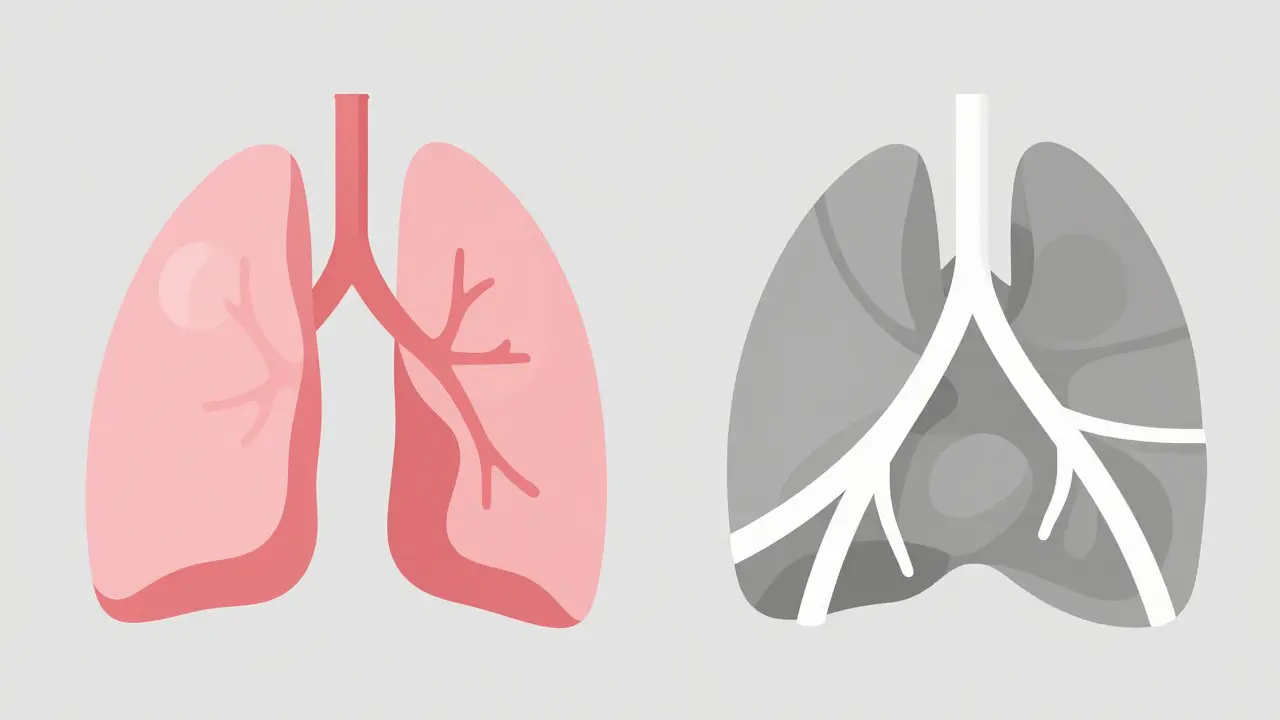
From a biological standpoint, the process usually involves oxidative stress. The drug triggers an inflammatory response that damages the lung cells. When the body tries to heal this damage, it doesn't replace the tissue with normal, stretchy lung cells. Instead, it deposits collagen-essentially creating internal scar tissue. Once that collagen is there, the lung loses its elasticity, making it harder for you to breathe and for oxygen to enter your bloodstream.
Spotting the warning signs
Early detection is everything. If you're on any of the high-risk medications mentioned above, you need to be your own best advocate. Don't ignore "minor" respiratory changes. Watch for these specific red flags:
- A persistent dry cough that doesn't go away with typical cold remedies.
- Shortness of breath during activities that used to be easy (like climbing a flight of stairs).
- Low-grade fever, chills, or unusual fatigue.
- Chest pain or a feeling of tightness in the lungs.
If you notice these, get to a doctor immediately. Tell them exactly which medications you are taking. Because there are no unique X-ray or breathing test patterns that only appear in drug-induced cases, the only way a doctor can diagnose this is by looking at your medication history and ruling out other causes like heart failure or idiopathic pulmonary fibrosis.
Can you actually fix scarred lungs?
The good news is that drug-induced pulmonary fibrosis is often more treatable than other forms of lung scarring, provided it's caught early. The most critical step-the absolute cornerstone of treatment-is stopping the offending medication immediately. When the trigger is removed, the inflammatory process stops.
For those who act quickly, the prognosis is generally positive. Around 75-85% of patients make a good recovery. In more severe cases, doctors may prescribe high-dose corticosteroids (like prednisone) to knock down the inflammation and prevent further scarring. If oxygen levels drop too low (typically below 88%), supplemental oxygen therapy is used to keep the heart and organs safe while the lungs heal.
However, it's a race against time. About 15-25% of people end up with permanent lung impairment because the scarring progressed too far before the drug was stopped. This is why the New Zealand Medicines Adverse Reactions Committee has pushed for better prescriber awareness-stopping the drug on day one is infinitely better than treating the scarring on day sixty.

The future of prevention
We are seeing a trend where more medications are being linked to lung issues, partly because we have more complex targeted therapies and cancer immunotherapies. To combat this, researchers are looking for "predictive biomarkers." The goal is to run a genetic test before you even start a drug to see if you are predisposed to this kind of reaction.
Until then, the gold standard is baseline testing. Some experts suggest that anyone starting a high-risk drug should have a baseline spirometry test (a lung function test). That way, if your breathing capacity drops even slightly three months later, doctors have a data point to compare it to, rather than guessing if you've always been a bit winded.
Can lung scarring from drugs be reversed?
It depends on the timing. While actual collagen scars are permanent, the inflammation causing them can be stopped. If the drug is discontinued early, many patients show significant improvement within three months. However, once extensive fibrosis (scarring) has set in, that specific tissue cannot be turned back into healthy lung tissue.
Do I need to stop my medication immediately if I have a cough?
Never stop a prescribed medication-especially heart or cancer drugs-without consulting your doctor first. Stopping some medications abruptly can be dangerous. Instead, contact your healthcare provider immediately and report your symptoms so they can evaluate if the drug is the cause and transition you to a safer alternative.
How long does it take for drug-induced fibrosis to develop?
The timeline varies wildly. Some chemotherapy drugs like bleomycin can cause rapid toxicity. Others, like nitrofurantoin, can take months or even up to ten years of long-term use before symptoms appear. Amiodarone typically manifests within 6 to 12 months of therapy.
What is the survival rate for this condition?
The prognosis is generally favorable if caught early, with 75-85% of patients making a good recovery. However, the mortality rate can be higher in severe cases; for example, some data shows a 17.3% mortality rate in a specific cohort of reported medication-related ILD cases in New Zealand, highlighting the need for prompt diagnosis.
Are there any tests that can definitely prove a drug caused the scarring?
No single test provides a "smoking gun." There are no specific radiographic or pathologic patterns unique to drug-induced cases. Diagnosis is made by combining lung function tests, imaging (like CT scans), and a meticulous review of the patient's medication history while ruling out other causes.
What to do next
If you are currently taking a high-risk medication, don't panic, but do stay vigilant. Start a simple log of any new respiratory symptoms. If you experience breathlessness or a dry cough, schedule a pulmonary function test (PFT). Ensure your doctor knows every supplement and medication you are taking, as some over-the-counter drugs or herbal supplements can occasionally complicate the clinical picture.