
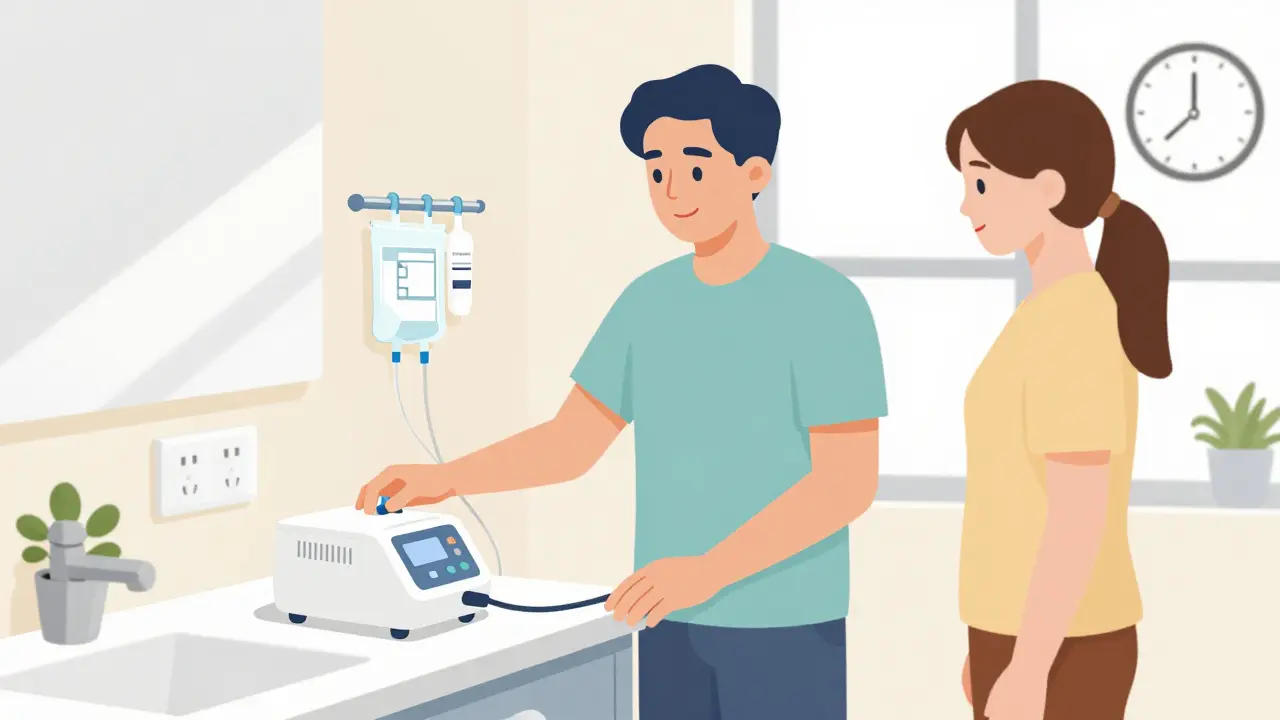
For people living with end-stage renal disease, dialysis isn’t just a medical procedure-it’s a daily reality. For many, that reality means three long, exhausting trips a week to a clinic, sitting for hours hooked up to a machine, only to return home drained and still feeling unwell. But there’s another way: home hemodialysis. It’s not for everyone, but for those who qualify, it can change everything. More control. Better sleep. Fewer hospital visits. And yes, even better survival rates.
What Home Hemodialysis Really Means
Home hemodialysis (HHD) is exactly what it sounds like: dialysis done in your own home, using a machine designed for personal use. It’s not a new idea. The first successful dialysis shunt was developed in the 1960s, but it wasn’t until the 1990s, with the rise of compact, user-friendly machines like the NxStage System One, that it became truly practical for everyday use. Today, about 12% of U.S. dialysis patients choose this path. That number is growing-not because it’s trendy, but because the data shows it works better.Unlike in-center dialysis, where treatments are scheduled around the clinic’s hours, home hemodialysis lets you pick your own time. You can dialyze in the morning, late at night, or even while you sleep. The flexibility isn’t just about convenience-it’s tied directly to how well your body handles the treatment.
Training: It’s Not Just Learning How to Use a Machine
Before you can dialyze at home, you and your care partner must go through training. This isn’t a quick demo. It’s a full course in managing your own health. Most programs require between 3 and 12 weeks of training, depending on your experience, health, and the type of machine you’ll use.You’ll learn how to:
- Set up a clean, dedicated space for dialysis (usually a 6x6 foot area near a drain and power outlet)
- Insert needles into your vascular access (a fistula or graft) safely-this is often the hardest part
- Operate the dialysis machine, including priming, starting, and shutting down
- Monitor your blood pressure and fluid removal goals
- Recognize warning signs like low blood pressure, air in the lines, or machine alarms
- Store and order supplies, including dialysate fluid, needles, and tubing
- Keep detailed logs of each session for your care team
Training includes both written tests and hands-on practice under supervision. Medicare covers up to 25 training sessions, and most patients need every one. Some programs now use virtual reality simulators to practice needle insertion before ever touching a real patient. Studies show this cuts training time and improves confidence-some centers report 92% competency rates with this method.
And here’s the catch: you can’t do it alone. Almost all programs require a trained care partner-usually a spouse, family member, or close friend-to be present during every treatment. They learn everything you do. Why? Because emergencies happen. A needle comes loose. The machine alarms. Your blood pressure drops. You need someone who knows exactly what to do. About 30% of people who want home dialysis can’t find a suitable partner, which is one of the biggest barriers to adoption.
Three Main Schedules-and Why They Matter
Not all home hemodialysis is the same. There are three common schedules, each with different benefits:- Conventional Home HD: Three times a week, 3-4 hours per session. This looks like in-center dialysis, just done at home. It’s easier to start with, but doesn’t offer the same health advantages as more frequent options.
- Short Daily HD: Five to seven times a week, 2-3 hours per session. This is where things get powerful. Because you’re dialyzing more often, your body doesn’t have to handle huge fluid shifts. Blood pressure improves. Heart strain drops. A 2021 study found patients on this schedule had a 28% lower risk of death compared to those on in-center dialysis.
- Nocturnal HD: Three to seven nights a week, 6-10 hours while you sleep. This is the most effective for removing toxins and waste. Phosphorus levels drop dramatically-some patients cut their phosphate binder pills by over three a day. It also helps with sleep quality and reduces itching and muscle cramps.
Choosing the right schedule depends on your health, lifestyle, and goals. Short daily and nocturnal schedules are linked to better survival, fewer hospitalizations, and improved quality of life. But they also demand more time and discipline.
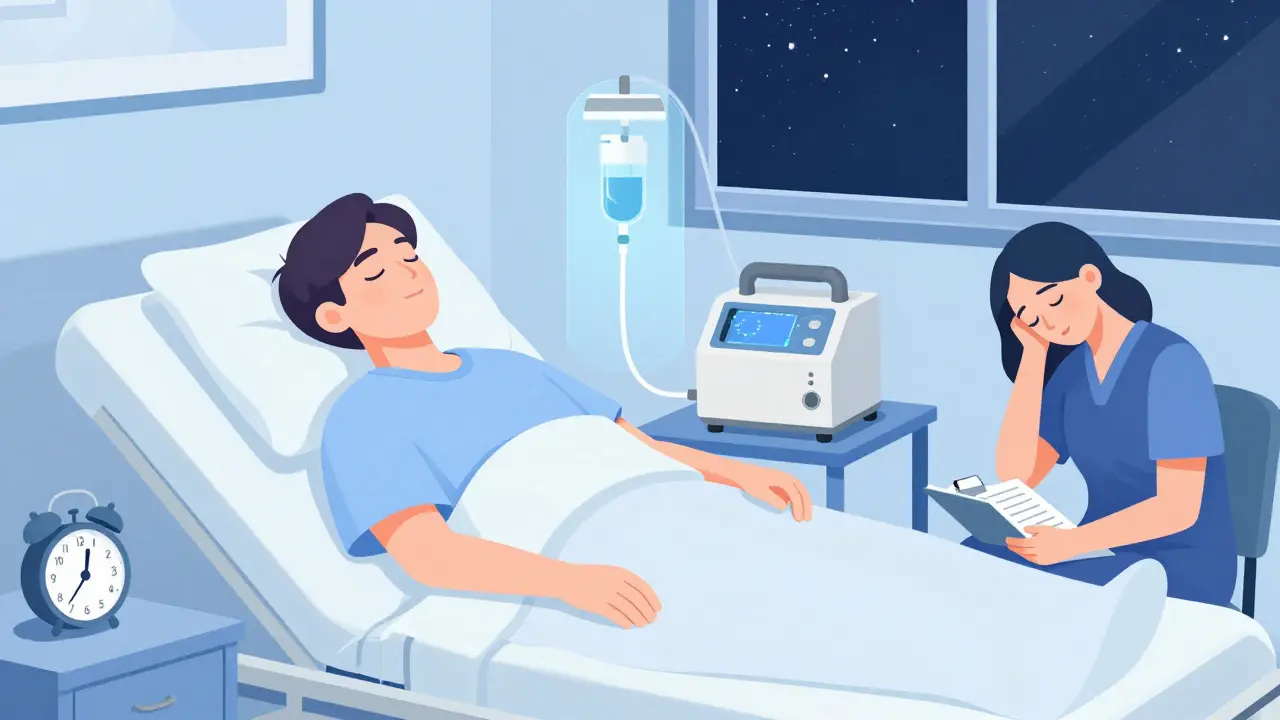
What You Need at Home
Setting up for home hemodialysis isn’t like setting up a coffee maker. You need:- A dedicated space: At least 6 feet by 6 feet, with easy access to a drain and water supply.
- Water system: Your home water must pass strict purity standards. Most systems require a reverse osmosis (RO) unit to filter out chemicals and bacteria. Monthly water cultures and annual chemical tests are mandatory.
- Electricity: A dedicated 120-volt, 20-amp circuit-no sharing with heavy appliances.
- Storage: Space for supplies-tubing, needles, dialysate bags, disinfectants. Many patients use a locked cabinet to keep everything clean and organized.
- Travel plans: If you use a standard machine, you can’t take it on trips. You’ll need to arrange dialysis at clinics when you travel. Portable machines like the NxStage System One change that, letting you dialyze in a hotel room or even a car.
Outcomes: The Real Numbers
The data doesn’t lie. People on home hemodialysis, especially those doing frequent or nocturnal treatments, live longer and feel better.- Survival: Studies show home hemodialysis patients have a 15-20% lower risk of death compared to those on in-center dialysis.
- Quality of life: Patients report 37% higher scores on quality-of-life surveys. They sleep better, have more energy, and feel more in control.
- Heart health: Left ventricular mass (a sign of heart strain) drops significantly with daily or nocturnal dialysis.
- Phosphate control: Nocturnal dialysis reduces serum phosphate levels by 42% compared to conventional in-center treatment. That means fewer meds, fewer side effects, and less bone damage.
One study tracked patients for five years. Those on short daily dialysis spent 60% fewer days in the hospital than those on standard care. That’s not just better health-it’s fewer bills, less stress, and more time with family.
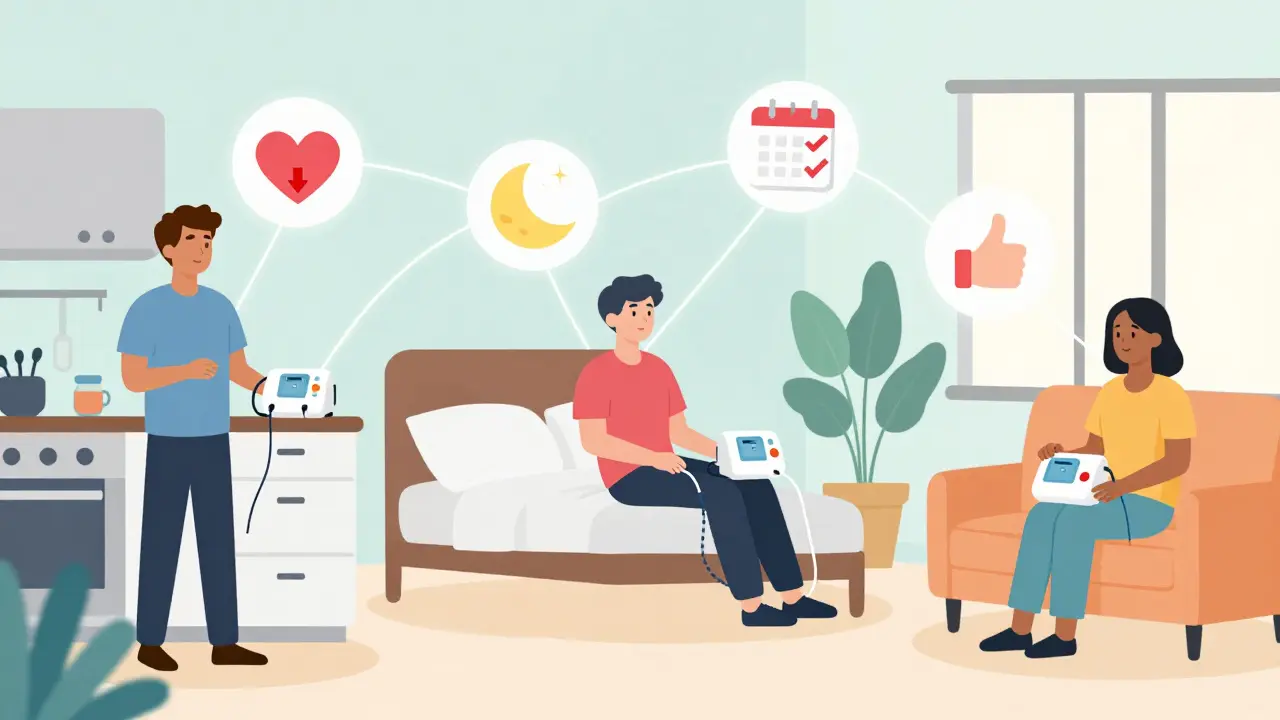
The Hidden Challenges
Let’s be real: home hemodialysis isn’t easy. It’s not just about the machine. It’s about the emotional weight.- 92% of users say they love the schedule flexibility-but 67% say machine alarms drive them crazy.
- 58% struggle with keeping supplies stocked and organized.
- 52% say their relationship with their care partner has been strained. The pressure of being responsible for someone’s life isn’t light.
- 63% of users felt anxious during the first few months. Handling needles, dealing with alarms, worrying about mistakes-it’s intense.
Many people don’t talk about this. But it’s real. That’s why strong support systems-nurses who check in regularly, peer groups, mental health counseling-are just as important as the training.
Why Isn’t Everyone Doing It?
If it’s better, why do only 12% of patients choose it?- Only 12% of U.S. dialysis centers offer home training programs.
- Nephrologists say 71% of them don’t have enough staff time to train patients properly.
- Reimbursement hasn’t kept up. Medicare pays for training, but not enough to cover the full cost of the staff hours needed.
- Many doctors still default to in-center dialysis because it’s easier to manage.
But things are changing. The 2021 Advancing American Kidney Health initiative set a goal: 80% of new patients should start on home dialysis or transplant by 2025. We’re not there. But new FDA-approved machines, better training tech, and upcoming Medicare payment reforms that reward outcomes over location are pushing the system forward.
Who Is It For?
Home hemodialysis isn’t for everyone. But if you:- Have a stable health condition
- Have a willing, able care partner
- Can manage a routine (or have help with it)
- Want more control over your life
-then it’s worth exploring. The best candidates aren’t the healthiest. They’re the ones who want to live differently.
Can I do home hemodialysis by myself?
Almost always, no. Most programs require a trained care partner to be present during every treatment. Solo dialysis is possible with certain machines and special approval, but it’s rare. The risk of complications-like a needle coming loose or a sudden drop in blood pressure-is too high to manage alone without immediate help. Even experienced patients keep a partner nearby.
How long does training take for home hemodialysis?
Training typically lasts 3 to 12 weeks, with most patients completing it in 4 to 6 weeks. The length depends on your learning pace, whether you’ve practiced needle insertion before, and the complexity of your machine. Medicare covers up to 25 training sessions, which is usually enough. Some centers now use VR simulators to speed up learning and improve confidence.
Is home hemodialysis safer than in-center dialysis?
For many patients, yes-especially if they’re doing frequent or nocturnal sessions. Studies show lower mortality rates, fewer hospital stays, and better heart health. But safety depends on proper training, consistent routines, and having a reliable care partner. Poorly managed home dialysis can be riskier than in-center care. The key is not the location-it’s the preparation.
Does insurance cover home hemodialysis?
Yes. Medicare covers home hemodialysis equipment, supplies, training, and maintenance. Private insurers typically follow Medicare guidelines. Training sessions are covered up to 25, and ongoing supplies are reimbursed monthly. You may still have out-of-pocket costs for things like water filtration systems or travel arrangements, but the core treatment is covered.
What if my care partner can’t continue?
If your care partner becomes unable to help-due to illness, work, or personal reasons-you’ll need to find a replacement. Many patients train a second person as a backup. If no one is available, you may have to switch back to in-center dialysis. Some programs offer trained home health aides, but these are expensive and not widely available. Planning ahead is essential.
Can I travel with a home hemodialysis machine?
It depends on the machine. Standard home dialysis machines are not portable. But systems like the NxStage System One are designed for travel. You can pack them in a car or take them on a plane with proper planning. You’ll need to arrange for dialysate and water supply at your destination. Many patients use portable water filters and pre-packed supplies. Always coordinate with your clinic before traveling.

Chris Bird
March 12, 2026 AT 10:19Man, I read this and thought about my cousin in Lagos. He’s on dialysis three times a week and walks two hours to the clinic. Home dialysis sounds like a dream. No way he could afford the setup, but the fact that it cuts hospital visits by 60%? That’s life-changing. Why isn’t this available everywhere?
Miranda Varn-Harper
March 13, 2026 AT 17:46While the statistics presented are statistically significant, one must consider the selection bias inherent in the population that pursues home hemodialysis. Those who opt for this route are typically more motivated, better educated, and possess greater socioeconomic resources. To generalize these outcomes as universally superior is to ignore the systemic inequities that prevent marginalized populations from even accessing the training.
LiV Beau
March 15, 2026 AT 07:03This is so inspiring!! 🌟 I had no idea nocturnal dialysis could cut phosphate meds by 3+ a day-that’s wild. My aunt just started it and she’s finally sleeping through the night. The care partner thing is tough but so worth it. If you’re on the fence, just talk to someone who’s done it. The freedom is unreal. You get to eat what you want, nap when you’re tired, and not feel like a patient 24/7. It’s not perfect, but it’s *yours*.
Adam Kleinberg
March 16, 2026 AT 15:23Denise Jordan
March 17, 2026 AT 01:58So basically, you’re trading clinic boredom for home panic attacks? Cool. I’ll stick with the TV and free snacks.
Gene Forte
March 17, 2026 AT 17:35Every human deserves dignity in their care. Home hemodialysis isn’t just medical-it’s a return of autonomy. When you control when, how, and where you heal, you reclaim your life. That’s not a statistic. That’s a revolution in how we treat suffering. If we can make this accessible to more people, we’re not just saving lives-we’re honoring them.
David L. Thomas
March 17, 2026 AT 22:01From a nephrology standpoint, the hemodynamic stability with short daily and nocturnal modalities is undeniable. The reduction in intradialytic hypotension episodes correlates directly with improved LV mass regression. The real bottleneck isn’t the tech-it’s the reimbursement structure and the lack of integrated care coordination. We’re treating dialysis like a commodity, not a chronic disease management paradigm.
Bridgette Pulliam
March 19, 2026 AT 01:40I work as a home health nurse in Ohio. I’ve seen families go from terrified to empowered in six weeks. The training is brutal, but the payoff? A man who hadn’t left his house in a year started gardening again. A woman who used to cry before every session now makes tea while her machine runs. It’s not magic. It’s structure, support, and someone who believes in you. If you’re scared? Start with a video call with someone who’s done it. You’re not alone.
Mike Winter
March 20, 2026 AT 01:27Interesting piece, though I wonder if the 12% adoption rate is truly a reflection of patient choice, or simply the result of systemic inertia. In the UK, home dialysis uptake is closer to 25%, partly due to centralized training hubs and better integration with social services. Perhaps the issue isn’t feasibility-but will. We have the tools. Do we have the collective will to make them accessible?
Randall Walker
March 21, 2026 AT 18:10So… you’re telling me I have to let someone else stick needles into my arm… every day… for the rest of my life? And if they mess up… I die? And you think this is BETTER? 😂
Alexander Erb
March 21, 2026 AT 23:22Bro I get you. The alarms drive me nuts too. But honestly? The first time I heard one and my wife knew exactly what to do? I cried. She didn’t panic. She just did it. We’ve been doing this for 18 months now. The machine? Annoying. The partner? My hero. If you’re scared of the partner thing… train two people. One’s backup. One’s your person. It’s not perfect. But it’s better than dying on a chair in a fluorescent room.
Donnie DeMarco
March 23, 2026 AT 11:03Home dialysis = no more clown show at the clinic. I used to get yelled at for being 'noncompliant' because I couldn’t show up on time after working two shifts. Now I do it at 2am, watch anime, and wake up feeling human. My kidneys ain’t perfect, but my life? Way better. And yeah, I still mess up the tubing sometimes. But I got my crew. We got this.