
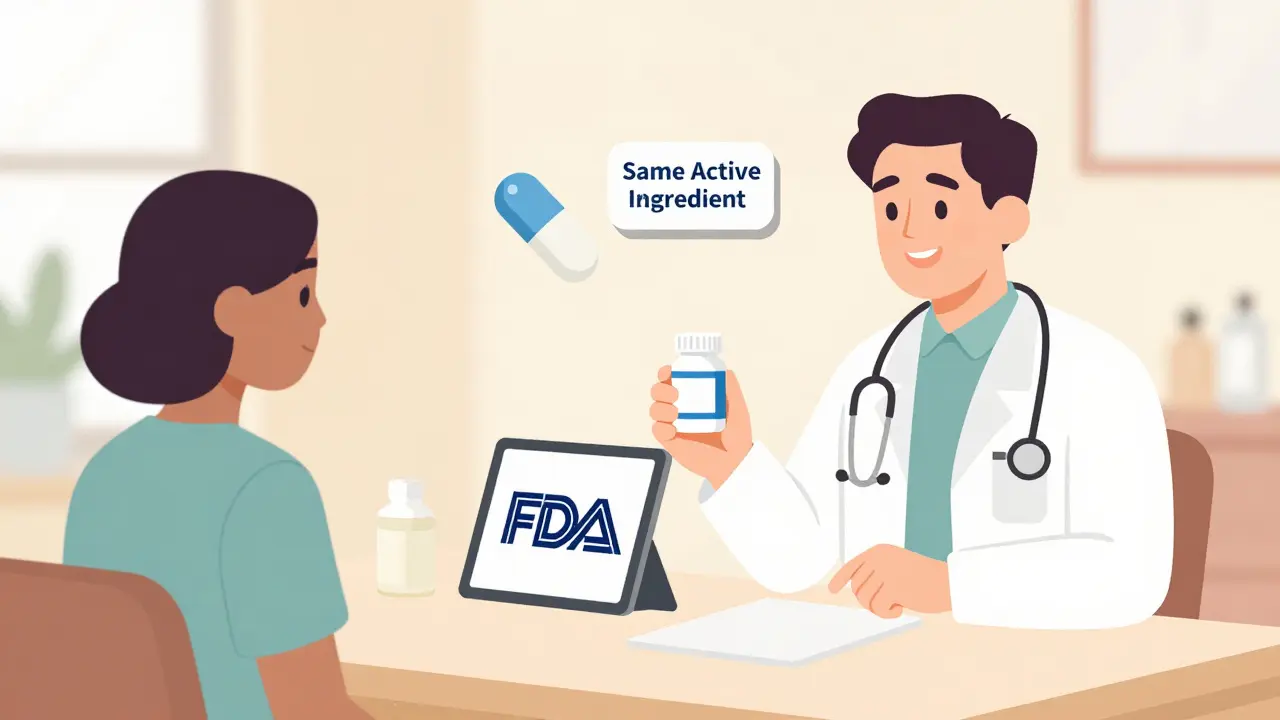
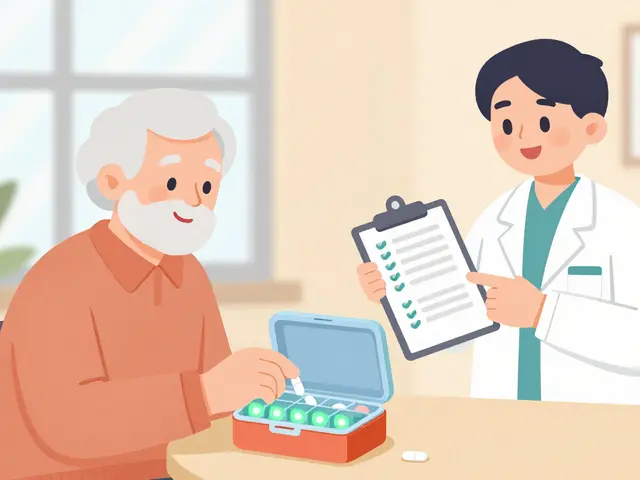
When your doctor hands you a prescription for a generic drug, you might not think twice-unless they say nothing at all. That silence speaks louder than any label. Many patients assume generic medications are inferior, cheaper versions of the real thing. But the truth? The generic medications you’re given are held to the same strict standards as brand-name drugs. The problem isn’t the pills-it’s the conversation-or lack of one-that happens before you leave the office.
The Gap Between Science and Perception
The FDA requires generic drugs to deliver the same active ingredient, in the same strength, and with the same effect as their brand-name counterparts. The bioequivalence range? 80% to 125%. That means a generic drug must perform within a tiny margin of the original. In lab tests and real-world use, they’re identical. But patients don’t believe that. A 2015 study found nearly 30% of people thought brand-name drugs worked better. Over half said their doctor never even brought up generics. That’s not ignorance-it’s a communication failure.It’s not about price. Even when patients know generics cost 80% less, many still refuse them. Why? Because they’ve been conditioned to think brand = better. Drug companies spent decades marketing that idea. But here’s the kicker: research shows the single biggest factor in whether someone accepts a generic isn’t cost, education, or even their income-it’s what their clinician says.
What Actually Works in Communication
Not all talk about generics is created equal. Saying “We can switch you to a cheaper version” doesn’t cut it. Patients hear: “This is the backup option.” That triggers doubt. Effective communication has three parts: authority, confidence, and anticipation.First, authority. Patients need to know the FDA didn’t cut corners. Explain the 80-125% bioequivalence standard. Mention that generics go through the same manufacturing inspections as brand-name drugs. Don’t assume they know this. Most don’t.
Second, confidence. Avoid phrases like “Let’s try this and see how it goes.” That implies uncertainty. Instead, say: “This generic is just as effective as the brand. I prescribe it to all my patients, including myself.”
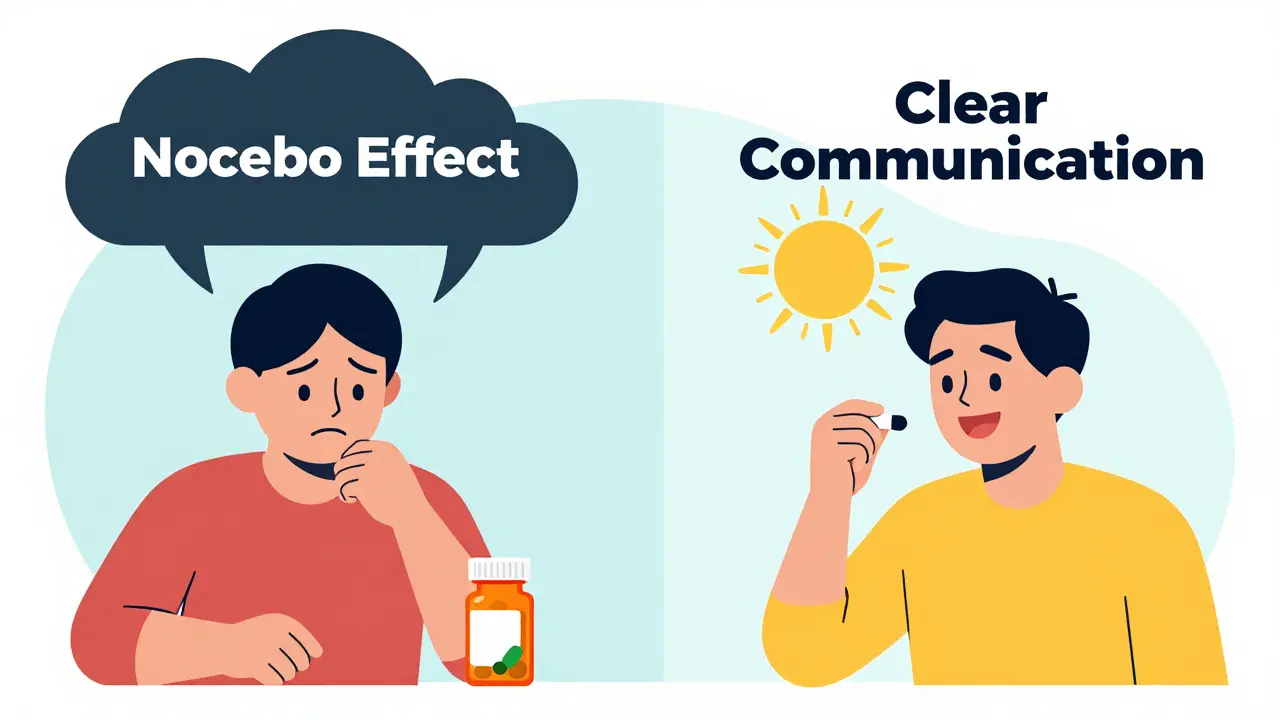
Third, anticipation. Some people feel side effects after switching-not because the drug changed, but because they expected to. This is called the nocebo effect. A 2019 JAMA study showed patients who got clear, reassuring explanations had 28% fewer reported side effects after switching to generics. When a pharmacist says, “Some people react to generics,” they’re not helping-they’re planting the seed of fear.
Who’s Most Affected-and Why
Communication doesn’t work the same for everyone. Non-Caucasian patients are 1.7 times more likely to distrust generics. Patients with incomes under $30,000 are over twice as likely to insist on brand names. These aren’t random preferences. They’re shaped by history, access, and mistrust in systems that haven’t always served them well.One 2021 study found culturally tailored communication reduced skepticism by 41% in these groups. That means using language they relate to, acknowledging their concerns without dismissal, and sometimes even showing them the FDA’s own materials in their native language. It’s not just about facts-it’s about respect.
One patient on Reddit shared: “My cardiologist spent 10 minutes showing me the FDA data, told me he takes generics too, and didn’t rush. I’ve been on it for two years. No issues.” That’s the kind of moment that changes behavior. Contrast that with a Healthgrades review: “Pharmacist handed me a different pill. Said ‘some people react.’ I stopped taking it for three weeks.” One conversation made all the difference.
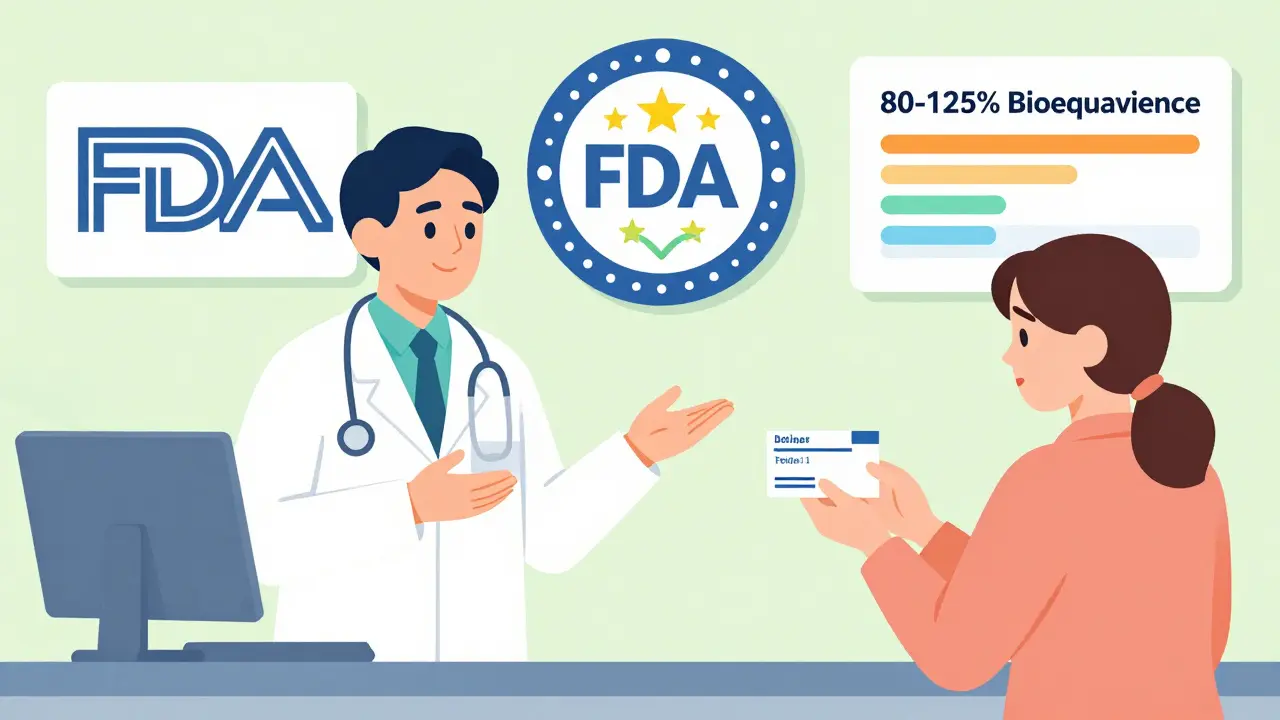
When Two Providers Talk, Acceptance Soars
A 2021 study tracked patient responses based on who spoke up. If only the doctor mentioned generics, acceptance was 76%. If only the pharmacist did, it was 72%. But when both talked-clearly, consistently, and together-acceptance jumped to 92%. That’s not coincidence. It’s reinforcement.Think about it: patients see their doctor once every few months. They see their pharmacist every time they refill. If the doctor says “This generic is fine,” but the pharmacist just swaps the bottle without comment, the message gets lost. But if the pharmacist says, “Your doctor chose this because it’s the same medicine, just cheaper,” and the doctor confirms it next visit, trust builds.
That’s why Kaiser Permanente’s “Generic First” program worked. They trained every clinician and pharmacist to use the same script. They embedded prompts in their electronic records. They didn’t just encourage communication-they made it part of the workflow. Result? 94% of prescriptions filled were generics. Savings? $1.2 billion a year.
Barriers That Keep Clinicians Silent
So why don’t more providers talk about this? Three big reasons: time, knowledge, and fear.On average, doctors have just 1.2 minutes per patient to discuss meds. That’s not enough to explain bioequivalence. But here’s the fix: training. The American Pharmacists Association developed a 15-minute module that cut communication time by 38% while boosting patient understanding from 42% to 87%. It’s not about length-it’s about clarity.
Then there’s knowledge gaps. A 2019 survey found only 54% of physicians could correctly answer a basic question about FDA bioequivalence standards. If you’re unsure yourself, you won’t speak up. That’s why ongoing education matters.
And fear? Some clinicians worry about backlash. “What if the patient says no?” But research shows most patients will accept generics-if they feel heard. The real risk isn’t refusal. It’s silence.
The Bigger Picture: Why This Matters
Generics make up 90% of all prescriptions in the U.S.-but only 23% of drug spending. That’s $37 billion saved every year. Yet brand-name preference requests have doubled since 2010. Why? Because as more complex generics enter the market-like inhalers, injectables, and biosimilars-patients will need more reassurance, not less.The FDA, AMA, and CMS are now pushing for standardized communication tools. Epic Systems rolled out a “Generic Confidence Score” in 2024 that nudges clinicians to cover key points during EHR visits. Medicare is starting to tie reimbursement to communication quality. This isn’t just about saving money. It’s about ensuring people get the right treatment without fear holding them back.
What You Can Do
If you’re a patient: ask. “Is there a generic version? Is it really the same? Why?” You deserve to know. If you’re a clinician: don’t assume they know. Don’t rush. Use clear language. Share the FDA’s free materials. Say it like you mean it.Generics aren’t second-rate. They’re science-backed, cost-effective, and just as safe. But they need someone to say it out loud-with confidence, care, and clarity.
Why do some patients think generic medications are less effective?
Many patients believe generics are inferior because of decades of marketing by brand-name drug companies that implied higher quality. Patients often equate price with value-assuming a cheaper pill must be weaker. Studies show this is a misconception. The FDA requires generics to have the same active ingredients, strength, and performance as brand-name drugs, with a bioequivalence range of 80-125%. The difference is in packaging and cost, not clinical effect.
Does the way a clinician talks about generics really affect whether a patient takes them?
Yes, dramatically. A 2011 study found patients who received clear communication from their provider were 37% more likely to accept and stick with a generic medication. When clinicians use confident, reassuring language-like “This is the same medicine, just less expensive”-patients trust the switch. Vague or hesitant phrases like “Let’s try this and see” increase doubt and lead to non-adherence.
What is the nocebo effect in relation to generic medications?
The nocebo effect happens when a patient expects to feel side effects-and then actually does, even if the drug hasn’t changed. In one JAMA study, patients who were told generics might cause problems reported 28% more symptoms after switching, even though the medication was identical to the brand. Poor communication creates fear, and fear triggers real physical reactions. Clear, positive messaging reduces this effect.
Are generic medications really as safe and effective as brand-name ones?
Yes. The FDA requires generic drugs to meet the same strict standards as brand-name drugs. They must contain the same active ingredient, in the same dose, and deliver the same therapeutic effect. Bioequivalence testing ensures they work within a 80-125% range of the original. Thousands of studies confirm no meaningful difference in safety or effectiveness. The only differences are inactive ingredients (like fillers) and cost.
Why do some patients prefer brand-name drugs even when generics are available?
Beyond marketing, cultural factors, income, and past experiences play a role. Patients with lower incomes may have had bad experiences with underfunded health systems and associate cheaper with lower quality. Non-Caucasian patients are 1.7 times more likely to distrust generics due to historical inequities in healthcare. Without tailored communication, these beliefs persist-even when cost savings are clear.
How can pharmacists and doctors work together to improve generic acceptance?
When both providers deliver consistent, clear messages, patient acceptance jumps to 92%. Doctors should explain the switch during visits using simple, confident language. Pharmacists should reinforce that message at pickup: “Your doctor chose this generic because it’s identical to the brand, and it saves you money.” Using the same terms, sharing FDA materials, and documenting the conversation helps build trust. Tools like Kaiser Permanente’s standardized scripts have proven this approach works.
What should a clinician say when switching a patient to a generic?
Say: “This generic has the same active ingredient and works exactly like your brand-name drug. The FDA requires it to meet the same safety and effectiveness standards. It’s been tested in thousands of patients and saves you about 80% on cost. I prescribe this to all my patients, including myself. If you notice anything unusual, let me know-but most people don’t notice any difference.”
Are there any situations where generics might not be appropriate?
For the vast majority of medications, generics are equally safe and effective. However, for certain narrow-therapeutic-index drugs-like some epilepsy, thyroid, or blood thinner medications-small differences in absorption can matter. In these cases, clinicians may choose to stick with a brand-name drug, but only after careful evaluation and discussion with the patient. Even then, many generics are now approved for these uses. The key is individualized decision-making, not blanket assumptions.

Andrew N
January 7, 2026 AT 04:59Let me break this down for you. The FDA bioequivalence range of 80-125%? That’s not a typo. That’s math. A 25% variance means a generic could technically be half as potent or 25% more potent than the brand. That’s not identical. That’s a gamble. And no, I don’t trust the FDA’s inspections either-they’re underfunded and overworked. This whole post is just pharma propaganda dressed up as science.
Sai Ganesh
January 7, 2026 AT 14:13In India, we’ve been using generics for decades. My grandfather took them for hypertension for 20 years. No issues. But here’s the thing-no one ever explained it to him. He just trusted the pharmacist. That’s the real problem. Not the drug. The silence. People don’t need a lecture. They need to feel like they’re not being sold something second-rate.
LALITA KUDIYA
January 8, 2026 AT 00:22my mom switched to generic lisinopril last year and now she says she feels better 😊 i think it’s because the doctor actually sat down and showed her the FDA page. not just said ‘it’s cheaper’
Poppy Newman
January 8, 2026 AT 17:15sooo… the nocebo effect is basically psychological placebo in reverse?? 😮 i love this. like, if you tell someone their coffee is decaf but it’s not, they still feel jittery. same energy here. we’re all just walking around with expectations like invisible scripts. wild.
Rachel Steward
January 9, 2026 AT 14:12Let’s not romanticize this. The fact that 30% of people still believe generics are inferior proves the system is broken. But blaming clinicians is lazy. The real issue is that drug companies spent $20 billion on direct-to-consumer ads for brand-name drugs while generics got zero marketing. This isn’t about communication-it’s about corporate manipulation. And now we’re supposed to fix it with a 15-minute module? Pathetic.
Also, the ‘94% generics’ stat from Kaiser? That’s because they’re a closed system. They control the narrative. In the real world? People still get handed pills in a different color and panic. You can’t talk your way out of a culture of fear built by billion-dollar ad campaigns.
Anastasia Novak
January 10, 2026 AT 04:55Ugh. I just got handed a generic version of my antidepressant and I swear I felt worse for two weeks. It’s not in my head. I’m not ‘noceboing’ myself. My therapist said the same thing-‘it’s probably just your brain.’ But my body didn’t get the memo. And now I’m on a different brand because I can’t afford to keep risking my mental health on some cheap pill that looks like a gummy bear.
Don’t tell me to trust the FDA. I’ve seen what happens when you trust systems that don’t care about you.
Jonathan Larson
January 11, 2026 AT 11:34The ethical imperative here is not merely clinical-it is epistemological. The patient’s belief system is not a defect to be corrected but a phenomenological reality that must be honored. To dismiss the perception of inferiority as mere ignorance is to replicate the very power asymmetry that perpetuates health disparities. The clinician’s role is not to persuade, but to co-construct meaning through dialogic humility. The data is clear; the humanity is not optional.
Alex Danner
January 11, 2026 AT 16:27I’m a pharmacist. I’ve been doing this for 18 years. I’ve seen people cry because they think their meds are ‘fake.’ I’ve also seen them breathe easier when I say, ‘This is the exact same medicine your doctor ordered. The only difference is the company name and the price.’ I hand them the FDA’s generic drug fact sheet. I point to the lot number. I say, ‘Your doctor chose this because it’s just as good.’ And guess what? 9 out of 10 say ‘oh.’ That’s it. No lecture. No jargon. Just clarity and calm.
Don’t overcomplicate it. People aren’t stupid. They’re scared. And fear doesn’t need facts-it needs a voice that doesn’t sound like it’s rushing to the next patient.
Elen Pihlap
January 13, 2026 AT 10:56but what if your doctor doesn’t even know the difference between generic and brand? i asked mine and they just said ‘oh yeah, they’re the same’ and walked out. so now i’m stuck wondering if i’m taking poison or not. why is this so hard?
Paul Mason
January 13, 2026 AT 19:03yo i live in the UK and we use generics ALL THE TIME. no one bats an eye. we don’t have this brand-name worship here. it’s just medicine. maybe if US doctors stopped acting like they’re selling luxury cars and started acting like they’re doctors, we’d all be better off.
Katrina Morris
January 15, 2026 AT 11:10just wanted to say thank you for this post. i’m a nurse and i’ve been trying to tell my coworkers we need to talk more about generics but everyone’s too busy. this gave me the words i needed. also i misspelled ‘bioequivalence’ three times while typing this but you get the point 😅
steve rumsford
January 16, 2026 AT 00:15generic = same stuff, cheaper packaging. end of story. why are we making this a therapy session?
Anthony Capunong
January 17, 2026 AT 21:28America’s biggest problem isn’t generic meds-it’s that we let corporations tell us what’s good for us. If this was a Chinese or Russian drug, people would be screaming about safety. But since it’s made in the same FDA-approved plant as the brand? Suddenly it’s fine. Hypocrites.