
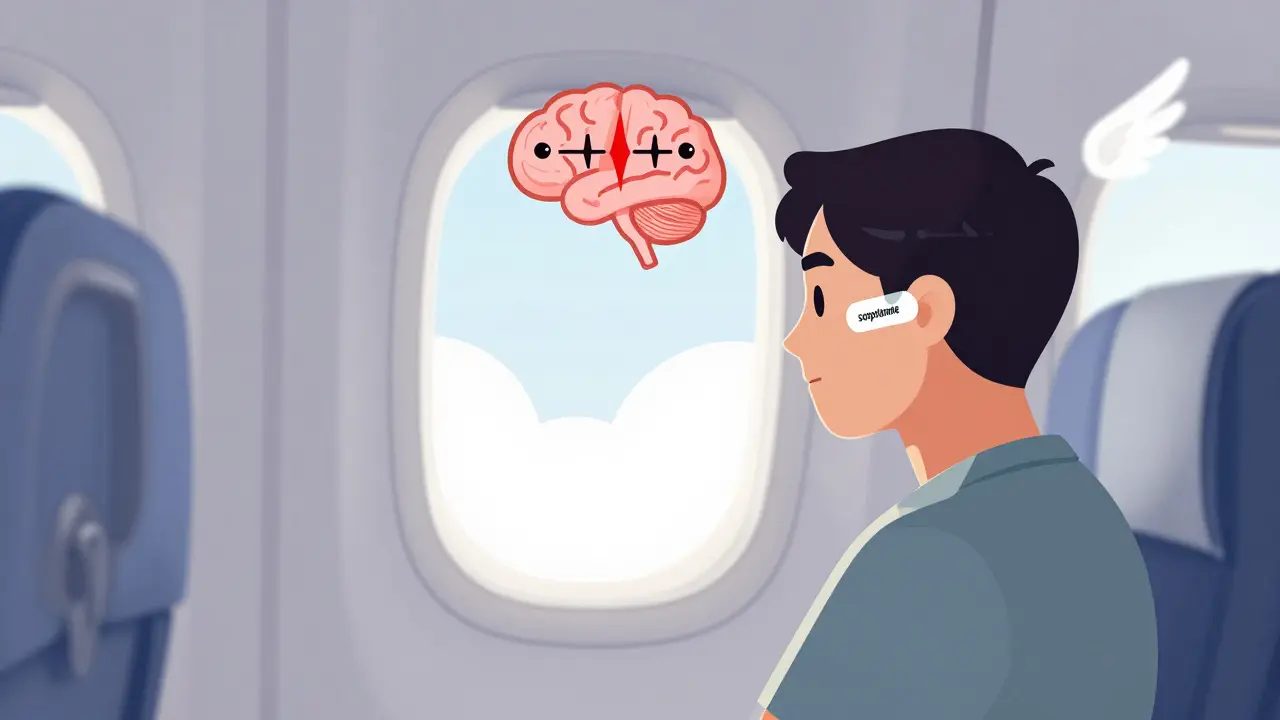
Traveling can be exciting, but motion sickness and jet lag can turn a dream trip into a nightmare. Millions of people deal with nausea, dizziness, and sleep disruption every year-not because they’re weak, but because their bodies haven’t caught up with their destinations. The good news? Medications can help. The bad news? Taking them wrong can make things worse. This isn’t about popping pills and hoping for the best. It’s about knowing when, how much, and who should use what-and what to avoid at all costs.
Understanding Motion Sickness and Why Medications Work
Motion sickness happens when your brain gets mixed signals. Your eyes see movement, your inner ear feels it, but your body doesn’t match what’s happening. That mismatch triggers nausea, sweating, and vomiting. It’s not just for kids or first-time cruisers. About 1 in 3 adults get it on planes, boats, or even roller coasters.
The most common meds for this are antihistamines like dimenhydrinate (Dramamine) and meclizine (Bonine), plus scopolamine patches. They work by calming the part of your brain that controls nausea. But they don’t all act the same. Dramamine kicks in fast-about 30 minutes after you take it-but makes you sleepy in up to 35% of users. Bonine takes longer to start working (around 45 minutes), but only 18% of people feel drowsy. That’s why many travelers prefer it for long drives or flights where staying alert matters.
Then there’s the scopolamine patch (Transderm Scop). It’s applied behind the ear at least 4 hours before travel and lasts up to 72 hours. It’s the most effective for extended trips-like cruises or road trips over 6 hours-with 75% success rates. But it’s not for everyone. About 22% of users get dry mouth, 15% report blurred vision, and older adults (over 65) sometimes get confused or disoriented. If you have glaucoma, don’t use it. Period. The patch can raise eye pressure and trigger sudden vision loss.
Jet Lag: When Your Clock Is Out of Sync
Jet lag isn’t just being tired. It’s your internal clock-controlled by light, hormones, and sleep cycles-being yanked across time zones. Crossing five or more time zones? Over 90% of travelers feel it. Symptoms include insomnia, daytime fatigue, brain fog, and stomach upset. Medications can help reset your rhythm, but timing is everything.
Melatonin is the first-line treatment. It’s a hormone your body naturally makes at night. Taking 0.5 to 5 mg about 30 minutes before your target bedtime at your destination helps signal it’s time to sleep. Surprisingly, 0.5 mg works just as well as 5 mg for most people-and causes fewer side effects. Some users report weird dreams or mild disorientation, especially if they drink alcohol while taking it. Avoid mixing them. Alcohol makes melatonin less effective and increases dizziness.
For tougher cases, doctors sometimes prescribe zolpidem (Ambien) or eszopiclone (Lunesta). These are sleep aids that work fast. Zolpidem helps 72% of travelers fall asleep faster, but 4.3% report next-day grogginess. Worse, 1.8% have sleepwalking episodes. That’s dangerous on a plane or in a hotel room. Never take these during a flight. The CDC warns they can impair your reaction time enough to cause emergencies if you need to move quickly.
Stimulants like modafinil are sometimes used for daytime alertness, but they’re not for casual travelers. With a half-life of 12-15 hours, taking it after noon can wreck your night’s sleep. Stick to melatonin unless you’re a frequent international traveler with a doctor’s guidance.
Comparing Medications: What Works Best for You
Choosing the right med depends on your trip, your body, and your tolerance for side effects. Here’s how the top options stack up:
| Medication | Type | When to Take | Effectiveness | Common Side Effects | Key Warnings |
|---|---|---|---|---|---|
| Dimenhydrinate (Dramamine) | Antihistamine | 30-60 min before travel | 67% | Drowsiness (35%), dry mouth | Avoid driving for 6 hours after |
| Meclizine (Bonine) | Antihistamine | 1 hour before travel | 60% | Drowsiness (18%), mild dizziness | Less sedating than Dramamine |
| Scopolamine patch | Anticholinergic | At least 4 hours before | 75% | Dry mouth (22%), blurred vision (15%) | Not for glaucoma or elderly with dementia |
| Promethazine (Phenergan) | Phenothiazine | 1-2 hours before | 70% | Severe drowsiness (40%), dizziness | Black box warning: never for children under 2 |
| Melatonin (0.5-5 mg) | Hormone | 30 min before target bedtime | 58% | Weird dreams (29%), mild disorientation | Avoid with alcohol |
| Zolpidem (Ambien) | Hypnotic | At destination, right before sleep | 72% | Sleepwalking (1.8%), next-day grogginess (4.3%) | Never use on planes or before driving |
For short trips under 6 hours, Bonine is often the safest pick. For long cruises or road trips, the scopolamine patch wins-but only if you’re under 65 and don’t have eye issues. For jet lag, melatonin is the clear winner for most people. Save zolpidem for extreme cases and only if your doctor says it’s okay.

Timing Is Everything
Taking a pill at the wrong time can ruin your trip-or make you sick. Here’s the simple rulebook:
- Motion sickness: Take Dramamine 30-60 minutes before boarding. Bonine? One hour before. Scopolamine patch? Apply it at least 4 hours before you move.
- Jet lag: For eastward travel (like New York to Paris), get morning light and take melatonin at bedtime in your new time zone. For westward travel (like Tokyo to LA), get evening light and take melatonin in the morning. Don’t guess-use the CDC’s phase response curve chart.
- Caffeine: Avoid coffee, tea, or energy drinks after 2 p.m. local time. Caffeine lasts 5 hours and delays sleep adjustment.
- Driving: Don’t drive for 6 hours after taking Dramamine, 8 hours after promethazine, and 24 hours after removing a scopolamine patch. Even if you feel fine, your reflexes are slower.
Many travelers skip the prep and end up taking meds mid-trip. That’s too late. These aren’t instant fixes. They need time to build up in your system.
What Not to Do
Some habits are dangerous and common. Don’t:
- Give promethazine to a child under 2. It can stop breathing.
- Use scopolamine if you have glaucoma, an enlarged prostate, or dementia. Side effects can be severe.
- Combine melatonin with alcohol. It increases confusion and dizziness.
- Take zolpidem on a plane. Emergency response teams report cases where travelers couldn’t respond to safety instructions.
- Use Zyrtec, Claritin, or Allegra for motion sickness. They’re non-sedating antihistamines-and they don’t work for nausea.
Also, don’t assume natural means safe. Melatonin is a hormone. Taking too much (over 5 mg) doesn’t help-it just increases side effects. Stick to 0.5-3 mg unless your doctor says otherwise.
Real Stories, Real Risks
Reddit users on r/travel report scopolamine patches saved their 7-day cruise-but 1 in 3 had to carry Biotene spray because dry mouth was unbearable. Amazon reviews for Bonine praise its low drowsiness, but many say it takes longer to kick in than Dramamine. On Drugs.com, melatonin scores better than zolpidem, but nearly a third say they had strange dreams.
One 72-year-old woman on CruiseCritic said she got confused after her scopolamine patch and thought she was back home. She needed help finding her cabin. Elderly travelers are at higher risk for cognitive side effects. Always tell your doctor if you’re over 65.
What’s New in 2026?
Science is catching up. In May 2024, the FDA approved a new scopolamine buccal film that’s absorbed through the cheek. It delivers less drug into the bloodstream, which may mean fewer side effects. Early trials show promise.
Also, new drugs targeting NK1 receptors (neurokinin-1) are in Phase III trials. These are non-sedating and 78% effective in stopping nausea-no drowsiness. They’re not on the market yet, but they could replace antihistamines in the next few years.
The CDC’s 2025 Yellow Book draft now emphasizes personalized melatonin timing based on your body’s light response. No more one-size-fits-all advice.
When to Skip Medication Altogether
Before you reach for a pill, try these proven non-drug fixes:
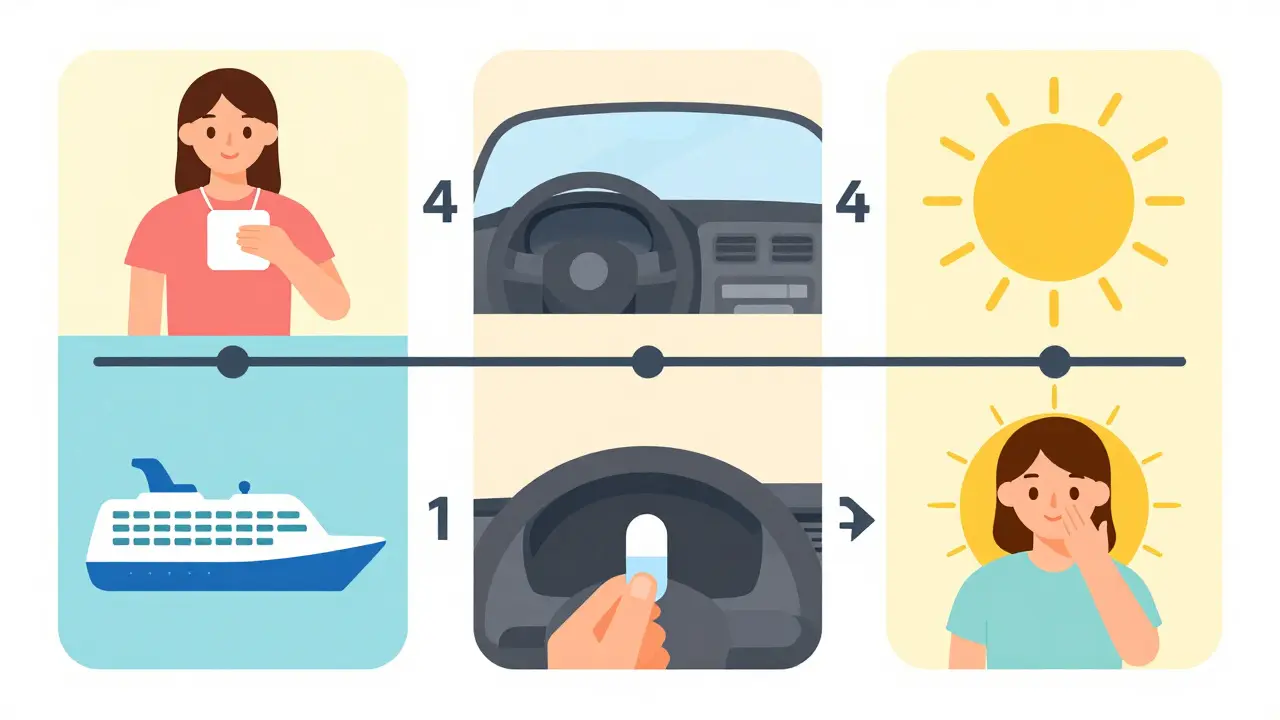
- For motion sickness: Sit over the wing on a plane. Look at the horizon. Avoid reading. Chew gum. Ginger candies help some people.
- For jet lag: Get sunlight at your destination. Walk outside at sunrise or sunset. Avoid screens an hour before bed. Stay hydrated.
For mild motion sickness, these tricks work better than pills-and cost nothing. For jet lag, light exposure resets your clock faster than any pill.
Medication should be your backup-not your first move.
Can I take motion sickness and jet lag meds together?
Generally, no. Motion sickness meds like Dramamine or scopolamine cause drowsiness. Jet lag meds like melatonin or zolpidem also affect sleep. Combining them can lead to extreme drowsiness, confusion, or impaired coordination. If you need both, space them out by at least 4 hours and only do it under a doctor’s supervision.
Is melatonin safe for long-term use during frequent travel?
Yes, for most people. Melatonin is a natural hormone, and short-term use (a few weeks) is well-studied and safe. There’s no evidence it causes dependence. But if you’re traveling every month, talk to your doctor. Long-term use without monitoring could mask underlying sleep disorders.
Why does the scopolamine patch cause dry mouth?
Scopolamine blocks acetylcholine, a chemical that tells your body to produce saliva. Less acetylcholine = less saliva. This is a known side effect, not an allergy. Sucking on sugar-free hard candy or using saliva substitutes like Biotene can help. If dry mouth is severe, switch to meclizine or try non-medication methods.
Can I use Dramamine for jet lag?
No. Dramamine is designed to stop nausea from motion, not reset your internal clock. It won’t help you fall asleep at the right time. In fact, its sedating effect might make you sleep at the wrong time, worsening jet lag. Use melatonin instead.
What should I do if I forget to take my scopolamine patch before travel?
If you’re already traveling and feeling sick, the patch won’t help much-it needs 4 hours to absorb. Switch to an oral option like meclizine (Bonine) or dimenhydrinate (Dramamine). But don’t apply the patch mid-trip. It can cause sudden dizziness or confusion if your body is already in motion. Better to wait until your next trip and plan ahead.
Are over-the-counter melatonin supplements regulated?
In the U.S., melatonin is sold as a dietary supplement, so the FDA doesn’t test its purity or dosage accuracy. Studies show many OTC brands contain 10-47% more melatonin than labeled. Look for products with USP Verified or NSF Certified labels-they’re tested for accuracy. Avoid unbranded or bulk supplements.
Next Steps: Your Travel Medication Checklist
Before your next trip, ask yourself:
- How many time zones will I cross? (More than 3? Plan for jet lag.)
- Will I be on a boat, plane, or car for more than 6 hours? (Scopolamine or Bonine might help.)
- Am I over 65 or have glaucoma? (Skip scopolamine.)
- Do I need to drive after landing? (Avoid sedating meds.)
- Have I tried light exposure and hydration first? (They’re free and effective.)
- Have I checked the expiration date on my meds? (Old pills lose potency.)
Traveling shouldn’t feel like a medical mission. But with smart planning, you can enjoy your trip without nausea, confusion, or grogginess dragging you down.


Allen Davidson
January 16, 2026 AT 08:20Been using Bonine for years on long road trips and it’s been a game changer. No more white-knuckling the wheel because I’m dizzy. Just take it an hour before and you’re golden. I don’t even need to nap during the drive anymore. Seriously, if you’ve never tried it, give it a shot. Dramamine is too heavy for most people.
Samyak Shertok
January 18, 2026 AT 06:08Oh wow so we’re now treating jet lag like it’s a glitch in the Matrix? Next you’ll tell me we can fix gravity with melatonin. I mean sure, take a hormone pill and pretend you’re a time traveler… but what about just… adapting? Humans evolved to survive without pills. Maybe the real problem is we’ve become too soft to handle time zones.
Melodie Lesesne
January 19, 2026 AT 04:23Love this breakdown! I used to just pop Dramamine and hope for the best. Now I stick to Bonine and always bring ginger chews. Also, the scopolamine patch thing? Scary. My aunt had a bad reaction and thought she was back in 1998. So weird. Definitely not for everyone. Light exposure is my new best friend though. Just walk outside when I land. No meds needed.
Corey Sawchuk
January 20, 2026 AT 18:56Good info. I’ve been using melatonin for years and it works fine. 1mg is enough for me. Don’t need 5mg. Also never take it with alcohol. Learned that the hard way. One time I woke up at 3am thinking I was in a different country. Turns out I was just in my own bed. But felt like I’d been abducted.
Rob Deneke
January 21, 2026 AT 08:48Don’t forget to check your meds’ expiration dates. I took some old Dramamine on a flight last year and it did nothing. Felt like a zombie for 12 hours anyway. Waste of money and energy. Always check the label. Also if you’re over 65 talk to your doctor before using any patch. Those things are not toys.
evelyn wellding
January 21, 2026 AT 10:42YESSSS this is the info I needed 😍 I was about to buy a whole box of Dramamine until I read this. Bonine for the win! And melatonin 0.5mg? Mind blown. I’ve been taking 5mg and wondering why I had nightmares about flying squirrels. Thanks for saving my next trip!! 🙌
Chelsea Harton
January 22, 2026 AT 14:35scopolamine patch bad for old people. duh. why do people still use it? also melatonin is not a drug. its a hormone. but people treat it like candy. stop.
Corey Chrisinger
January 23, 2026 AT 06:46It’s funny how we treat our bodies like machines you can tweak with pills. We’re not robots. We’re biological systems shaped by millennia of evolution. Maybe the real solution isn’t more chemistry… but more alignment. Sunlight. Silence. Stillness. The pill is just a bandaid on a wound we created by living out of sync.
Bianca Leonhardt
January 24, 2026 AT 12:51Wow. Someone actually took the time to write a useful post. Rare. Most people just say 'take melatonin' like it's magic. This is the only thing I've read that actually explains why things work and what the real risks are. Kudos. And yes, if you're over 65 and still using scopolamine patches? You're asking for trouble. Stop being reckless.
Travis Craw
January 25, 2026 AT 06:52Good stuff. I used to take zolpidem on flights cause I thought it’d help me sleep. Big mistake. Woke up confused and missed my connection. Now I just use melatonin and avoid caffeine after 2pm. Simple. Works. No drama. Also never take anything on a plane unless you’re sure you won’t need to move fast.
vivek kumar
January 25, 2026 AT 21:59Interesting how the FDA approved a buccal film for scopolamine. That’s actually smart. Less systemic absorption means fewer side effects. But I’m skeptical about NK1 receptor drugs. We’ve seen this before - promising phase III trials, then phase IV reveals hidden risks. Let’s wait for real-world data before celebrating.
Nick Cole
January 27, 2026 AT 15:24My dad had a bad reaction to promethazine when he was 70. Thought he was in a different house. Took 3 days to recover. Never again. This post saved me from making the same mistake. Thank you for the clarity. I’ll stick to light exposure and melatonin. No pills unless I absolutely have to.
Riya Katyal
January 28, 2026 AT 03:27Oh so now you’re telling me I can’t just take Dramamine and zolpidem together because ‘it’s dangerous’? Wow. What a shock. I’ve been doing it for years. I’m fine. Maybe your body is weak. Or maybe you’re just scared of a little chemistry.
Ryan Hutchison
January 29, 2026 AT 17:07Look, I’m American and I know what works. If you’re from India or Canada and you’re still asking questions about melatonin dosages, you’re doing it wrong. We’ve had this figured out for decades. Just take the pill. Don’t overthink it. This over-analysis is why other countries can’t travel right.
Christina Bilotti
January 31, 2026 AT 15:00How quaint. You think a Reddit post with a table is authoritative? The CDC doesn’t endorse melatonin as a first-line treatment - it’s a supplement. And you’re recommending it over prescription hypnotics? This is why people end up in ERs. You’re not a doctor. Don’t pretend you are. And for the love of science, stop using emoticons in medical advice.