
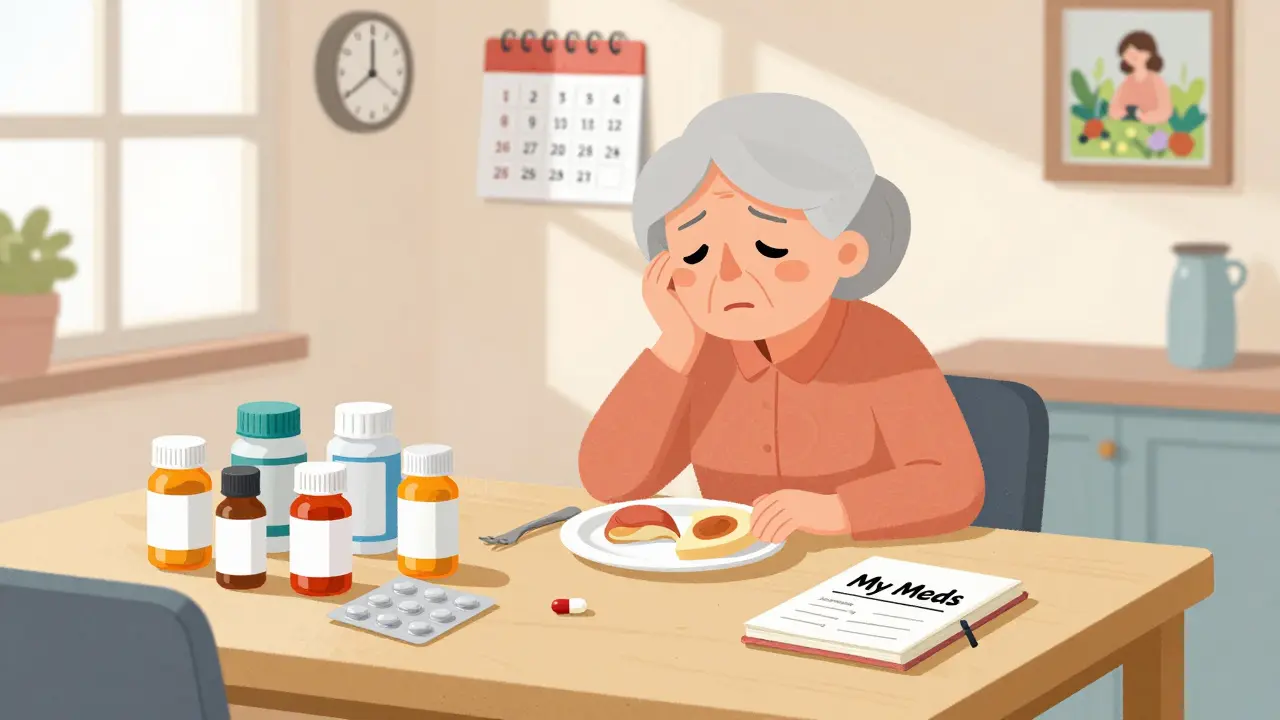
For many older adults, taking multiple pills every day isn’t just inconvenient-it’s exhausting. Imagine waking up, sitting at the kitchen table, and sorting through a dozen different pills: one for blood pressure, two for cholesterol, another for diabetes, plus a vitamin, a pain reliever, and maybe a sleep aid. By lunchtime, you’ve already forgotten if you took the morning dose. This is the reality of pill burden-the overwhelming number of medications seniors are asked to manage daily. And it’s not just about forgetting pills. It’s about confusion, side effects, cost, and fear. But there’s a simpler way: combination medications.
What Is Pill Burden, and Why Does It Matter?
Pill burden isn’t just a number. It’s the physical, mental, and emotional weight of managing multiple medications. For seniors, it often means juggling several prescriptions from different doctors, each with their own schedule. Some pills need to be taken with food, others on an empty stomach. Some must be spaced hours apart. The result? A lot of people skip doses, take the wrong ones, or just give up. Studies show that nearly half of seniors take five or more medications daily. That’s not unusual-it’s expected. But when you take more than four pills a day, your chance of missing a dose jumps sharply. And missing doses isn’t harmless. For conditions like high blood pressure or diabetes, even one skipped pill can raise your risk of stroke, heart attack, or hospitalization. The good news? You don’t have to live this way. Combination medications-where two or more drugs are packed into a single pill-are designed to cut that burden in half, sometimes even more.How Combination Medications Work
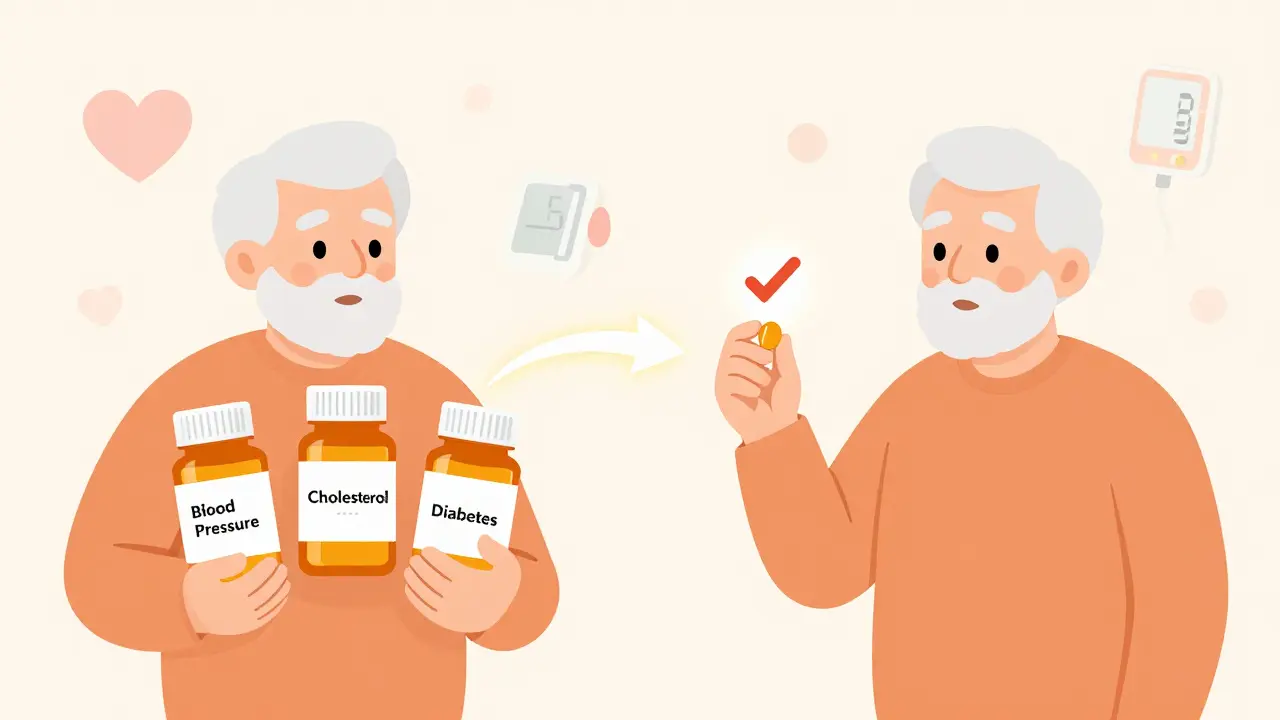
A combination medication, also called a fixed-dose combination (FDC) or single-pill combination (SPC), blends two or more active ingredients into one tablet or capsule. Think of it like a multivitamin-but instead of vitamins, it’s blood pressure medicine and a diuretic, or a statin and an antihypertensive. These aren’t new. They’ve been used for decades in HIV and tuberculosis treatment, where missing even one dose can lead to drug resistance. But now, they’re becoming standard for chronic conditions like high blood pressure, heart failure, and type 2 diabetes. For example, a common combination pill for high blood pressure might contain:- Losartan (an ARB)
- Hydrochlorothiazide (a diuretic)
Why Combination Pills Work Better
It’s not magic-it’s math. When you cut the number of pills, you cut the chance of forgetting. A major 2007 study in the American Journal of Medicine found that patients using combination pills were 26% more likely to stick to their regimen than those taking the same drugs separately. That’s huge. And it’s not just about adherence. It’s about results. In a 2023 analysis of over 80 studies, patients on single-pill combinations for high blood pressure saw:- A drop in systolic blood pressure by nearly 4 mmHg
- A drop in diastolic blood pressure by 1.5 mmHg
When Combination Pills Are the Best Choice
Combination medications aren’t right for everyone. But they’re a strong first choice for many seniors, especially when:- You’re on two or more drugs for the same condition (like high blood pressure or high cholesterol)
- Your doctor has already settled on the right doses and doesn’t expect to change them often
- You’ve had trouble remembering or sticking to your current regimen
- You’re taking the same meds every day, with no need for daily adjustments
What’s Not So Great About Combination Pills
There’s a flip side. The biggest downside? Rigidity. If you’re on a combination pill and your doctor wants to increase your blood pressure dose, you can’t just adjust one part. You’re stuck with the fixed ratio. That’s fine if your numbers are stable. But if you’re still finding the right balance, starting with separate pills gives you more control. Also, if you develop a side effect from one drug in the combo, you can’t just stop that one. You have to stop the whole pill. That can be frustrating. For example, if you get a dry cough from an ACE inhibitor but tolerate the diuretic fine, you can’t keep the diuretic and ditch the cough-causing drug if they’re in one pill. That’s why doctors often start with single drugs first, then switch to a combo once the right doses are confirmed. But for many seniors already on stable meds, the combo is the smarter move.Cost and Convenience: The Hidden Benefits
You might think a pill with two drugs in it costs more. But it often costs less. Many combination pills are available as generics. That means they’re cheaper than buying two separate brand-name pills. Plus, you pay one co-pay instead of two. For seniors on fixed incomes, that adds up. There’s also less hassle for caregivers. No more sorting pills into daily boxes. No more checking if the right ones were taken. One pill, one time. Simpler for everyone. And here’s something you won’t hear often: fewer pills mean fewer questions from pharmacists. Less confusion. Less stress. That’s not just about money-it’s about dignity.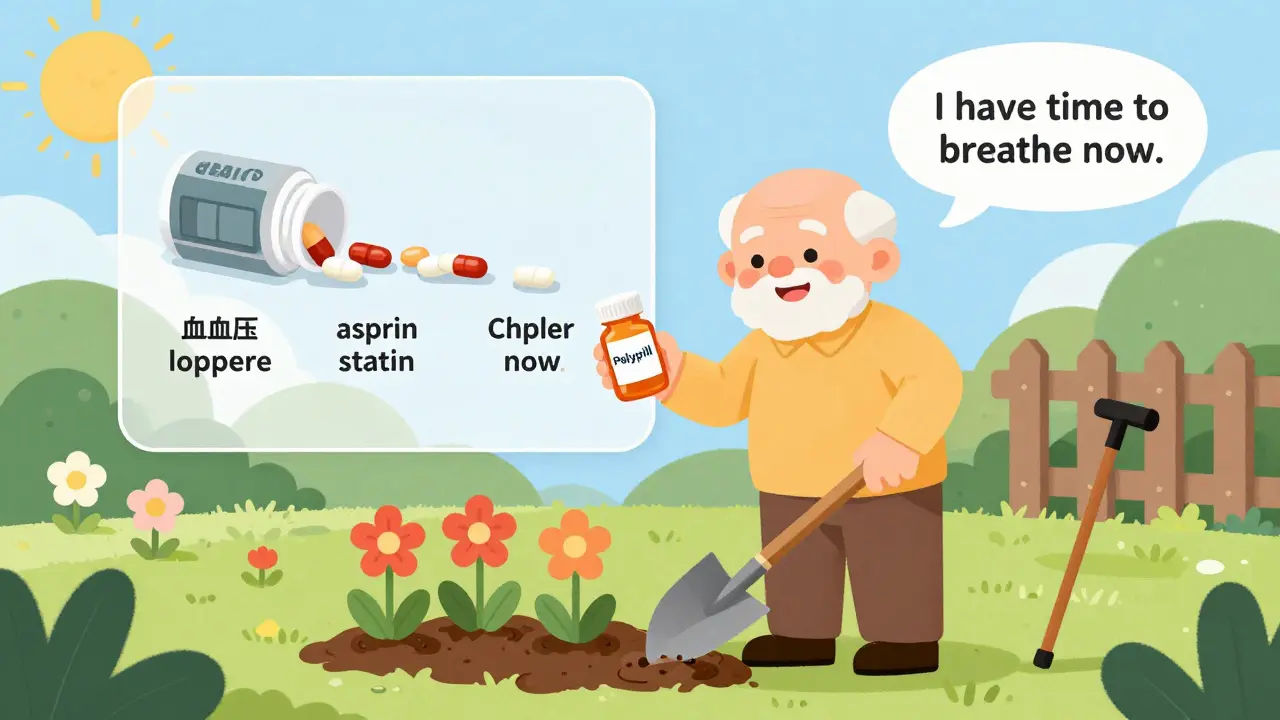
How to Talk to Your Doctor About Combination Pills
You don’t need to wait for your next appointment to ask. Bring it up next time you’re at the pharmacy or during a routine visit. Say something like:- “I’m having a hard time keeping track of all my pills. Are any of these available in a combination pill?”
- “I’ve heard about single-pill combinations for blood pressure. Could I switch to one of those?”
- “Would it be safe to try a combo pill instead of taking these two separately?”
What to Do Next
If you’re managing multiple medications:- Write down every pill you take, including dose and time of day.
- Look for any pairs of drugs that treat the same condition (like two blood pressure pills).
- Ask your doctor: “Is there a combination pill for these?”
- Check with your pharmacist: “Are these available as a combo? What’s the cost?”
- If you switch, give it a few weeks. Track how you feel. Are you forgetting less? Are side effects better or worse?
Real-Life Impact: Beyond the Numbers
One woman in her late 70s from Christchurch told her pharmacist she used to take 11 pills a day. After switching to three combination pills, she now takes just four. She says she sleeps better, doesn’t panic about missing doses, and even started gardening again. That’s what this is really about. It’s not just about pills. It’s about freedom. About not feeling like a walking pharmacy. About having energy to enjoy life instead of managing a daily medication checklist. The future of senior care isn’t more pills. It’s smarter pills. And combination medications are leading the way.Are combination medications safe for seniors?
Yes, when prescribed correctly. Combination medications undergo strict testing to ensure the drugs work safely together and deliver the same effect as taking them separately. Doctors usually start with single drugs to find the right dose, then switch to a combo once the regimen is stable. For seniors on multiple medications for chronic conditions like high blood pressure or diabetes, combination pills are often safer because they reduce the risk of missed doses, which can lead to serious health events.
Can I switch from my current pills to a combination pill on my own?
No. Never switch or stop your medications without talking to your doctor. Even if two drugs are available in a combo pill, the doses may not match what you’re currently taking. Your doctor needs to review your health, lab results, and side effects before making any change. Switching too quickly can cause blood pressure or blood sugar to become unstable.
Do combination pills cost more than buying separate pills?
Usually, they cost less. Many combination pills are available as generics, which are significantly cheaper than brand-name drugs. Even if the combo pill’s list price is higher, you pay only one co-pay instead of two or three. Many seniors save $20-$50 per month by switching. Always ask your pharmacist to compare the cost of your current regimen versus the combo option.
What if I have side effects from one drug in the combo?
That’s a common concern. If you develop a side effect from one component-like a cough from an ACE inhibitor-you can’t just stop that one drug. You’ll need to switch back to separate pills or try a different combo. Talk to your doctor right away. They may switch you to a different combination or adjust your treatment plan. Don’t ignore side effects just because the pill is convenient.
Are there combination pills for conditions other than high blood pressure?
Yes. While they’re most common for high blood pressure, cholesterol, and diabetes, combination pills are also used for epilepsy, HIV, Parkinson’s, and even mental health conditions like depression and schizophrenia. For example, some antipsychotic medications now come in long-acting injectable forms that reduce the need for daily pills. The goal is the same: simplify treatment to improve adherence and outcomes.
How do I know if I’m a good candidate for a combination pill?
You’re a good candidate if you’re taking two or more medications for the same condition, your doses are stable, you’ve had trouble remembering pills, or you’re paying multiple co-pays. If your doctor has been adjusting your doses often or you have allergies to one component, a combo may not be right yet. But if your treatment plan is settled, it’s worth asking. Many seniors benefit greatly from the simplicity.

Cameron Hoover
December 22, 2025 AT 17:27My grandma switched to combo pills last year and it changed everything. She used to have this giant pill organizer that looked like a science project. Now? One little blister pack in the morning, one at night. She says she finally remembers to take them-and she’s gardening again. I cried when she told me she felt like herself for the first time in years.
Stacey Smith
December 22, 2025 AT 18:03This is why America needs to stop letting big pharma rip us off. Single pills should be standard, not some luxury hack for the lucky few.
Ben Warren
December 24, 2025 AT 06:16While the premise of fixed-dose combinations is statistically sound, the underlying assumption-that patient adherence is primarily a function of pill count-ignores the complex pharmacokinetic and regulatory variables inherent in polypharmacy management. The FDA’s approval criteria for SPCs, while rigorous, do not account for inter-individual metabolic variability, nor do they mandate post-marketing surveillance of long-term drug-drug interactions in geriatric populations with multimorbidity. Furthermore, the economic incentive structure within Medicare Part D often disincentivizes formulary inclusion of combination therapies when generic monotherapies remain available at lower cost-per-unit. Therefore, the purported benefits of adherence improvement are, in many cases, conflated with convenience rather than clinical efficacy.
Teya Derksen Friesen
December 25, 2025 AT 09:39It’s remarkable how such a simple solution-reducing pill burden-can restore dignity to aging individuals. The psychological relief of not having to manage a pharmacy on your kitchen counter cannot be overstated. This isn’t just medicine. It’s a form of care.
Sandy Crux
December 26, 2025 AT 13:00...and yet, no one mentions that many of these "combination pills" are just rebranded generics with a slightly higher markup... and that the "polypill" hype? It’s mostly funded by pharmaceutical marketing teams with vested interests in reducing patient autonomy... and the fact that you can’t titrate doses? That’s not a feature-it’s a flaw... and don’t even get me started on the lack of long-term data in frail elderly populations... really, we’re celebrating this as progress?...
Hannah Taylor
December 28, 2025 AT 03:35my uncle took one of those combo pills and ended up in the er. they said it was "unforeseen interaction" but i think the docs just didnt check his other meds right. theyre pushing these pills like theyre magic beans. trust me, big pharma dont care if you live or die, they just want you to keep buying.
Sarah Williams
December 29, 2025 AT 02:47This is the kind of change that actually matters. Not flashy new drugs-just making life easier for people who’ve been through enough.
Theo Newbold
December 29, 2025 AT 02:52The 2007 study cited has a clear selection bias-it excluded patients over 80 and those with renal impairment, which are precisely the populations most in need of simplification. The 2023 meta-analysis conflates correlation with causation; improved adherence may stem from increased clinical follow-up rather than pill count reduction. Also, the blood pressure numbers cited-4 mmHg systolic-are statistically significant but clinically negligible in isolation. Real-world outcomes require holistic management, not pharmaceutical convenience.
Jay lawch
December 29, 2025 AT 18:27In India, we’ve had these combination pills for decades-called "patented fixed-dose combinations"-and they’re the reason our elderly live longer despite poor healthcare infrastructure. But here in the West, you’re still stuck in the 1990s, overprescribing single agents because doctors are too lazy to think in terms of integrated care. The real problem isn’t the pills-it’s the system that profits from complexity. Your doctors don’t want you to take fewer pills-they want you to keep coming back for more prescriptions. That’s not medicine. That’s a business model.
Cara C
December 29, 2025 AT 19:35Ben, your point about metabolic variability is valid. But that’s why doctors should screen before switching-not avoid the option entirely. And Hannah, I’m sorry your uncle had a bad experience. That’s why pharmacists need to be involved in med reviews. This isn’t about blind trust in pharma. It’s about smarter collaboration between patients, doctors, and pharmacists. If we focus on the process-not just the pill-we can make this work safely for everyone.