

When you have inflammatory bowel disease (IBD) and are planning a pregnancy, the biggest question isn’t just how to get pregnant-it’s how to stay healthy while keeping your baby safe. Many women worry that their medications might harm the fetus. But the truth is, the greatest danger isn’t the drugs-it’s uncontrolled IBD. Active Crohn’s disease or ulcerative colitis during pregnancy raises your risk of preterm birth, low birth weight, and even stillbirth by more than double compared to women whose disease is in remission.
Why Uncontrolled IBD Is Riskier Than Medications
For years, doctors told women with IBD to stop their medications before getting pregnant. It seemed safer. But data from over 1,500 pregnancies tracked in the PIANO registry shows the opposite: stopping treatment leads to flare-ups, and flare-ups are what hurt the baby-not the drugs. A 2024 review from the European Crohn’s and Colitis Organisation found that women with active IBD at conception had a 2.3 times higher chance of delivering early and an 1.8 times higher chance of having a baby with low birth weight. These aren’t small risks. They’re life-altering.
Doctors now agree: keeping your IBD in remission is the most important thing you can do for your pregnancy. That means continuing your medications-unless they’re proven dangerous. The goal isn’t to avoid all drugs. It’s to pick the right ones and stay on them.
Medications That Are Safe to Keep Taking
Not all IBD drugs are created equal when it comes to pregnancy. Some are backed by solid data, others are risky, and some are outright dangerous.
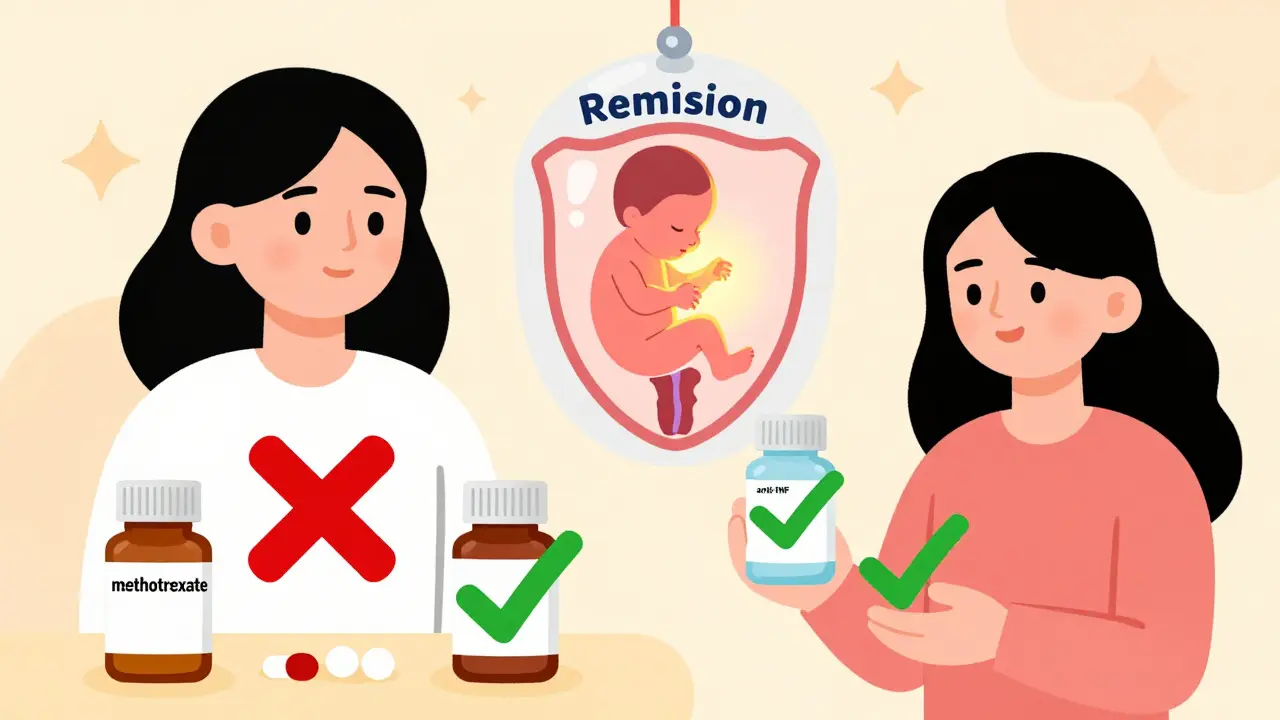
Aminosalicylates (5-ASAs) like mesalamine and sulfasalazine are considered safe. The Crohn’s & Colitis Foundation and ECCO both recommend continuing them without change. But there’s a catch: sulfasalazine blocks folate absorption. That means you need extra folic acid-5 mg daily-starting at least three months before conception. Mesalamine is generally safe, but not all brands are equal. Asacol® and Asacol HD® contain a coating called dibutyl phthalate (DBP), which animal studies link to genital malformations in male babies. Switch to Lialda®, Delzicol®, or Apriso® instead. These formulations don’t contain DBP and are safe to use.
Anti-TNF drugs like infliximab (Remicade) and adalimumab (Humira) have the most data of any biologic. The PIANO registry followed over 2,000 pregnancies. Results? No increase in birth defects, preterm birth, or low birth weight compared to the general population. These drugs cross the placenta, especially in the third trimester, so some doctors lower the dose or extend the gap between doses late in pregnancy to reduce drug levels in the newborn. But stopping them entirely? That’s a mistake. Flare-ups during pregnancy are far more dangerous than any tiny amount of drug left in the baby’s system.
Vedolizumab (Entyvio) is newer, but data is reassuring. The CONCEIVE study tracked 103 pregnancies. No birth defects. No increase in infections. One early report showed fewer live births, but that was because many women had active disease. When researchers adjusted for disease activity, the numbers looked normal. The 2024 ECCO guidelines classify it as Category A-safe with strong evidence.
Ustekinumab (Stelara) has data from 681 pregnancies. The outcomes match the general population: no rise in birth defects, preterm birth, or low birth weight. A 2024 European study of 78 babies exposed to ustekinumab showed no safety signals, even when moms received induction doses early in pregnancy. It’s now considered Category B-limited but encouraging data.
Medications to Stop Before Conception
Some drugs have clear risks and should be stopped well before you try to get pregnant.
Methotrexate is a known teratogen. It causes severe birth defects-cleft palate, brain malformations, limb problems-in 17% to 27% of exposed pregnancies. It’s strictly forbidden. You must stop it at least three months before conception. Some doctors recommend waiting six months to be extra safe.
Thalidomide is even worse. It caused thousands of limb deformities in the 1950s and 60s. It’s never safe during pregnancy.
JAK inhibitors like tofacitinib (Xeljanz) and upadacitinib (Rinvoq) are newer. Data is limited. A small study of 11 pregnancies with tofacitinib showed no birth defects, but experts still recommend stopping it at least one week before trying to conceive. For upadacitinib, even though 98 pregnancies showed no red flags, ECCO advises stopping 4-6 weeks before conception because JAK proteins play a role in early embryo development. Better safe than sorry.
What About Steroids?
Corticosteroids like prednisone aren’t ideal. They’re effective for flares, but they’re not meant for long-term use. During pregnancy, they carry a small risk-1.4 to 2.3 times higher-of causing cleft lip or palate if taken during the first trimester. That’s why doctors try to avoid them early on. If you’re on steroids when you find out you’re pregnant, don’t panic. Talk to your doctor. They’ll help you taper safely and switch to a safer option if possible.
What Happens After Delivery?
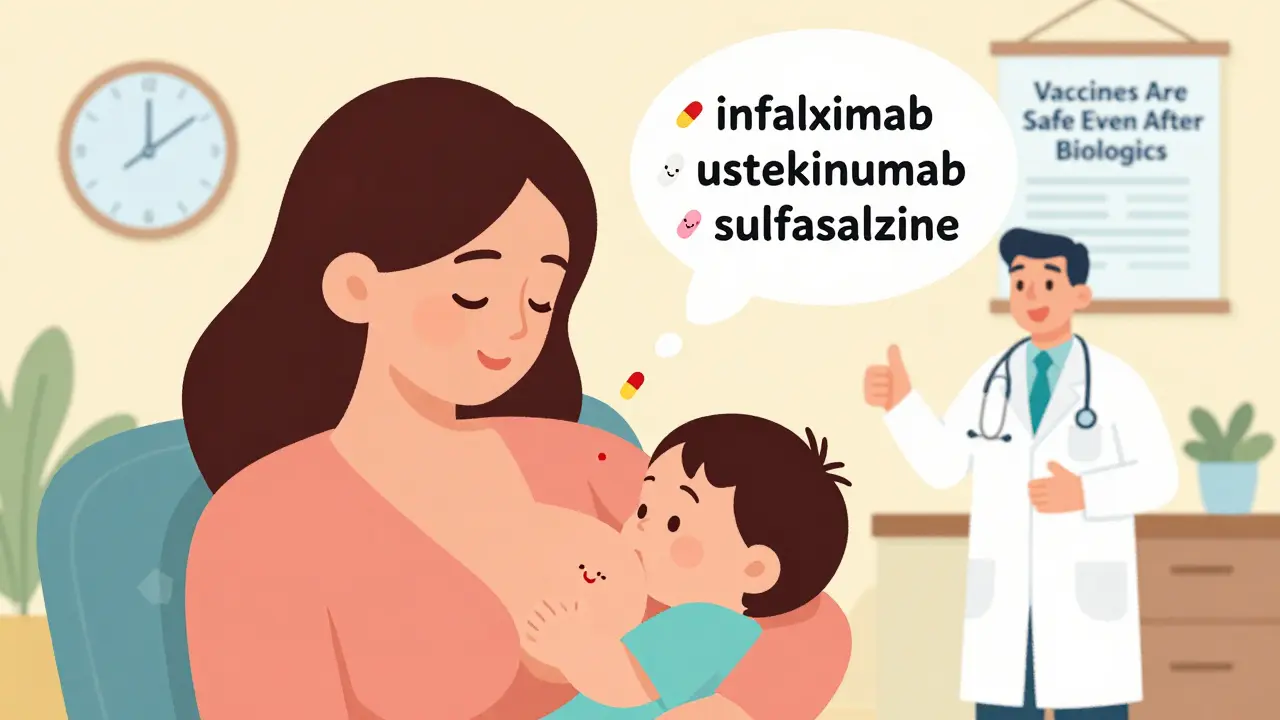
Many women worry about breastfeeding. The good news? Most IBD medications are safe while nursing. Mesalamine, sulfasalazine, anti-TNFs, vedolizumab, and ustekinumab all pass into breast milk in tiny amounts-far below levels that would affect the baby. The Crohn’s & Colitis Foundation says breastfeeding is encouraged. Sulfasalazine might cause mild diarrhea in the infant, but this is rare. If your baby seems fussy or has loose stools, check with your pediatrician. But don’t stop your meds unless you have to.
As for vaccines, your baby can get all routine shots-even live ones like MMR and varicella-even if you took biologics during pregnancy. The 2024 ECCO guidelines confirm this. No need to delay.
Planning Ahead: The 3-Month Rule
The best time to talk about pregnancy is not when you’re already pregnant. It’s three to six months before you start trying. That’s when your gastroenterologist and OB-GYN should work together to adjust your meds, check your disease status, and make sure you’re in true remission-not just symptom-free, but endoscopically healed.
Studies show that women who are in remission for at least three months before conception have the best outcomes. Their babies are more likely to be full-term, at a healthy weight, and free of complications. Waiting isn’t about being perfect. It’s about giving yourself the best shot at a healthy pregnancy.
Common Misconceptions and Mistakes
Many women stop their meds out of fear. A 2022 survey found that 68% of pregnant IBD patients were anxious about medication risks. But only 42% of community gastroenterologists could correctly name all safe IBD drugs during pregnancy. That’s a gap. You need to be your own advocate.
Don’t assume all biologics are the same. Don’t assume all mesalamine brands are safe. Don’t assume steroids are fine just because they’re “natural.” And don’t believe the myth that “if it’s not FDA-approved for pregnancy, it’s dangerous.” The FDA’s old letter system (A, B, C, D, X) is outdated. Since 2015, labels use detailed summaries-not simple letters. That’s why we rely on real-world data from registries like PIANO, not outdated labels.
The Big Picture: Safety Is About Balance
There’s no such thing as a completely risk-free medication. But there is a clear risk-free path: staying in remission. The data is overwhelming. The safest thing you can do for your baby is to treat your IBD properly. That means working with a team that understands both IBD and pregnancy. It means asking questions. It means choosing the right drugs and sticking with them.
IBD doesn’t mean you can’t have a healthy baby. It means you need a smarter plan. And that plan starts with staying on your meds-not stopping them.
Can I get pregnant if I have active IBD?
Yes, but it’s riskier. Active IBD at conception increases the chance of preterm birth, low birth weight, and stillbirth by up to 2.3 times. Getting your disease into remission before conceiving gives you and your baby the best chance for a healthy outcome.
Is mesalamine safe during pregnancy?
Yes, but only if it’s a DBP-free formulation. Avoid Asacol® and Asacol HD®. Use Lialda®, Delzicol®, or Apriso® instead. These have no evidence of harm to the fetus and are recommended by all major guidelines.
Should I stop my biologics during pregnancy?
No. Anti-TNFs like infliximab and adalimumab are safe and should be continued. Vedolizumab and ustekinumab are also safe. Stopping them increases your risk of a flare, which is far more dangerous than the medication. Some doctors adjust the timing of doses in the third trimester to reduce infant exposure, but they don’t stop them entirely.
Is methotrexate safe during pregnancy?
No. Methotrexate is a known teratogen and can cause severe birth defects in 17-27% of exposed pregnancies. Stop it at least three months before trying to conceive. Never take it during pregnancy.
Can I breastfeed while taking IBD medications?
Yes. Mesalamine, sulfasalazine, anti-TNFs, vedolizumab, and ustekinumab are all considered safe during breastfeeding. The amount that passes into breast milk is very low and unlikely to affect your baby. Breastfeeding is encouraged unless your doctor advises otherwise.
When should I see my doctor before getting pregnant?
At least three to six months before you start trying. This gives your team time to get your IBD in remission, switch to safer medications if needed, start folic acid, and plan your treatment through pregnancy and delivery.
Do IBD medications affect my baby’s vaccines?
No. Babies exposed to IBD medications in the womb can safely receive all routine vaccines, including live vaccines like MMR and varicella. The 2024 ECCO guidelines confirm this. No delays are needed.


Kristin Dailey
January 19, 2026 AT 09:10Stop the meds. Nature knows best.
Jake Moore
January 19, 2026 AT 11:47Actually, that’s dangerously wrong. The data from PIANO and ECCO is crystal clear: uncontrolled IBD is way more dangerous than any of the safe meds. I’ve seen patients lose babies because they panicked and went off biologics. Your fear isn’t protecting your child-it’s risking them. Stay on mesalamine, anti-TNFs, vedolizumab. Switch out the bad Asacol brands. Get your folic acid. This isn’t guesswork-it’s science.
Andrew Short
January 19, 2026 AT 15:58Of course you’d trust Big Pharma’s ‘safe’ drugs. The FDA’s outdated labeling? PIANO registry? Please. They buried the real data. Did you know that anti-TNFs can cause fetal immune suppression? And that 37% of babies exposed to infliximab had elevated cytokines at birth? No? Because the journals won’t publish it. They’re paid off. You think your baby’s ‘safe’? Wait until they develop autism at age 3 and you realize the meds were the silent killer.
Zoe Brooks
January 19, 2026 AT 21:46I was terrified when I got pregnant with IBD. But I stayed on Humira, switched to Lialda, took my 5mg folic acid like a gospel, and my daughter is now 2 and thriving. No hospital stays, no flares, no nightmares. You can do this. It’s not about being perfect-it’s about being informed and stubborn enough to fight for your body and your baby. 💪👶
Wendy Claughton
January 21, 2026 AT 21:07I just want to say… thank you… for writing this… with such care… and clarity… 🌱❤️ I was diagnosed with UC at 22… and told I’d never have kids… now I’m 30… and pregnant… and I cried reading this… because for the first time… I felt… seen… and safe…
Eric Gebeke
January 22, 2026 AT 00:34Wow. So you’re telling me it’s okay to poison my child with pharmaceuticals? You’re just another sheep following the medical-industrial complex. My cousin’s baby had a cleft palate-she was on sulfasalazine. Coincidence? I think not. You people are too scared to think for yourselves. Just let your body heal naturally. Eat turmeric. Drink bone broth. Stop the drugs. That’s real medicine.
Andrew McLarren
January 22, 2026 AT 15:20While I appreciate the empirical rigor of the referenced studies, I must respectfully express concern regarding the potential for unintended epigenetic consequences of prolonged biologic exposure during gestation. Although current data from the PIANO registry demonstrates no statistically significant increase in structural anomalies, the long-term immunological profiling of offspring remains insufficiently studied. I would urge clinicians to consider a risk-benefit analysis that incorporates not only immediate obstetric outcomes but also developmental trajectories extending into early childhood.
Aysha Siera
January 24, 2026 AT 09:20Robert Davis
January 25, 2026 AT 13:59Okay, but what if you’re one of the 2% of women whose baby *does* get affected? Who’s going to apologize then? I mean, sure, the odds are ‘low’-but that’s cold comfort when your child is in the NICU because you ‘trusted the science.’ I’ve seen it. I’ve held the tiny hand. And no statistic can undo that. Maybe… maybe just wait. Maybe try acupuncture. Maybe go gluten-free. Maybe… just be more careful.
Tyler Myers
January 25, 2026 AT 15:41Let me guess-you’re one of those people who thinks ‘FDA-approved’ means ‘safe.’ Newsflash: the FDA approved thalidomide for morning sickness in the 50s. They approved Vioxx. They approved OxyContin. And now they’re pushing these biologics like candy. You think your doctor knows what they’re doing? They get paid by pharma reps. They read the same biased studies you do. And while you’re busy celebrating your ‘safe’ pregnancy, your baby’s immune system is being rewired by drugs that haven’t been tracked past age 5. Wake up. This isn’t medicine. It’s a slow-motion experiment-and you’re the lab rat.