
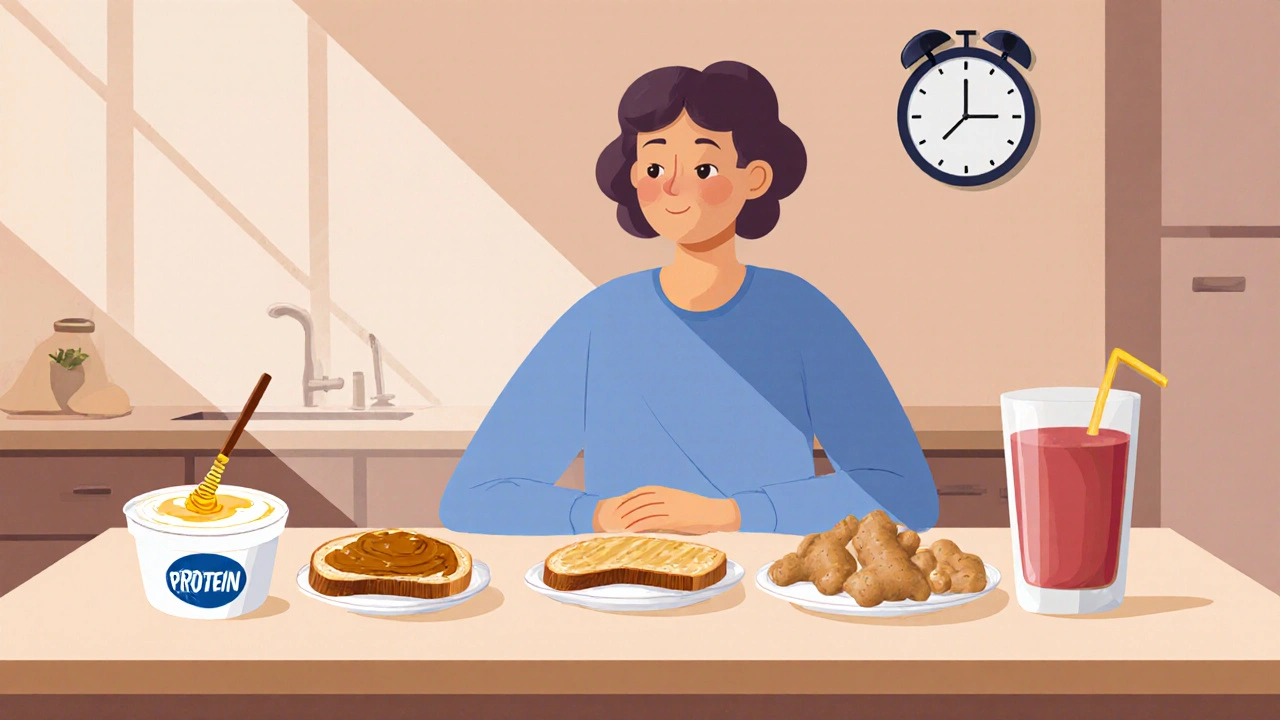
When you're going through chemotherapy, your body isn't just fighting cancer-it's also fighting the side effects of treatment. Nausea can hit hard, turning even your favorite foods into triggers. At the same time, you might notice the scale dropping, your clothes getting looser, and your energy fading. This isn't just about being tired. It's about your body losing muscle, not fat. And that can slow down your treatment, make you more vulnerable to infections, and reduce your chances of recovery.
Why Your Body Needs More Than Just Calories
Most people think eating well during chemotherapy means eating healthy-salads, whole grains, veggies. But that’s not enough. Chemotherapy changes how your body uses food. Your muscles break down faster. Your immune system needs more fuel. And your body burns through energy at a higher rate.Experts say you need 25-30 kcal per kilogram of body weight each day-up from the usual 20-25 for healthy adults. That’s a 20-30% increase. Protein needs jump even higher: 1.2 to 2.0 grams per kilogram daily. For someone weighing 70 kg (154 lbs), that’s 84-140 grams of protein a day. Compare that to the 56 grams recommended for a healthy person. This isn’t about getting fit. It’s about staying strong enough to finish treatment.
Without enough protein, your body starts eating itself. Muscle loss isn’t just about looking weaker. It’s linked to longer hospital stays, more infections, and even lower survival rates. Studies show that patients who maintain their weight and muscle mass during chemo are 8-12% more likely to survive certain cancers than those who lose weight.
Taming Nausea: What to Eat (and What to Avoid)
Nausea is one of the most common and crushing side effects of chemotherapy. It’s not just feeling queasy-it’s losing your appetite for days, even weeks. But you can manage it.Start by avoiding the big triggers: greasy, fried, or overly sweet foods. These make nausea worse in 73% of patients. Strong smells are another major culprit. If the smell of coffee or grilled chicken makes you gag, switch to cold or room-temperature foods. They release less odor. Think chilled yogurt, applesauce, or cold pasta salad.
Drink fluids between meals, not with them. Sipping water or ginger tea while eating fills your stomach too fast, making nausea worse. Instead, sip slowly throughout the day-aim for 6-8 cups. If plain water turns you off, try diluted juice, clear broth, or electrolyte drinks.
Small, frequent meals work better than three big ones. Aim for five to six mini-meals every 2-3 hours. Each should have 20-30 grams of protein. That’s about 3 eggs, a cup of Greek yogurt, or a scoop of peanut butter on toast. Don’t wait until you’re hungry. Set a timer. Eat even if you don’t feel like it.
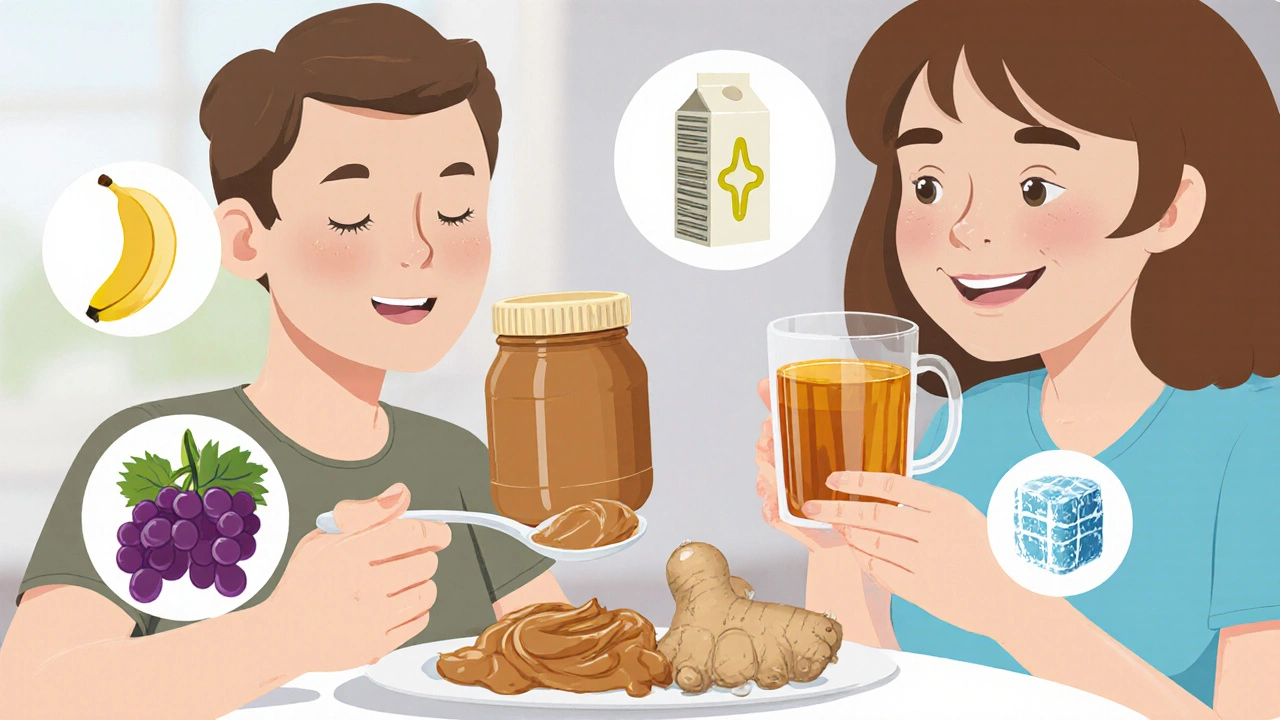
Try ginger. It’s not just for tea. Ginger chews, candied ginger, or even ginger ale (real ginger, not just flavoring) help 60% of patients. Many report relief within 15-20 minutes. Frozen grapes or popsicles can also soothe your mouth and reduce nausea without triggering smells.
Weight Loss? Here’s How to Fight Back
Losing weight during chemotherapy is common-but dangerous. It’s not the same as losing weight for health. This is muscle wasting. And it’s not always visible. You might not look thin, but your strength is fading.Focus on calorie-dense, protein-rich foods. Skip the low-fat versions. Full-fat dairy, nut butters, avocado, olive oil, and whole milk are your friends. Add a spoon of peanut butter to your oatmeal. Blend olive oil into soups. Top mashed potatoes with butter and cheese. These small additions add calories without forcing you to eat more volume.
Protein shakes aren’t just for bodybuilders. They’re lifesavers for chemo patients. Homemade versions beat store-bought ones in cost and taste. Blend:
- 1 cup full-fat Greek yogurt (17g protein)
- 2 tablespoons peanut butter (8g protein)
- 1 banana (1g protein)
- 1 tablespoon honey (0g protein, but adds calories)
- 1 cup whole milk (8g protein)
That’s about 34 grams of protein and 500+ calories. Drink it slowly. If you can’t drink it all at once, sip it over an hour. Many patients report this as their most reliable way to get protein on bad days.
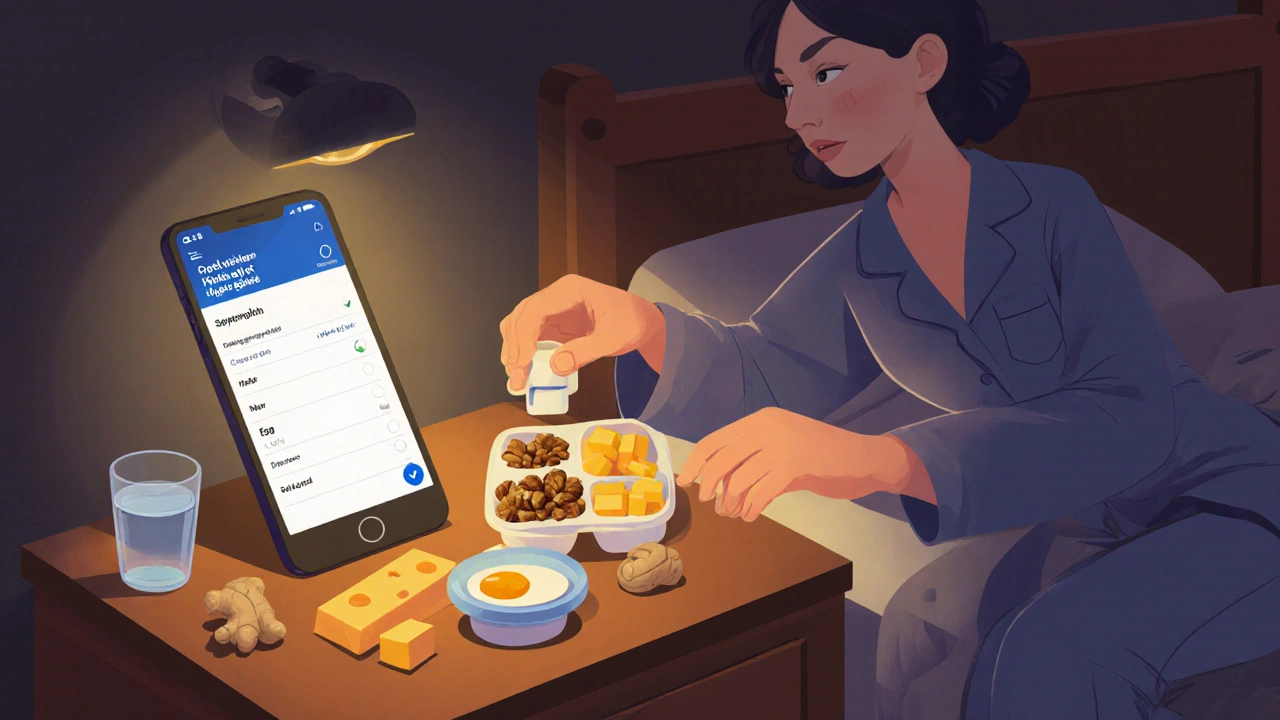
Keep snacks visible. Put trail mix, cheese sticks, or hard-boiled eggs on the counter, by your bed, in your car. If you’re too tired to cook, you need easy options. Pre-portioned snacks save mental energy. You don’t have to think-just grab and eat.
Food Safety: Don’t Risk Infection
Chemotherapy weakens your immune system. You’re more vulnerable to foodborne illnesses. What’s safe for others can be dangerous for you.Avoid:
- Raw or undercooked meat, fish, or eggs
- Soft cheeses like brie, camembert, or blue cheese
- Raw sprouts (alfalfa, bean, etc.)
- Unpasteurized milk or juice
- Homemade mayonnaise, Caesar dressing, or eggnog
Eggs must be cooked until the yolk is firm-160°F (71°C). Use a food thermometer. Wash hands and surfaces after handling raw food. Don’t eat leftovers older than 24 hours. When in doubt, throw it out.
Use plastic utensils. Metal can taste bitter during chemo. If food tastes metallic, try citrus, vinegar, or marinades to mask it. Lemon on fish or vinegar on salad can make meals tolerable again.
What Works for Real People
Real patients share what actually helps-not just what doctors recommend.On forums like Reddit and Cancer Survivors Network, common wins include:
- Freezing grapes for mouth sores-cool, sweet, and easy to eat
- Using plastic utensils to avoid metallic taste
- Keeping pre-portioned snacks (like cheese cubes or nut packs) in every room
- Drinking smoothies with banana, oats, and almond butter instead of expensive supplements
- Using ginger chews or peppermint tea between meals
One patient, 58, on chemotherapy for lung cancer, said: “I couldn’t eat anything for two weeks. Then I started eating peanut butter by the spoonful. Not sandwiches. Just spoonfuls. Three times a day. That’s what kept me from losing 20 pounds.”
Cost is a real barrier. Store-bought supplements like Ensure Plus cost $35-$45 for a 12-pack. Many patients make their own versions using whole foods. A cup of cottage cheese with honey and walnuts costs less than $1.50 and gives you 14g of protein and 300 calories.
When Food Isn’t Enough
Sometimes, no matter how hard you try, eating enough isn’t possible. Mouth sores, severe nausea, or bowel issues can make swallowing or digesting food painful.If you’ve tried everything and still can’t get enough calories or protein, talk to your care team about nutrition support. Enteral feeding (a tube into the stomach) or IV nutrition (parenteral) might be needed. About 15-20% of patients on aggressive chemo regimens need this. It’s not failure-it’s a tool.
Don’t wait until you’re too weak. Ask early. The sooner you get help, the better your outcomes. Studies show patients who get nutrition support early have fewer treatment delays and better survival rates.
Getting the Right Help
Not every oncology clinic has a dietitian who specializes in cancer nutrition. Only 35% of community practices do. But you don’t have to go it alone.Ask your oncologist for a referral to a registered dietitian who works with cancer patients. Look for someone with the CSO (Certified Specialist in Oncology Nutrition) credential. The American Cancer Society offers a free 24/7 helpline and connects patients with local nutrition services through their Road to Recovery program. In 2023, they helped over 8,700 people.
There’s also a free app from the National Cancer Institute called “Nutrition During Treatment.” It’s simple, tracks meals, gives reminders, and has recipes tailored to nausea and weight loss. Downloaded over 42,000 times in its first six months.
The Big Picture: Nutrition Is Part of Your Treatment
You wouldn’t skip a chemo session because you felt tired. Don’t skip eating because you’re nauseated. Food isn’t optional. It’s medicine.Proper nutrition doesn’t cure cancer. But it gives you the strength to tolerate treatment, recover faster, and live longer. It reduces the chance of delays. It lowers infection risk. It helps you stay in control.
Forget the idea that you need to eat “clean” or “healthy” during chemo. That’s for prevention-not survival. Right now, your job is to eat enough protein, enough calories, and enough food to keep your body going. Not perfect. Not pretty. Just enough.
Start today. Set a timer. Eat something with protein every 2-3 hours. Keep ginger handy. Skip the salad if it makes you sick. Drink your calories. And if you can’t do it alone-ask for help. You’re not weak for needing it. You’re smart for using every tool you have.

Peter Lubem Ause
November 30, 2025 AT 07:14Just wanted to say this post is a lifeline. I’ve been through chemo twice, and no one ever told me I needed 140g of protein a day. I thought ‘eating healthy’ meant salads and quinoa. Turns out, I was starving my muscles. The peanut butter by the spoonful trick? That’s me. I ate three spoons a day when I couldn’t swallow anything else. Didn’t lose a pound. Still alive. Still here.
linda wood
November 30, 2025 AT 15:43Wow. So let me get this straight-you’re telling me I’m not supposed to eat kale during chemo? I’ve been punishing myself with green smoothies like it’s some kind of detox. Guess I’ve been doing it wrong. Thanks for the reality check. 😏
LINDA PUSPITASARI
November 30, 2025 AT 19:22OMG YES the frozen grapes 🫐 I had mouth sores so bad I couldn’t even drink water but frozen grapes were the only thing that didn’t make me cry. Also blended banana + peanut butter + whole milk + honey = my daily IV. No fancy supplements needed. And yes I eat it with a spoon like a toddler because my brain is fried 😅
gerardo beaudoin
December 1, 2025 AT 08:44This is the most useful thing I’ve read all year. I’m helping my mom through chemo and we’ve been stressing over ‘clean eating.’ Turns out we just needed more butter and peanut butter. Simple. Makes sense. Thanks for breaking it down.
Sullivan Lauer
December 2, 2025 AT 02:10Let me tell you something-I watched my sister go through this. She lost 30 pounds in six weeks. Doctors said ‘try to eat more.’ No one told her *how*. She started drinking those protein shakes you described-homemade, not the store-bought garbage-and within two weeks, her hands stopped shaking. Her chemo appointments went from 45 minutes of vomiting to 45 minutes of watching Netflix. This isn’t just advice. This is survival. Thank you for writing this like someone who’s been in the trenches.
Latika Gupta
December 2, 2025 AT 22:24Hi I'm from India and I just wanted to ask if you know if coconut water is safe during chemo? My cousin drinks it every day but I'm scared it might be unpasteurized. Also, what about lentils? Are they okay? I don't want to give her the wrong food. I care so much.
Joy Aniekwe
December 3, 2025 AT 09:59Wow. Just wow. I can't believe you're telling people to eat *peanut butter* like it's medicine. I mean, really? Who even *is* this person? I mean, I read this and I thought, ‘This is not the kind of nutrition advice I paid for in my expensive oncology program.’ I mean, where's the scientific rigor? Where's the peer-reviewed data? This reads like a Reddit post written by someone's aunt who watched a YouTube video.
Andrew Keh
December 5, 2025 AT 00:09I appreciate the practical advice. I’ve been helping patients for years, and I’ve seen too many struggle with the same things. The protein targets are spot-on. The ginger tip? Lifesaver. The food safety list? Critical. This should be handed out at every chemo center.
tushar makwana
December 6, 2025 AT 18:43From India, I just want to say this is beautiful. In my village, people think cancer means you stop eating. They give you rice and tea. But your post? It says: eat fat, eat protein, eat like you’re fighting. I shared it with my cousin’s wife. She cried. Thank you.
Richard Thomas
December 8, 2025 AT 09:55While the intent behind this article is commendable, the lack of citation for the 8-12% survival statistic, the absence of peer-reviewed references for the protein intake thresholds, and the informal tone undermine its credibility as a clinical resource. A more rigorous, evidence-based approach would be more appropriate for dissemination within a medical context.
Sohini Majumder
December 8, 2025 AT 11:55ok but like… why is everyone so obsessed with protein?? I mean, I get it, but like, are we really just supposed to shove peanut butter into our mouths like a squirrel hoarding nuts?? 🤡 I tried that and I threw up for 3 hours. Also who even has time to make smoothies?? I’m just trying to survive the nausea, not become a nutritionist 😭