
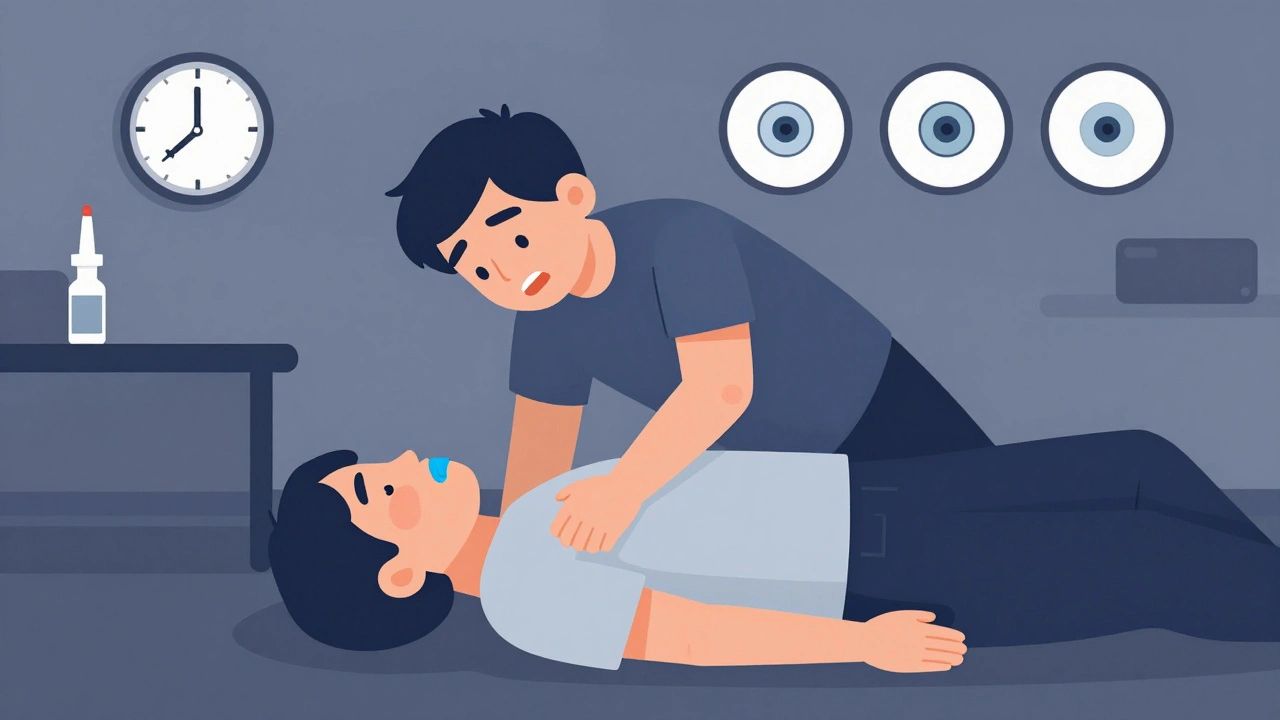
Every day, 187 people in the U.S. die from a drug overdose. Most of them? Opioid overdoses. And the scary part? Many of these deaths happen because no one around them knew what to do. It’s not a mystery. It’s not complicated. But if you don’t know the signs, or how to act, you could lose someone in minutes - before help even arrives.
What Happens During an Opioid Overdose?
Opioids - whether prescription painkillers like oxycodone, illegal heroin, or deadly synthetic drugs like fentanyl - work by attaching to receptors in your brain. One of those receptors controls your breathing. When too much opioid floods the system, it shuts down that signal. Your breathing slows. Then stops. Your body doesn’t get oxygen. Your brain starts dying. In as little as four minutes. This isn’t just about drug users. It’s about anyone who takes opioids, even once. A pill sold as Xanax might contain fentanyl. A painkiller prescribed by a doctor might be stronger than expected. A friend might take a little extra to feel better - and end up not waking up. The CDC says 81% of all drug overdose deaths in 2023 involved opioids. Fentanyl, a synthetic opioid 50 to 100 times stronger than morphine, is now the main driver. It’s mixed into other drugs without warning. You don’t need to be addicted to overdose. You just need to take something that contains it.How to Spot an Opioid Overdose
You don’t need medical training to recognize an overdose. There are three clear signs - often called the “opioid overdose triad” - that show up together:- Unresponsive - No matter how hard you shake them or shout their name, they won’t wake up.
- Slow, shallow, or stopped breathing - Look at their chest. Is it moving? Listen for gasps or gurgling sounds - like someone drowning in their own saliva.
- Pinpoint pupils - Their pupils will be tiny, like needles, even in dim light.
- Lips, fingernails, or skin turning blue, purple, or gray
- Cold, clammy skin
- Gurgling or snoring sounds (not sleeping - this is air struggling to pass)
- Limp body - like a ragdoll
- Extreme drowsiness or inability to stay awake
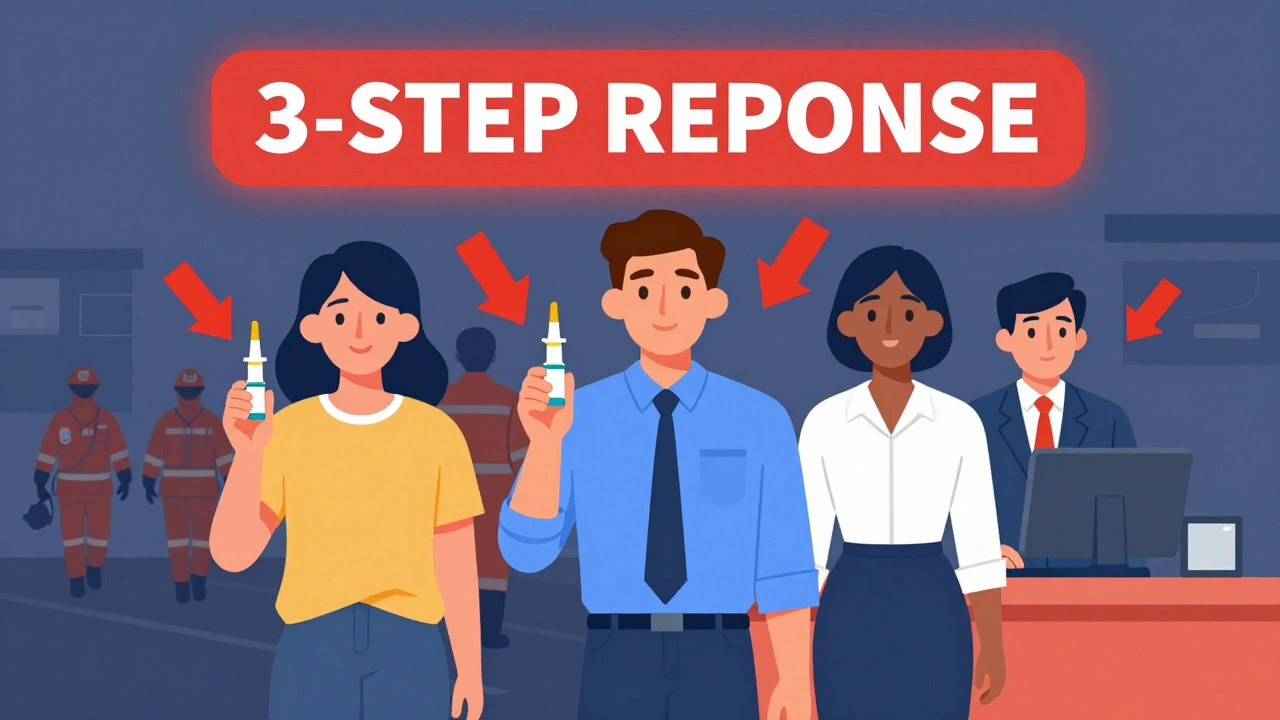
What to Do Right Now: The 3-Step Emergency Response
If you suspect an opioid overdose, follow this simple, life-saving sequence:- Call 9-1-1 immediately. Even if you’re not sure, call. Emergency responders need to know it’s a possible opioid overdose so they bring naloxone and proper equipment.
- Give naloxone if you have it. Naloxone - sold as Narcan or generic nasal spray - reverses opioid effects in minutes. It’s safe. It won’t hurt someone who hasn’t taken opioids. If you’re unsure, give it anyway.
- Stay with them until help arrives. Naloxone wears off in 30 to 90 minutes. The opioid might still be in their system. They could stop breathing again. Keep monitoring them. Put them in the recovery position (on their side) if they’re breathing but unconscious. Don’t leave them alone.
How to Use Naloxone (Narcan)
Naloxone nasal spray is easy. No needles. No training needed. Here’s how:- Remove the device from its package.
- Hold it with your thumb on the bottom and two fingers on the top.
- Tilt the person’s head back slightly.
- Insert the nozzle into one nostril.
- Press the plunger firmly to spray the full dose.
- Remove the device and call 9-1-1 if you haven’t already.
- Wait 2-5 minutes. If they don’t wake up or start breathing again, give a second dose in the other nostril.
What Happens After Naloxone?
Naloxone doesn’t cure anything. It just buys time. After someone wakes up, they may feel angry, confused, or sick. That’s normal. The opioid is being ripped out of their system. They might go into withdrawal - sweating, shaking, nauseous. That’s not a reason to walk away. They need medical care. Even if they seem fine, opioids can cause internal damage. Fluid in the lungs. Heart rhythm problems. Brain injury from lack of oxygen. A doctor needs to check them. And after that? They need support. Opioid use disorder is a medical condition, not a moral failure. Counseling, medication-assisted treatment (like methadone or buprenorphine), and mental health care can help them rebuild. But they won’t get there alone. Your call, your action, your naloxone - that’s the first step.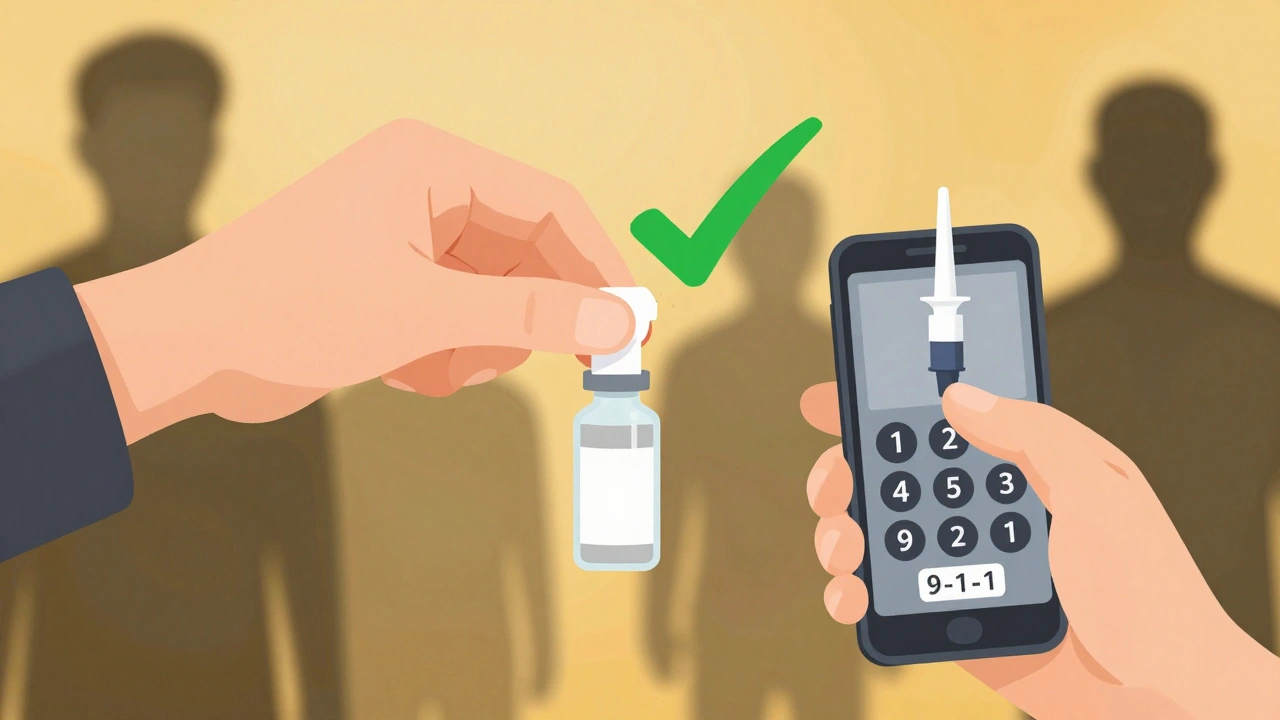
Prevention: Beyond Naloxone
Naloxone saves lives. But it’s not the only tool. Fentanyl test strips - small paper strips you dip into a drug solution - can tell you if fentanyl is present. They’re not perfect. But they’re better than guessing. Some people use them before taking anything. It’s not a guarantee, but it’s a chance. Also: never use drugs alone. If you’re using, have someone with you who knows how to respond. And if you’re worried about someone else - talk to them. Don’t wait for a crisis. Ask: “Have you ever used naloxone?” “Do you know where to get it?” The crisis didn’t start with a single pill. It grew from silence. From stigma. From assuming someone else would handle it. You don’t have to be a doctor. You don’t have to be brave. You just have to care enough to act.Frequently Asked Questions
Can naloxone hurt someone who hasn’t taken opioids?
No. Naloxone only works if opioids are present in the body. If someone hasn’t taken opioids, naloxone has no effect. It won’t cause harm, addiction, or withdrawal. If you’re unsure whether someone overdosed on opioids, give naloxone anyway. It’s safe to use even in doubt.
How long does naloxone last, and can the overdose come back?
Naloxone typically lasts 30 to 90 minutes. Many opioids - especially fentanyl - last much longer. That means the person can stop breathing again after naloxone wears off. Always call 9-1-1 and stay with the person until emergency help arrives. You may need to give a second dose of naloxone if they don’t wake up or start breathing normally.
Can I get naloxone without a prescription?
Yes. In 49 U.S. states and many other countries, you can buy naloxone over the counter at pharmacies without a prescription. Many pharmacies offer it for $25-$50. Some community health centers, needle exchange programs, and local health departments give it away for free. Ask your pharmacist - they’re trained to help.
What if I’m afraid of legal trouble for calling 9-1-1?
Most states have Good Samaritan laws that protect people who call for help during an overdose. These laws shield you from arrest or prosecution for drug possession if you’re seeking help for someone else. The goal is to save lives - not punish them. Calling 9-1-1 is the right thing to do, and the law supports you for doing it.
Are fentanyl test strips reliable?
Fentanyl test strips can detect the presence of fentanyl in drugs, but they’re not foolproof. They don’t tell you how much fentanyl is there, and they can’t detect all synthetic opioids. Still, they’re better than nothing. If a test strip shows fentanyl, it’s a clear sign to avoid using the substance. Many harm reduction programs provide them for free.

patrick sui
December 2, 2025 AT 11:10Naloxone availability has improved dramatically since 2018, but distribution equity is still a massive gap in rural and low-income urban areas. We need harm reduction integrated into primary care, not just pharmacies. The CDC’s data shows 68% of reversals happen via bystanders - that’s community-level resilience right there. We’re not just saving lives, we’re rebuilding social infrastructure. 🤝
Declan O Reilly
December 3, 2025 AT 18:22man i just learned this stuff last week after my cousin OD’d on what he thought was oxycodone. turns out it was fentanyl laced with xylazine. nobody told him. nobody knew. i kept thinking ‘he’s just sleeping’ until his lips turned blue. naloxone saved him. but why does it cost 50 bucks when the drug that kills people is dirt cheap? 🤯
Conor Forde
December 4, 2025 AT 21:36Let me get this straight - we’re giving out free Narcan like candy but still criminalizing possession? That’s like handing out fire extinguishers while setting the whole building on fire. The real crisis isn’t the drugs - it’s the fact that we treat addiction like a crime instead of a neurobiological disorder. This post is good, but it’s still playing inside the system. We need decriminalization. We need safe supply. We need to stop pretending this is about ‘bad choices.’
Also, fentanyl test strips? Brilliant. But why aren’t they in every vending machine? Why are they still ‘harm reduction fringe stuff’? Because stigma. And stigma kills.
James Steele
December 5, 2025 AT 19:35While the physiological mechanisms of opioid receptor antagonism via naloxone are well-documented, the broader policy architecture surrounding harm reduction remains statistically underpowered. The 14% reduction in mortality cited is compelling, yet confounded by unmeasured variables such as socioeconomic stratification and access to MAT. One must interrogate the epistemological foundations of bystander interventionism - is it a Band-Aid on a hemorrhage? The data suggests efficacy, but not systemic transformation.
Moreover, the normalization of over-the-counter naloxone deployment risks creating a moral hazard: if the ‘safety net’ is always present, does it disincentivize abstinence? The behavioral economics of this intervention require further longitudinal study.
Louise Girvan
December 6, 2025 AT 00:05They’re giving out Narcan like it’s candy… and then letting dealers slip fentanyl into everything. This is deliberate. It’s not an accident. It’s a population control scheme. Big Pharma, the DEA, the government - they want you addicted. So they flood the streets with cheap, lethal drugs. Then they sell you the antidote. Profit. 💀
soorya Raju
December 7, 2025 AT 06:20Why is this even a thing? In India we don’t have this problem because we don’t have fentanyl. Only heroin and opium, and people know how to handle it. This is a Western problem caused by overprescribing and lazy doctors. Why are you letting corporations poison your people? You’re weak. You let them sell you poison and then give you a spray to fix it? Pathetic.
Dennis Jesuyon Balogun
December 8, 2025 AT 06:38Let me be clear - this isn’t about naloxone. This is about dignity. Every time someone overdoses, it’s because we failed them before they ever touched a pill. We failed them in school. In family. In mental health care. In employment. Naloxone is a Band-Aid on a wound caused by systemic abandonment. I’ve seen brothers die because no one asked them how they were really doing. We treat the symptom, not the soul. This post? It’s a start. But we need more than protocols. We need community. We need to stop looking away.
Grant Hurley
December 8, 2025 AT 18:58just got my first naloxone kit from the pharmacy today - $30, no questions asked. felt weird at first, like i was carrying a weapon. then i thought - nah, it’s a life insurance policy. i keep it in my glovebox now. my roommate does coke. my cousin does oxy. my coworker does benzos. i’m not judging. i’m just ready. 🙌
Lucinda Bresnehan
December 10, 2025 AT 03:31I’m a nurse in rural Kentucky, and I’ve seen this too many times. Last month, a 19-year-old girl came in after her boyfriend gave her Narcan. She didn’t even know what it was - she just saw him turn blue and remembered a flyer at the library. We taught her how to use it. She’s now training her high school’s peer health group. That’s the power of simple knowledge. You don’t need a degree. You just need to care enough to learn. And if you’re reading this? You already care. That’s half the battle.
Shannon Gabrielle
December 11, 2025 AT 23:04Wow. Another feel-good PSA. Next they’ll be handing out free hugs with the Narcan. Meanwhile, the real problem is that we’ve turned addiction into a spectator sport. People post about it like it’s a TED Talk. Meanwhile, the streets are full of zombies and the cops are still arresting kids for possession. This isn’t helping. It’s performative. You’re not saving lives. You’re just making yourself feel better.
ANN JACOBS
December 13, 2025 AT 22:12It is with profound reverence and heartfelt conviction that I offer this reflection: the advent of accessible, non-prescription naloxone represents not merely a pharmacological advancement, but a moral reawakening within the collective consciousness of American society. To witness ordinary citizens - teachers, mechanics, mothers, and students - become first responders in the most intimate of tragedies is nothing short of transcendent. It is a quiet revolution, conducted not with banners or marches, but with a single spray, a steady hand, and the unyielding refusal to look away. May we continue to normalize compassion as a public good, and may the day come when such interventions are no longer necessary - because prevention, dignity, and care have become the foundation, not the afterthought.
Sean McCarthy
December 14, 2025 AT 00:53Why is this even a thing? People should just not do drugs. That’s it. No spray. No training. Just don’t do it. If you do and you die, that’s your fault. Why should I pay for your mistake? This is just encouraging bad behavior.