
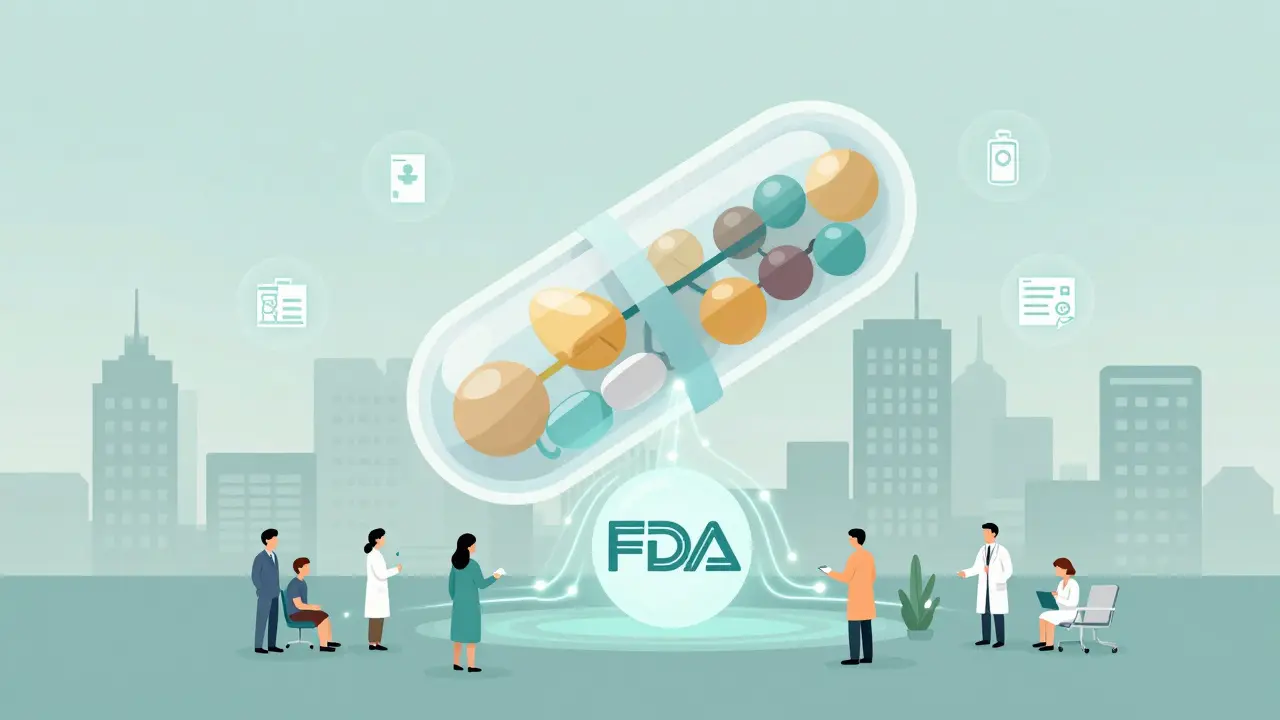
When you pick up a generic pill at the pharmacy, you expect it to work just like the brand-name version. And for most people, it does. But how does the FDA make sure it keeps working safely-long after the drug hits the shelves? Unlike brand-new drugs, generics don’t go through years of clinical trials. Instead, they’re approved based on one key fact: they’re bioequivalent to the original. That means they deliver the same amount of active ingredient at the same rate. But bioequivalence doesn’t guarantee every patient will react the same way. That’s where post-market surveillance comes in.
Why Monitoring Doesn’t Stop at Approval
The FDA approves over 15,000 generic drugs since 1984. By 2020, generics made up 90% of all prescriptions filled in the U.S. That’s a massive number of pills, taken by millions of people every day. Clinical trials before approval usually involve a few thousand patients over months or a couple of years. But real life? People take these drugs for decades. They mix them with other medications. They have different health conditions, ages, and genetic backgrounds. Side effects that show up in one in 10,000 patients won’t show up in a trial of 5,000. That’s why the FDA can’t stop watching after approval.The Tools the FDA Uses to Watch
The FDA doesn’t rely on guesswork. It uses a set of powerful, interconnected systems to track what happens after a generic drug is sold.The main tool is the FDA Adverse Event Reporting System (FAERS). Anyone-doctors, pharmacists, patients, or even family members-can report unexpected side effects, allergic reactions, or even cases where the drug didn’t seem to work. These reports go into a massive database. The FDA’s Office of Surveillance and Epidemiology digs through them, looking for patterns. If 200 people report the same rare reaction within a few months, that’s a signal. It doesn’t mean the drug caused it, but it means they need to investigate.
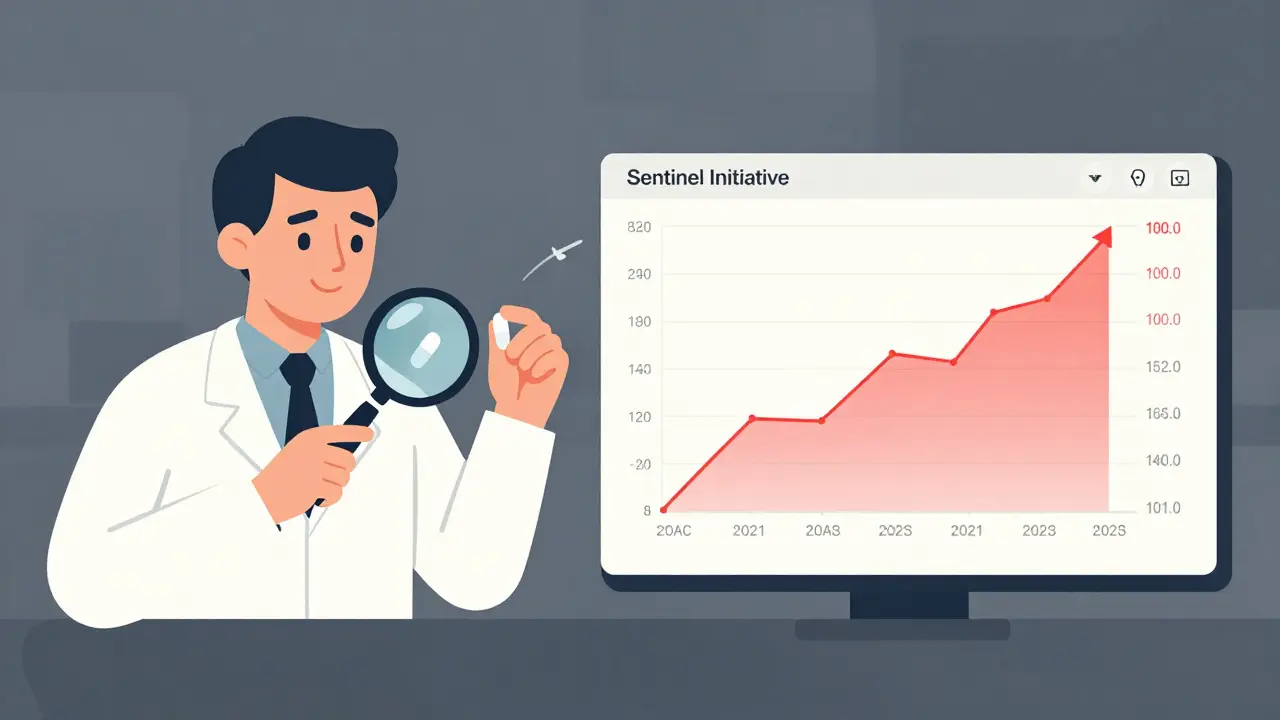
Then there’s the Sentinel Initiative. This system doesn’t wait for people to report problems. It actively scans real-world data from insurance claims, hospital records, and electronic health records of over 200 million Americans. It looks for spikes in hospital visits, lab results, or diagnoses that might be linked to a specific drug. For example, if a new generic version of a blood pressure drug is linked to a sudden rise in kidney-related ER visits in a certain region, Sentinel can flag it within weeks-not months.
The FDA also uses MedWatch, its direct reporting portal for healthcare professionals and the public. It’s how many patients first learn they can report a problem. And the agency doesn’t just wait for reports. Its inspectors show up unannounced at manufacturing plants. They check if the generic drug is still being made the same way it was when approved. A change in the inactive ingredients, the coating, or the manufacturing process could affect how the drug dissolves in the body-even if the active ingredient is identical.
The Challenge of Complex Generics
Not all generics are created equal. Simple pills like metformin or lisinopril are straightforward. But what about inhalers, topical creams, or extended-release capsules? These are called complex generics. They’re harder to copy exactly. A small difference in the way the drug is released from a pill, or how it’s absorbed through the skin, could change how it works. The FDA knows this. That’s why they’ve launched special research projects.In 2020, the FDA partnered with the Universities of Maryland and Michigan to create the Center for Research on Complex Generics (CRCG). Their job? To figure out how to better test and monitor these tricky drugs after they’re on the market. A 2021 report from the National Academies of Sciences warned that standard bioequivalence tests might miss real differences in how these drugs perform in real patients. For example, a generic inhaler might deliver the same amount of medicine-but if it’s harder to coordinate with breathing, patients might not get the full dose.
When the System Flags a Problem
What happens when the FDA finds something worrying? It doesn’t panic. It investigates.First, they look at all the data. Is the signal strong? Is it happening across multiple reports? Could it be a coincidence? They compare the generic to the brand-name drug. They check if other manufacturers of the same generic have similar reports. Sometimes, they find the issue is tied to a specific batch or factory. Other times, it’s the drug itself.
If the evidence points to a real safety risk, the FDA can take action. That might mean:
- Updating the drug’s label to warn about new side effects
- Issuing a “Dear Healthcare Provider” letter
- Requesting a voluntary recall
- Requiring the manufacturer to run additional studies
One well-known case involved a generic version of the epilepsy drug levetiracetam. Patients reported seizures returning after switching to a new generic. The FDA investigated and found that while the active ingredient was correct, differences in the formulation affected how consistently the drug was absorbed. The label was updated to warn about this possibility.
What Patients and Doctors Should Know
It’s easy to think that if a drug is generic, it’s just a copy. But the body doesn’t see it that way. Some patients report feeling different after switching-even when tests show the drugs are bioequivalent. This isn’t always a flaw in the drug. Sometimes, it’s the nocebo effect: the mind expects something to go wrong, so it feels like it does. A 2019 study found that about 15% of adverse event reports for generics mentioned perceived loss of effectiveness. But in most cases, when researchers checked the data, no real difference existed.Still, if you feel worse after switching to a generic, don’t ignore it. Talk to your doctor. And if you’re unsure whether your symptoms are real or psychological, report it. The FDA needs to hear from you. You don’t need to be a doctor. You don’t need to prove anything. Just describe what happened. Your report could help someone else.
The Future: AI and Real-Time Monitoring
The FDA is investing heavily in the future. In 2023, it allocated $5.2 million to research using artificial intelligence and machine learning to detect safety signals faster. The goal? To move from waiting for reports to predicting problems before they spread.Imagine a system that watches millions of electronic health records in real time. It notices that patients taking a certain generic version of a cholesterol drug are having more muscle pain than those on the brand name-even if the difference is small. It flags it. Scientists review it. Within weeks, they know if it’s a pattern or noise. Right now, that process can take months. AI could cut it down to days.
The Sentinel system is already growing. More hospitals, insurers, and clinics are joining. The FDA is also working on building better tools to compare outcomes between brand-name drugs and their generic versions-not just in labs, but in real lives.
It’s Not Perfect, But It Works
Critics say the system is underfunded. They point out that complex generics still slip through the cracks. And yes, there are gaps. But the system has evolved. It’s not the same as it was in 2010. It’s not the same as it was in 2000. The FDA now has tools that can spot problems in real time, across millions of people. It’s not about perfection. It’s about constant improvement.Generics save the U.S. healthcare system billions every year. They make life-saving drugs accessible. But access means nothing if the drugs aren’t safe. The FDA’s job isn’t done when the approval stamp is applied. It’s just beginning.
Do generic drugs have the same side effects as brand-name drugs?
By law, generic drugs must have the same active ingredient, strength, dosage form, and route of administration as the brand-name version. That means the same side effects are possible. But sometimes, differences in inactive ingredients (like fillers or coatings) can affect how the drug is absorbed or how your body reacts. This doesn’t mean the generic is unsafe-it just means some people might feel different. If you notice new or worse side effects after switching, talk to your doctor and report it to the FDA through MedWatch.
Can I trust that my generic drug is made safely?
Yes. The FDA inspects all drug manufacturing facilities-whether they make brand-name or generic drugs-using the same standards. The agency conducts unannounced inspections of over 3,500 facilities worldwide each year. If a facility fails an inspection, the FDA can block the drug from being sold. You can’t tell by looking at the pill, but the FDA ensures the production meets quality requirements.
Why do some people say generic drugs don’t work as well?
Some people report that a generic version doesn’t seem to work as well as the brand name. This can happen for several reasons. One is the nocebo effect-expecting a problem can make you feel one. Another is that different manufacturers use different inactive ingredients, which can slightly change how fast the drug enters your bloodstream. For most drugs, this doesn’t matter. But for narrow-therapeutic-index drugs (like warfarin or levetiracetam), even small changes can affect outcomes. If you notice a difference, don’t switch back without talking to your doctor. Report it to the FDA so they can investigate.
How does the FDA know if a generic drug is causing more problems than the brand name?
The FDA compares reports in FAERS and data from the Sentinel system between the brand and its generics. They look for patterns: Is one generic version linked to more reports than others? Are the side effects different? They also check if the issue is tied to a specific manufacturer or batch. If a pattern emerges, they investigate further-sometimes asking the manufacturer to run additional studies or change the product.
Can I report a problem with a generic drug even if I’m not a doctor?
Absolutely. The FDA encourages patients and caregivers to report side effects, allergic reactions, or if a drug didn’t work as expected. You can report online at MedWatch.FDA.gov or by calling 1-800-FDA-1088. You don’t need to be certain it was the drug. Just describe what happened. Your report helps the FDA spot problems early-before they affect more people.

Sue Stone
January 21, 2026 AT 19:53My grandma switched to generic blood pressure meds last year. No issues. But she swears the old brand tasted different. Weird, right?
Sallie Jane Barnes
January 23, 2026 AT 01:06It’s easy to assume generics are just cheap copies, but the truth is way more complex. The FDA’s systems are quietly keeping millions safe every day. We should be grateful, not skeptical.
Andrew Smirnykh
January 24, 2026 AT 17:53Interesting how cultural attitudes toward generics vary. In some countries, people trust them implicitly. Here, there’s still a stigma. Maybe we need more public education, not just better surveillance.
charley lopez
January 25, 2026 AT 13:36The Sentinel Initiative’s real-time analytics pipeline represents a paradigm shift in pharmacovigilance. Leveraging claims data and EHRs at scale enables signal detection with unprecedented temporal resolution, surpassing passive FAERS reporting.
Kerry Evans
January 26, 2026 AT 13:52Of course generics have problems. The FDA is asleep at the wheel. They approve drugs based on lab tests while people die from bad fillers. It’s corporate greed disguised as cost-saving. You think they care about you? They don’t.
Kerry Moore
January 27, 2026 AT 14:29I’ve been a pharmacist for 22 years. I’ve seen patients panic over switching generics, then realize their symptoms were stress-related. But I’ve also seen real bioequivalence issues-especially with extended-release formulations. The system works, but it needs more funding.
Oladeji Omobolaji
January 27, 2026 AT 20:31Back home in Nigeria, we don’t even have this system. Most generics come in without any oversight. I’m glad someone’s watching. Your FDA might be slow, but at least it’s trying.
Vanessa Barber
January 29, 2026 AT 18:46Actually, the FDA’s system is a joke. I’ve had three different generics for the same drug-each one made me feel totally different. They call it ‘bioequivalent’ but it’s all marketing.
Stacy Thomes
January 30, 2026 AT 16:48YOU CAN MAKE A DIFFERENCE! If you feel weird after a pill swap-REPORT IT! Don’t just suffer in silence. That one report? Could save someone’s life. Your voice matters!!
dana torgersen
February 1, 2026 AT 11:42It’s... fascinating... how the body, you know, responds to... *inactive* ingredients? Like, the fillers? The coatings? The... uh... *micro-environment* of the pill? I mean, it’s not just chemistry-it’s... *philosophy*... of absorption? And we’re just... trusting... machines? And databases? And... *algorithms*?!!
Dawson Taylor
February 3, 2026 AT 01:49Post-market surveillance is the only ethical way to scale drug safety. Clinical trials are inherently limited. Real-world data is the true test.
Laura Rice
February 3, 2026 AT 03:00My cousin had a seizure after switching to a generic levetiracetam. We thought it was a coincidence… until we saw the FDA alert. Now I check every generic label like it’s a treasure map. You never know what’s hiding in the filler.
Janet King
February 5, 2026 AT 01:05The FDA’s post-market systems are among the most robust in the world. They rely on public reporting, which means patient vigilance is part of the safety net. Thank you for sharing this clear overview.