
Overactive Bladder Drugs: What Works, What to Watch For
When your bladder sends signals you can’t ignore — sudden urges, frequent trips, or leaks — you’re likely dealing with overactive bladder, a condition where the bladder muscles contract involuntarily, even when the bladder isn’t full. Also known as urge incontinence, it affects millions, especially as people age, but it’s not something you just have to live with. There are real, proven overactive bladder drugs, medications designed to calm overactive bladder muscles and reduce urgency that can turn your daily life around.
Most of these drugs fall into two main groups: anticholinergics, a class of drugs that block nerve signals telling the bladder to contract, and beta-3 agonists, a newer type that directly relax the bladder muscle. Common anticholinergics include oxybutynin, tolterodine, and solifenacin. They work fast, but dry mouth, constipation, and blurred vision are common side effects. Beta-3 agonists like mirabegron and vibegron are often better tolerated — they don’t cause as much dryness, but can raise blood pressure in some people. What works for one person might not work for another, and that’s why matching the drug to your body matters more than just picking the cheapest option.
These drugs aren’t magic pills. They work best when paired with simple habits: cutting back on caffeine and alcohol, timing bathroom visits, and doing pelvic floor exercises. Many people stop taking their meds because of side effects, but there’s often a solution — switching brands, lowering the dose, or trying a patch instead of a pill. And if drugs alone don’t cut it, there are other options like nerve stimulation or Botox injections, which some of the posts below explore in detail.
What you’ll find here isn’t just a list of drug names. You’ll see real talk about what people actually experience — from the frustrating side effects of anticholinergics to the quiet relief of finally sleeping through the night. You’ll learn how to spot when a medication isn’t right for you, how to talk to your doctor about alternatives, and why some people feel better on generics while others don’t. There’s also coverage on how insurance rules like step therapy can force you to try cheaper options first — even if they’ve failed before. These aren’t theoretical guides. They’re stories from people who’ve been there, and the practical advice that came out of it.
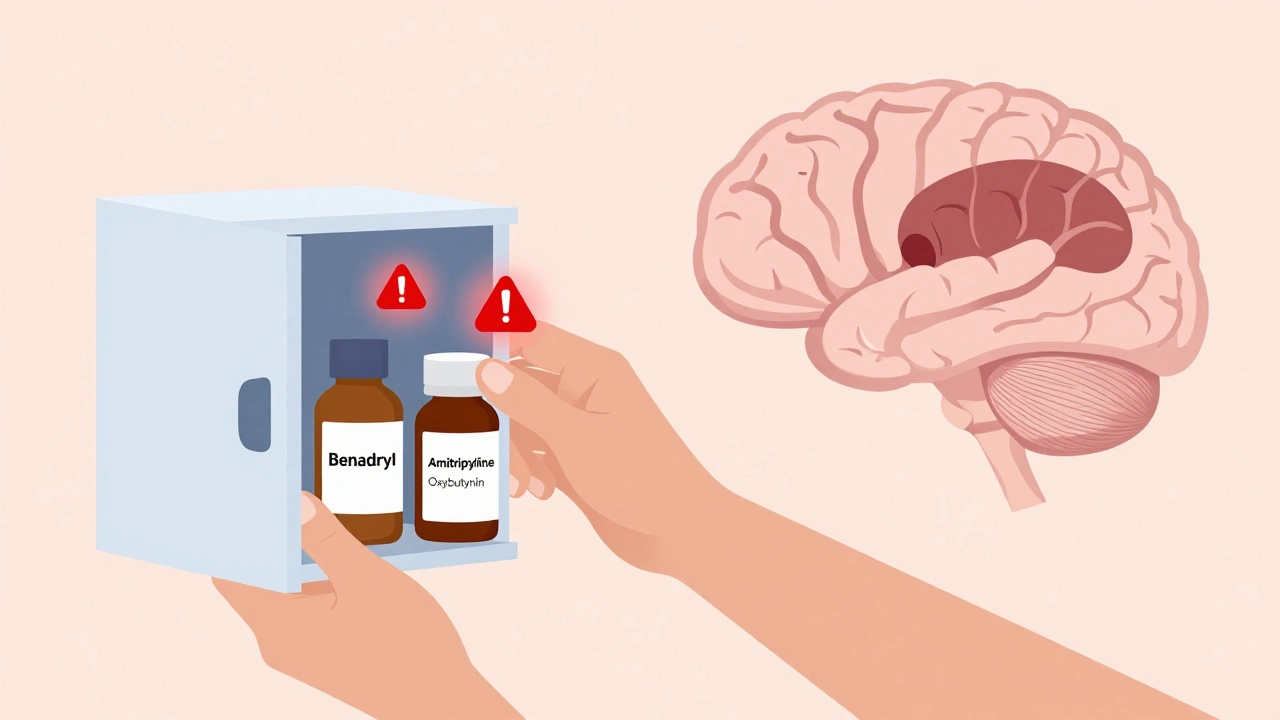
Anticholinergic Medications and Dementia: What You Need to Know About Cognitive Risk
Long-term use of common anticholinergic drugs like Benadryl and oxybutynin is linked to increased dementia risk. Learn which medications pose the greatest threat and how to safely reduce exposure.
Read More