

Time Zone Medication Scheduler
Medication Schedule
Critical Alert
When you’re flying across time zones, your body doesn’t just get tired-it gets confused. And if you’re taking daily medications, that confusion can turn into a serious health risk. Missing a dose by a few hours, storing insulin in a hot hotel room, or accidentally bringing a banned pill into another country isn’t just inconvenient. It can lead to hospital visits, dangerous side effects, or even treatment failure. The good news? With the right plan, you can avoid all of it.
Why Time Zones Break Your Medication Schedule
Most people think adjusting to jet lag is just about sleep. But if you’re on blood pressure pills, antiretrovirals, or birth control, your body is also trying to sync with a new clock. Medications don’t care about your time zone-they care about when they’re supposed to be in your system. Take antiretrovirals. Some, like dolutegravir, need to be taken within an hour of the same time every day. Miss that window, and the virus can start multiplying again. Blood thinners like warfarin have a long half-life (20-60 hours), so you have more flexibility. But insulin? That’s a whole different story. Its half-life is only 4-6 hours. A delay of even two hours can spike your blood sugar. The World Travel Protection 2023 guidelines say: if you’re crossing more than 2-3 time zones, switch to the destination time zone immediately. Don’t try to stick to home time. That just makes you forget. A 2019 University of Toronto study found that travelers who tried to keep their home schedule were 22% more likely to miss doses. And in a 2023 Reddit thread with over 140 comments, 82 out of 113 people who had medication problems said the main issue was simply losing track of time.How to Adjust Your Dosing Schedule
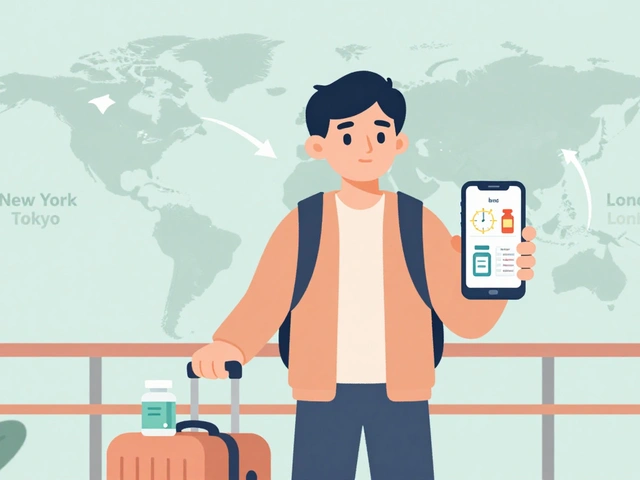
There’s no one-size-fits-all method. It depends on what you’re taking and how far you’re going. For eastward trips (like flying from New York to Tokyo): - If you’re crossing 5+ time zones, start shifting your doses 1 hour earlier each day, 5 days before you leave. This helps your body adjust slowly. A 2015 PMC study showed this reduces side effects by 37%. But it’s harder to stick to-people forget more often. - If you’re not up for that, just switch to local time the moment you land. Set alarms for your new schedule. Use your phone. Set two alarms. One for the pill, one for a reminder to check if you took it. For westward trips (like flying from London to Los Angeles): - You gain hours. This is easier. Just take your pill at the same local time as you would at home. If you usually take it at 8 a.m. London time, take it at 8 a.m. Pacific time-even if that’s 4 p.m. your body thinks it is. The extra time in your day gives you a buffer. Special cases: - Progestin-only birth control pills have a strict 3-hour window. Go over that, and you’re not protected. Set a phone alarm. Write it on your calendar. Don’t rely on memory. - Combined oral contraceptives have a 12-hour window. Still tight. But if you miss it, take it as soon as you remember and use backup protection for the next 7 days. - Antihypertensives can cause blood pressure swings in the first 72 hours after a time zone change. Monitor your pressure if you can. Talk to your doctor about adjusting timing before you leave. - Statins are forgiving. You can take them up to 4 hours off schedule without losing effectiveness. No panic needed.Storage: Heat, Humidity, and Light Are Your Enemies
Your pills aren’t just sitting in a drawer at home. They’re in your suitcase, in a hot taxi, on a beach towel, or in a hotel bathroom. That’s dangerous. The CDC’s 2022 Yellow Book says 23% of common medications are light-sensitive. That means if you leave them in a clear ziplock bag on a sunny windowsill, they can break down. Use opaque containers. Keep them in your carry-on, not checked luggage. Insulin: Must stay between 2°C and 8°C (36-46°F). If you’re going somewhere hot-Thailand, Mexico, Dubai-buy a travel cooler. They’re small, rechargeable, and cost under $50. Never leave insulin in a car or in direct sunlight. A 2022 TripAdvisor survey found 41% of travelers had storage issues with insulin in tropical climates. Most pills: Keep them below 30°C (86°F) and away from humidity. Bathrooms are the worst place to store anything. Even if your hotel has a fridge, don’t put pills in the door compartment-it opens too often and fluctuates in temperature. Travel tip: Buy a small, insulated pill case with a gel pack. Some even come with temperature sensors. If it hits 30°C, the case changes color. Simple, smart, and saves lives.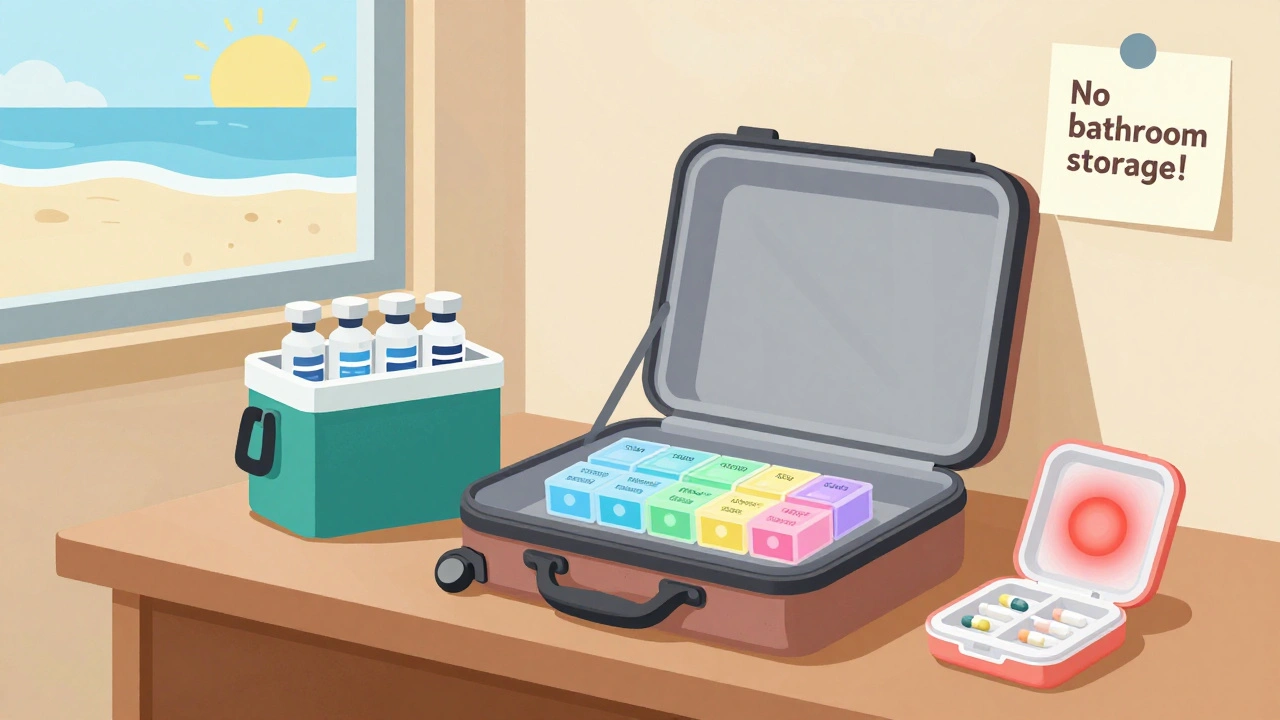
Legal Risks: What You Can’t Bring
You think your prescription is legal everywhere? Think again. Japan bans 52 medications that are common in the U.S.-including certain painkillers, ADHD drugs, and even some cold medicines. The UAE requires special permits for 17 drugs, including some antidepressants and sleep aids. Australia has strict limits on opioids. The UK and Canada have their own lists. Before you go, check the embassy website of your destination country. Or better yet, ask your pharmacist. They have access to global drug databases. Don’t rely on Google. Outdated info can get you arrested or have your meds confiscated. Always carry your medications in their original bottles with the pharmacy label. Airline security-TSA, EU, Australian Customs-requires this. No ziplock bags. No unlabeled pills. Even if you’ve traveled for years without issues, rules are getting stricter.Side Effects You Might Not Expect
Most people worry about missing a dose. But side effects can happen even when you don’t miss anything. - Dehydration from long flights can change how your body absorbs meds. Drink water. Avoid alcohol and caffeine on the plane. - Stomach upset from new foods can make you vomit or have diarrhea. If you throw up within an hour of taking a pill, take another dose. If you have diarrhea for more than 24 hours, talk to a doctor. Some meds (like birth control or antibiotics) won’t work if your gut is too active. - Drug interactions with new foods or supplements. Grapefruit juice can mess with statins and blood pressure meds. St. John’s Wort can reduce the effect of antidepressants and birth control. Check for interactions before you try local herbal teas or supplements. - Stress and sleep loss can make side effects worse. If you’re on anxiety meds, your dose might need a small adjustment. Talk to your doctor before you leave.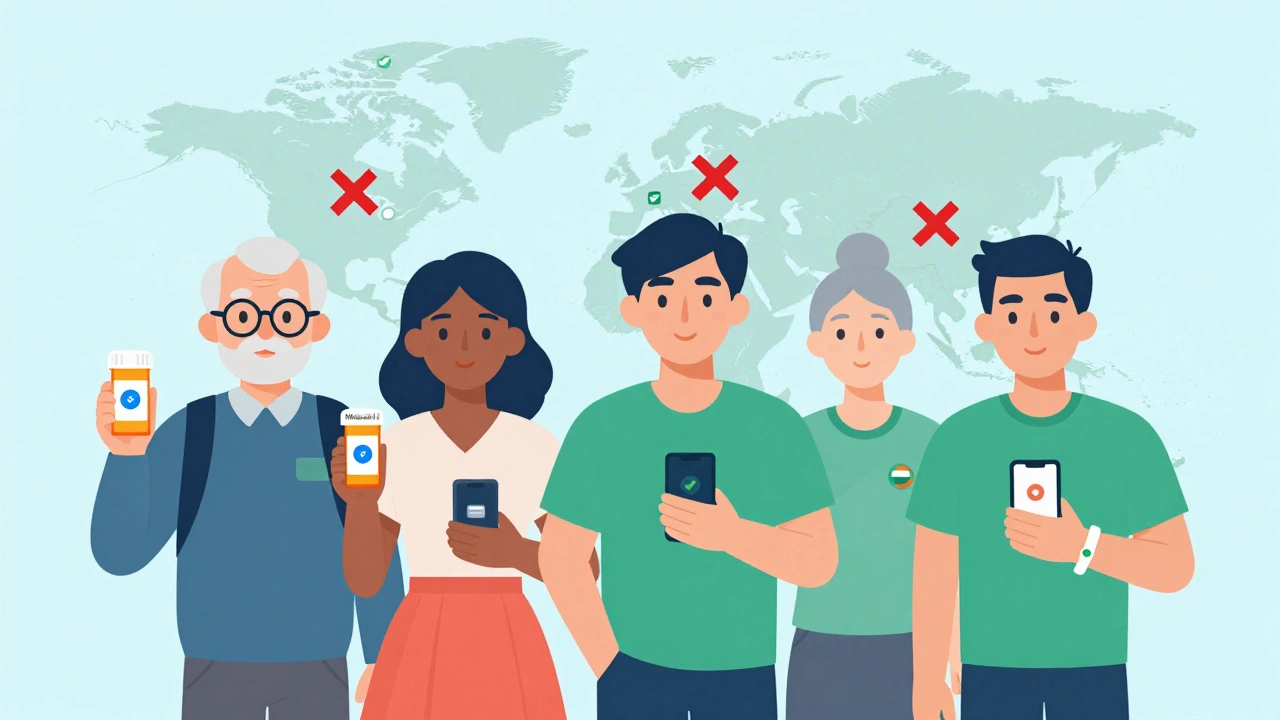
How to Prepare: A Step-by-Step Plan
Start 4-6 weeks before you leave. Here’s what to do:- Make a list of every medication you take: name, dose, frequency, purpose, and whether it’s taken with food or on an empty stomach.
- Book a travel medicine appointment with your doctor or pharmacist. Bring your itinerary. Ask: "Should I adjust timing? Are any of these banned where I’m going?"
- Get extra supply. Carry enough for your trip plus 7 extra days. Delays happen. Airlines require it. Harvard Global Support Services says 89% of major carriers enforce this.
- Pack smart. Use original containers. Keep meds in your carry-on. Use a pill organizer with time slots (morning, afternoon, night) and color-code them. Avoid ones with tiny compartments-hard to read on the go.
- Set alarms. Use Medisafe or MyTherapy apps. They’re endorsed by the CDC. They adjust for time zones automatically. Set two alarms per dose. One for the pill, one for a check-in: "Did you take it?"
- Bring a doctor’s note. Especially if you’re carrying needles, insulin, or controlled substances. It doesn’t guarantee you won’t be questioned-but it helps.
Who Needs the Most Help?
Not everyone faces the same risks. Seniors over 70 are at the highest risk. Eden Vista’s 2023 report found that 73% of them had at least one medication timing error while traveling. 29% ended up needing medical care. Why? Multiple medications, memory issues, and slower adaptation to change. Young adults with one pill? Easy. But if you’re on 4+ meds, especially with complex schedules (e.g., morning insulin, afternoon blood pressure, evening antiviral), you need more prep. A 2022 study found seniors needed 7-10 days of practice adjusting schedules. Young people? 2-3 days. If you’re diabetic, HIV-positive, on blood thinners, or taking immunosuppressants-don’t wing it. Talk to a specialist. Use a travel pharmacy service. Many insurance plans now include this for free.What Works in Real Life
People who get it right have one thing in common: they plan ahead and use tools. - 89% of positive reviews on Healthline’s travel forum mention multiple phone alarms. - 76% of experienced travelers use color-coded pill organizers. - Those who consulted a pharmacist before leaving reported 63% fewer problems, according to Harvard GSS 2022 data. One traveler from New Zealand to Germany shared: "I used to forget my blood pressure pill. Now I set a 7 a.m. alarm, put my pills in a red case, and I never leave the hotel without it. No more dizzy spells. No more panic." The tech is there. The advice is clear. The risks are known. You don’t need to be a doctor to travel safely with meds. You just need to be prepared.Can I take my medication on the plane?
Yes, you can-and you should. Always carry your meds in your carry-on. Never check them. Security may ask to see them, so keep them in original bottles. Most airlines require this. For insulin or injectables, bring a doctor’s note. Avoid taking doses during the flight unless your doctor says to. In-flight meals aren’t reliable, and time zones change mid-flight. Wait until you land and reset your schedule.
What if I miss a dose while traveling?
It depends on the medication. For blood pressure or statins, missing one dose rarely causes harm-just take it when you remember. For birth control, especially progestin-only pills, take it as soon as possible and use backup protection. For antiretrovirals or insulin, contact a local doctor immediately. Never double up unless instructed. Keep your doctor’s contact info and a list of your meds handy.
Are there apps that help with time zone medication changes?
Yes. The CDC endorses Medisafe and MyTherapy. Both automatically adjust your reminders when you cross time zones. They send alerts, track doses, and even notify you if you’re due for a refill. Studies show users of these apps have 42% better adherence during travel than those who don’t use them.
Can I bring my medication into any country?
No. Many countries ban common U.S. medications. Japan blocks over 50, including some painkillers and ADHD drugs. The UAE requires permits for antidepressants and sleep aids. Always check your destination’s embassy website or ask your pharmacist. Never assume your prescription is legal abroad.
How much extra medication should I pack?
Pack enough for your entire trip plus seven extra days. Delays happen-flights get canceled, visas get held up, storms disrupt travel. Major airlines and insurance providers require this. It’s not optional. If you run out, getting a refill abroad can be difficult or impossible without local prescriptions.

Lauren Dare
December 5, 2025 AT 05:06Let’s be real-half the people reading this are gonna skip straight to the ‘what to pack’ section and still forget their insulin in a hot taxi. I’ve seen it. The CDC’s Yellow Book? Great. But have you tried explaining to a 70-year-old with three time zones and five meds why their ‘little blue pill’ is now illegal in Japan? They just want to go to Tokyo and eat sushi without getting arrested. The tech exists. The warnings are everywhere. Yet here we are.
Gilbert Lacasandile
December 5, 2025 AT 20:57This is actually really helpful. I’ve been traveling with my antiretrovirals for years and never thought about switching time zones immediately. I used to just keep my home schedule and wonder why I felt off. Setting two alarms is genius-I’ll start doing that. Also, the pill case with the temp sensor? That’s a game-changer. I’m ordering one this week.
Lola Bchoudi
December 6, 2025 AT 20:41As someone who manages complex regimens for patients with HIV and diabetes, I can’t stress this enough: the 3-hour window on progestin-only pills isn’t a suggestion-it’s a biological deadline. And yes, the apps work. Medisafe’s time zone auto-adjust is why my clients have a 94% adherence rate abroad. Don’t just ‘try to remember.’ Automate it. Your future self will thank you. Also, never, ever store meds in the hotel bathroom. That’s not a storage solution. That’s a biohazard zone.
Morgan Tait
December 7, 2025 AT 02:04They’re not telling you the real reason they ban meds abroad. It’s not about safety-it’s about control. The WHO, Big Pharma, and the UN are all in cahoots to keep you dependent on their patented drugs. That’s why Japan bans 52 U.S. meds-because they’re pushing their own synthetic alternatives. And don’t get me started on the ‘original bottle’ rule. That’s just so TSA can scan your pills and log your health data into the global biometric registry. You think they don’t track you? They do. Always carry a doctor’s note… and maybe a Faraday pouch. Just in case.
Taya Rtichsheva
December 8, 2025 AT 22:25Christian Landry
December 8, 2025 AT 22:36Katie Harrison
December 10, 2025 AT 08:55Mona Schmidt
December 11, 2025 AT 22:35Excellent breakdown. One addition: if you’re on immunosuppressants or anticoagulants, avoid raw seafood and unpeeled fruits abroad. Even if it’s 'fresh,' the microbiome in your destination can interact unpredictably with your meds. I’ve seen patients develop sepsis from a single bite of street-market mango. Also-yes, grapefruit juice is a silent killer with statins. Even in Italy. Even if it’s 'organic.' I’ve written a handout for my patients titled 'Medication & Travel: Don’t Be a Statistic.' I’ll link it if anyone wants it.
Guylaine Lapointe
December 13, 2025 AT 14:09Ugh. Another 'just use an app' post. Did you ever stop to think that not everyone has a smartphone? Or that some of us are on fixed incomes and can’t afford $50 pill coolers? Or that the 'CDC-endorsed' apps are owned by Big Pharma subsidiaries that sell your health data? This isn't empowerment-it's consumerist band-aid advice wrapped in clinical jargon. The real solution? Universal healthcare access and global drug policy reform. Until then, you're just making people feel guilty for not buying enough gadgets.
Sarah Gray
December 14, 2025 AT 17:44You call this 'practical advice'? This reads like a pharmaceutical marketing pamphlet. The real issue isn't 'forgetting alarms'-it's that medication regimens are designed for sedentary, Western, clock-obsessed societies. Travelers aren't the problem. The system is. Why are we expected to micro-manage our biology to fit arbitrary time zones? Why can't we have longer-acting formulations? Why are we punished for having chronic conditions while trying to live? This isn't a checklist-it's a confession of how broken our medical infrastructure is.
Michael Robinson
December 16, 2025 AT 08:11It’s funny how we treat pills like magic beans. Take them at the right time, and your body obeys. Miss one, and chaos. But your body doesn’t care about time zones-it cares about rhythm. Maybe the real solution isn’t more alarms, but fewer pills. Maybe we’ve over-medicalized normal life. I’ve known people who stopped taking blood pressure meds for a year and felt better. Not because of science. Because they listened to their body, not their calendar.
Suzanne Johnston
December 17, 2025 AT 21:44There’s something deeply human in how we treat medication like a sacred ritual-set alarms, color-code, carry doctor’s notes, fear the unknown. But isn’t that just another way we try to control the uncontrollable? Travel reminds us: we are not in charge. The body adapts. The clock is arbitrary. The world doesn’t care if you took your pill at 8:00 or 8:02. Maybe the real lesson here isn’t about logistics-it’s about humility. We’re not managing our health. We’re negotiating with it. And sometimes, grace is more powerful than precision.
Graham Abbas
December 19, 2025 AT 06:50My dad took insulin to Bali. He didn’t use an app. Didn’t buy a cooler. Just kept his vials in his sock drawer-next to his clean underwear. He said, 'If it’s good enough for my feet, it’s good enough for my pancreas.' He didn’t miss a dose. Didn’t get sick. Didn’t get arrested. He just… trusted. Maybe the real magic isn’t in the tech. Maybe it’s in the quiet, stubborn, human act of showing up-even when you’re tired, confused, and halfway across the world.