
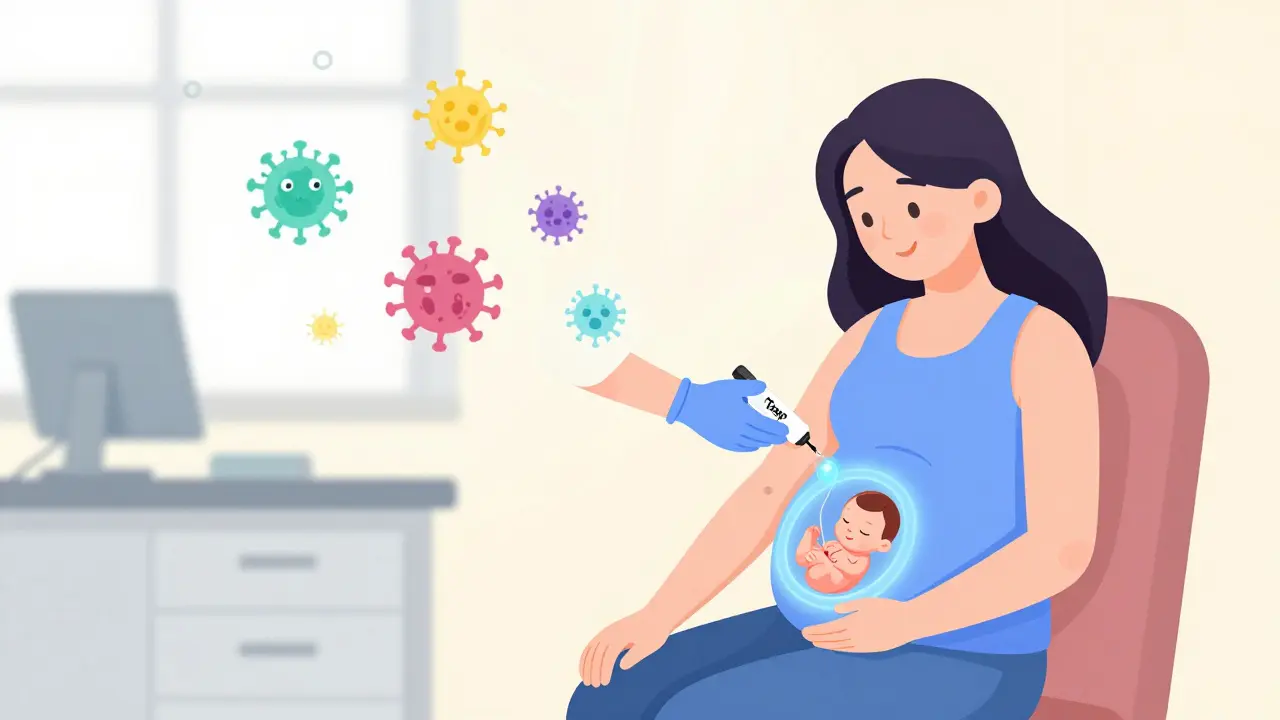
When you're pregnant, every decision feels bigger. Is that sushi safe? Should you take prenatal vitamins with iron? What about vaccines? The idea of getting a shot while carrying a baby can feel scary - especially when you hear conflicting stories online. But the science is clear: certain vaccines during pregnancy aren't just safe, they’re one of the most powerful ways to protect both you and your newborn.
Why Vaccines Matter During Pregnancy
Your immune system changes during pregnancy. It doesn’t weaken - it adapts. That adaptation makes you more vulnerable to serious infections like the flu, whooping cough, and COVID-19. And while you might feel okay, your baby doesn’t have a fully developed immune system yet. They can’t get most vaccines until they’re two months old. That’s where you come in.
When you get vaccinated while pregnant, your body makes antibodies. Those antibodies cross the placenta and give your baby protection from day one. It’s not just a bonus - it’s life-saving. For example, babies under six months are at highest risk of dying from whooping cough. But if you got the Tdap vaccine between 27 and 36 weeks, your baby’s risk drops by more than 80%.
Which Vaccines Are Safe During Pregnancy?
Not all vaccines are created equal. Some are safe, some are not. Here’s what you need to know:
- Influenza (flu) vaccine: This is an inactivated shot, not a nasal spray. It’s safe in any trimester. Get it as soon as it’s available each year - usually by late summer. The CDC found that in the 2020-21 flu season, pregnant people who got the flu shot were 40-60% less likely to be hospitalized for flu-related illness. Their babies were also protected: studies show a 41-63% drop in flu infections in infants under six months.
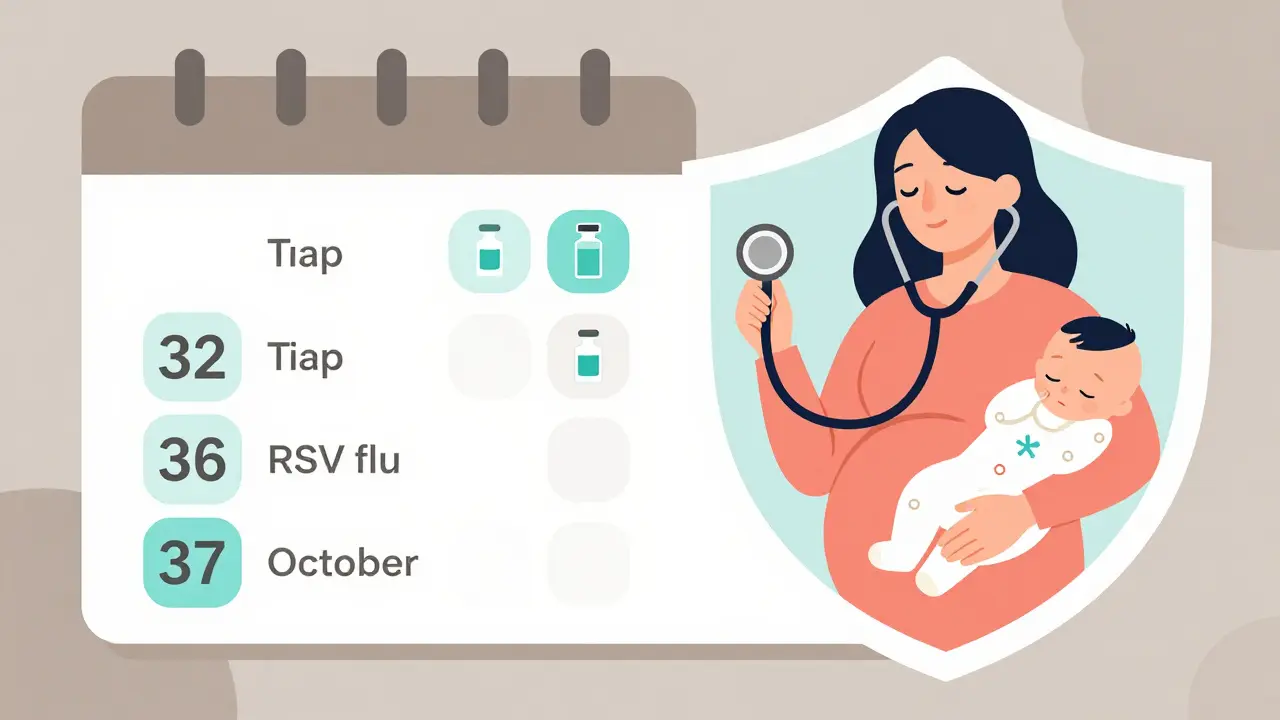
- Tdap (tetanus, diphtheria, pertussis): This is the whooping cough vaccine. It’s given between 27 and 36 weeks, ideally at 27-30 weeks. Why then? That’s when your body transfers the highest amount of antibodies to your baby. One study showed cord blood antibody levels were 1.4 times higher than your own. If you’ve had Tdap before, you still need it again - each pregnancy. Protection doesn’t carry over.
- COVID-19 mRNA vaccines (Pfizer-BioNTech, Moderna): These are safe and recommended at any point during pregnancy. Data from over 139,000 pregnant people in the CDC’s v-safe registry showed no increased risk of miscarriage, preterm birth, or birth defects. In fact, 96% of pregnant people hospitalized with severe COVID-19 in 2021 were unvaccinated. The vaccine reduces your risk of hospitalization by 96% and lowers the chance your baby will be born prematurely.
- RSV vaccine (Abrysvo): Approved in May 2023, this vaccine protects your baby from respiratory syncytial virus - a common cold-like virus that can turn deadly in infants under six months. It’s given between 32 and 36 weeks, during September through January. The MATISSE trial showed an 81.8% reduction in severe RSV infections in the first 90 days after birth. Side effects? Most people report nothing more than a sore arm or mild fatigue.
Vaccines to Avoid During Pregnancy
Live vaccines - those made with weakened viruses - are not recommended during pregnancy. That includes:
- MMR (measles, mumps, rubella)
- Varicella (chickenpox)
- Nasal flu spray (LAIV)
If you need any of these, get them at least 28 days before you try to conceive. Rubella infection during pregnancy can cause serious birth defects. Chickenpox can lead to pneumonia in moms and skin scarring in babies. Don’t wait - plan ahead.
Timing Matters - Here’s the Schedule
Getting the right vaccine at the right time makes all the difference. Here’s what to aim for:
- Flu shot: Anytime during pregnancy, but get it by October if possible. Flu season runs October through May.
- Tdap: Between 27 and 36 weeks. Don’t wait until 35 weeks - the earlier in that window, the better antibody transfer.
- RSV vaccine: Between 32 and 36 weeks, during September to January. If you’re due in March, you might not need it this year.
- COVID-19 vaccine: Get the updated monovalent version as soon as it’s available. No need to wait - even if you had it before pregnancy.
Some providers give Tdap and the flu shot together. That’s fine. No need to space them out. The only thing to avoid? Getting RSV and Tdap too close together - space them by at least two weeks if possible, so your body can respond properly.
What About Breastfeeding?
Yes, you can get all recommended vaccines while breastfeeding. None of them pass into breast milk in harmful amounts. In fact, antibodies from vaccines like flu and Tdap can show up in breast milk, giving your baby extra protection. If you didn’t get Tdap during pregnancy, get it right after delivery - it still helps your baby, though not as well as if you’d gotten it while pregnant.
Side Effects - What to Expect
Most side effects are mild and short-lived:
- Sore arm (69% of people)
- Mild headache or fatigue (8-12%)
- Low-grade fever (rare)
Severe reactions like anaphylaxis are extremely rare - about 1 in 100,000 doses. That’s less likely than being struck by lightning. Providers watch you for 15 minutes after the shot, just as a precaution.
On Reddit’s r/ObGyn, 87% of respondents said they got Tdap during pregnancy. Most said the only side effect was soreness. On BabyCenter, 92% of those who got the RSV vaccine reported no significant issues.
Why Some People Still Hesitate
Concerns about vaccines during pregnancy are real - but they’re often based on old myths. A March of Dimes survey found that 41% of hesitant pregnant people worried about effects on the baby. But here’s what the data says:
- Over 1.5 million pregnant people received flu vaccines between 2010 and 2022 - no safety issues found.
- 1.2 million got Tdap - same result.
- 139,897 pregnant people got COVID-19 vaccines - 84.6% had no pregnancy complications.
Dr. Laura E. Riley, chair of obstetrics at Weill Cornell, says: “The evidence is overwhelming. These vaccines are among the safest things you can do during pregnancy.”
Even the World Health Organization says the benefits far outweigh any theoretical risk - based on 147 studies involving over 2.3 million pregnancies.
What If You Missed a Vaccine?
It happens. Maybe you didn’t know about the RSV vaccine. Or you got Tdap at 20 weeks instead of 27. Don’t panic.
- If you got Tdap before 27 weeks, you can still get it again between 27-36 weeks. It’s safe.
- If you missed the flu shot, get it anytime during flu season - even in March.
- If you’re past 36 weeks and haven’t gotten RSV, talk to your provider. It’s not recommended after 36 weeks, but they can advise based on your risk.
The goal isn’t perfection - it’s protection. Even a late vaccine is better than none.
What’s Next? The Future of Pregnancy Vaccines
Science isn’t standing still. In September 2023, the FDA approved the first Group B Strep (GBS) vaccine for Phase III trials. GBS causes pneumonia and sepsis in newborns - and a vaccine could prevent thousands of cases. A universal flu vaccine is also in development, with early results showing 85% effectiveness against multiple strains.
Right now, global coverage of pregnancy vaccines is still low - only 15-25% in low-income countries. But in the U.S., Tdap rates jumped from 14% in 2012 to 60% in 2022. That’s progress. And it’s not just about vaccines - it’s about making sure every pregnant person gets clear, consistent advice from their provider.
Since January 2023, ACOG has required doctors to document vaccine counseling in prenatal records. Result? Provider recommendation rates went from 76% to 94%.
Final Thoughts
Getting vaccinated during pregnancy isn’t about taking risks - it’s about reducing them. You’re not injecting your baby with something unknown. You’re giving them your body’s strongest defense against real, dangerous diseases.
Flu, whooping cough, RSV, and COVID-19 don’t wait. And your baby can’t fight them alone. The vaccines you get now are the first shield they’ll ever have.
Ask your provider about the vaccines you need. Bring this information. Ask questions. You’ve done everything right so far - this is just one more step in protecting the person you love most.
Can I get the flu shot during my first trimester?
Yes. The inactivated flu shot is safe during any trimester, including the first. The CDC recommends getting it as soon as it’s available each year - usually by late summer. Waiting until later doesn’t make it safer. In fact, getting it early means you’re protected during peak flu season, which can start as early as October.
Is the Tdap vaccine necessary if I got it as a teen?
Yes. Immunity from childhood Tdap fades over time. Even if you got it at age 11 or 12, you need another dose during each pregnancy. Antibody levels drop significantly after five years. Getting Tdap between 27 and 36 weeks ensures your baby gets the highest possible protection against whooping cough - a disease that can be deadly for newborns.
Can the RSV vaccine cause preterm labor?
No. The RSV vaccine (Abrysvo) was tested in over 7,000 pregnant people across 17 countries. No increase in preterm birth, low birth weight, or other complications was found. The vaccine is given between 32 and 36 weeks - well after the main risk period for preterm labor. Side effects are mild: sore arm, headache, or fatigue for a day or two.
What if I’m allergic to eggs? Can I still get the flu shot?
Yes. Most flu vaccines today are made without egg proteins or contain only trace amounts. Even people with severe egg allergies can safely receive the flu shot. The CDC says you don’t need to be observed for longer than 30 minutes - and many clinics now offer egg-free versions. Just tell your provider about your allergy so they can choose the right type.
Will vaccines affect my baby’s development?
No. Large studies tracking over 2.3 million pregnancies show no link between recommended vaccines and birth defects, developmental delays, or autism. The ingredients in these vaccines - like aluminum salts or mRNA - are carefully tested and do not cross the placenta in harmful amounts. The real danger comes from the diseases they prevent, not the vaccines themselves.
Can I get vaccinated if I’m breastfeeding?
Absolutely. All recommended vaccines are safe while breastfeeding. None contain live viruses that can pass through breast milk. In fact, antibodies from vaccines like flu and Tdap can show up in breast milk, giving your baby extra protection. If you didn’t get Tdap during pregnancy, get it right after delivery - it still helps your baby, though not as much as if you’d gotten it while pregnant.
Do I need to space out the vaccines?
You can get the flu shot and Tdap together - no problem. The same goes for the COVID-19 vaccine. The only exception is RSV and Tdap: if you’re getting both, space them by at least two weeks. This gives your immune system time to respond fully to each one. But even if they’re given closer together, it’s still safe. The goal is protection, not perfection.
Is it safe to get vaccinated if I’m pregnant with twins?
Yes. Twin pregnancies don’t change vaccine safety or timing. The same recommendations apply: flu shot anytime, Tdap between 27-36 weeks, RSV between 32-36 weeks. You may be at higher risk for complications from infections like flu or COVID-19, so vaccination is even more important. Studies show antibody transfer works just as well in twin pregnancies.
Next steps: Talk to your provider at your next prenatal visit. Ask which vaccines you need, when to get them, and whether your insurance covers them. Most do - including Medicaid and private plans. If your provider doesn’t offer them, ask for a referral. Your baby’s first defense starts with you.

lorraine england
January 22, 2026 AT 16:00I got the Tdap at 28 weeks and honestly? My arm was sore for two days and that was it. My baby is 4 months old now and hasn't had a single cold - I swear it's because of the vaccine. People act like you're poisoning your kid, but you're literally giving them armor.
Also, my OB gave me the flu shot and Tdap in the same visit. No drama. No drama at all.
Kevin Waters
January 23, 2026 AT 19:13Just wanted to add some real-world context - I’m a nurse in a high-risk OB unit. I’ve seen babies in the NICU with whooping cough. They’re tiny. They can’t even cry properly. One mom told me she didn’t get Tdap because she ‘heard it causes autism.’ I didn’t say a word. I just handed her this CDC handout and walked away. She got it the next week.
Trust the data. Not Reddit memes. The science is screaming at us - and babies are listening.
Izzy Hadala
January 24, 2026 AT 06:39While the data presented is statistically robust, one must consider the epistemological foundations of the cited studies. The CDC’s v-safe registry, while large-scale, is self-reported and subject to selection bias. Furthermore, the MATISSE trial’s primary endpoint was efficacy against severe RSV, not long-term neurodevelopmental outcomes.
That said, the risk-benefit calculus remains overwhelmingly favorable. The absence of evidence for harm, combined with robust evidence of benefit, constitutes a prima facie case for vaccination. I commend the author for synthesizing this information with precision.
Gina Beard
January 25, 2026 AT 13:27We think we’re protecting our babies.
But really, we’re just trying to outrun our own fear.
And maybe that’s okay.
Tommy Sandri
January 26, 2026 AT 14:09From a global health perspective, the disparities in vaccine access are alarming. While U.S. Tdap coverage rose from 14% to 60% between 2012 and 2022, in parts of sub-Saharan Africa, maternal vaccination rates for pertussis remain below 5%.
Equity in prenatal care isn’t a luxury - it’s a human right. The fact that we can protect newborns with a simple shot and still leave millions behind is a moral failure, not a medical one.
Sushrita Chakraborty
January 27, 2026 AT 07:21I am from India, and here, many pregnant women are not even aware that vaccines can be administered during pregnancy. My sister-in-law was told by her aunt, 'If you take a shot, the baby will be born with a mark.' She believed it until I showed her WHO guidelines in English and Hindi.
Education, not coercion, is the key. Please, healthcare providers - don't assume knowledge. Teach. Gently. Clearly.
And yes - I got both flu and Tdap during both my pregnancies. No side effects. Two healthy children.
Josh McEvoy
January 27, 2026 AT 07:46got the rsv shot last week 🤯 my arm hurt for 2 days but my baby’s gonna be a superhero 😎 no cap. also my mom cried when i told her i got vaccinated bc she thought it was 'dangerous' lmao
mom: 'but what if it messes with the baby’s brain?'
me: 'mom, the virus can kill babies. the vaccine just gives them superpowers.'
she’s still not convinced but she brought me soup so… progress? 🥲
Sawyer Vitela
January 28, 2026 AT 14:4787% of r/obgyn users got Tdap? That’s not data - that’s confirmation bias. You’re sampling a self-selected group of people who already believe in vaccines. Where’s the control group? Where’s the longitudinal data beyond 2 years? Where’s the funding disclosure?
Also, 96% of hospitalized COVID patients were unvaccinated? That’s a tautology. Of course they were. The vaccinated aren’t getting hospitalized. That’s the point. But correlation ≠ causation. And you’re not proving safety - you’re just repeating marketing slogans.
Shanta Blank
January 29, 2026 AT 10:53Oh my god. I got the RSV vaccine and now my baby’s immune system is basically a god-tier Fortnite skin. I’m basically a walking vaccine factory. My husband called me ‘Captain Antibody’ and I cried. Not because I was sad - because I finally felt like I was doing something right in this chaotic world.
Also, my sister’s OB told her not to get the flu shot because ‘it might cause miscarriage.’ I screamed into a pillow for 10 minutes. Like… what planet is she on? I’m gonna send her this post. And then I’m gonna send her a vaccine sticker. With glitter.
Tiffany Wagner
January 30, 2026 AT 04:20I missed Tdap until 34 weeks but got it anyway. My baby is fine. I was so scared before but now I feel like an idiot for worrying so much. The nurse was nice. The shot didn’t hurt. I just wish I’d known sooner.
Also, I’m still breastfeeding. I think I’m doing okay.