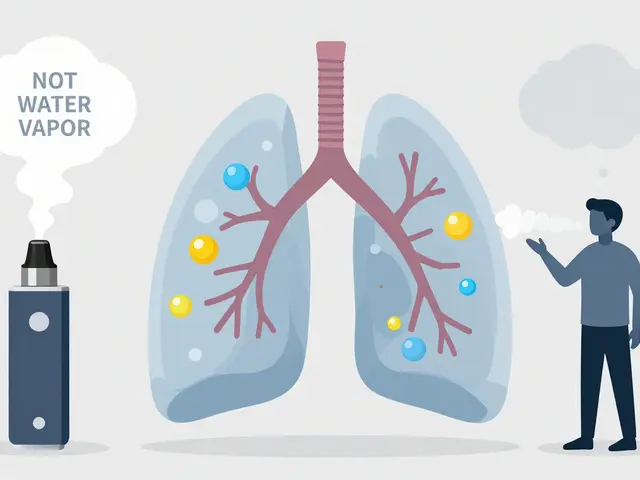
When you see someone vaping on the street, it’s easy to assume they’re avoiding the dangers of smoking. After all, ads and influencers have spent years selling vaping as a clean, harmless alternative. But the truth is more complicated - and far more dangerous for your lungs than most people realize.
What’s Actually in Vaping Aerosol?
Most people think e-cigarettes just produce water vapor. They don’t. What comes out of those devices is an aerosol - tiny droplets of chemicals suspended in air. The base ingredients are usually propylene glycol and vegetable glycerin. Sounds harmless? A 2024 study from the University of North Carolina found these substances are toxic to lung cells, and the more additives in the e-liquid, the worse the damage. That’s not speculation. It’s lab-tested fact.
But the base is only part of the problem. Vaping aerosols contain heavy metals like nickel, lead, and tin - particles that come from the heating coils inside the device. They also carry volatile organic compounds, including benzene, a known carcinogen found in car exhaust. Even flavorings aren’t safe. Diacetyl, once used in butter-flavored popcorn and linked to "popcorn lung," has been banned in many countries. But some cheap or black-market vape liquids still contain it. And even without diacetyl, other flavoring chemicals like acetaldehyde and formaldehyde are present in every puff.
The U.S. Surgeon General confirmed in 2016 that secondhand vaping exposes others to nicotine, ultrafine particles, and these same toxins. There’s no such thing as harmless vapor.
How Vaping Damages Your Lungs
Your lungs aren’t designed to handle chemical aerosols. Every time you inhale vape, you’re coating your airways with irritants. The result? Chronic inflammation. That’s not a minor annoyance - it’s the first step toward serious disease.
Studies show vapers have higher levels of inflammatory markers in their lungs than non-users. This inflammation doesn’t go away after you stop. It lingers, weakening your lung’s natural defenses. The American Thoracic Society found that vaping suppresses immune cells in the lungs, making it harder for your body to fight off infections like pneumonia and bronchitis. Even if you’ve never smoked, vaping alone raises your risk of recurring respiratory infections.
And it’s not just about short-term irritation. Long-term exposure changes lung tissue. A 2025 analysis from the NIH showed current e-cigarette users have a 48% higher risk of developing COPD - chronic obstructive pulmonary disease - compared to non-users. That’s not a small increase. That’s a major jump in disease risk, even when compared to people who’ve never smoked anything.
The EVALI Crisis: A Wake-Up Call
In 2019, the U.S. saw a sudden spike in severe lung injuries linked to vaping. Over 2,800 people were hospitalized. 68 died. The outbreak was called EVALI - E-cigarette or Vaping Use-Associated Lung Injury.
The culprit? Vitamin E acetate. It was added to THC vape cartridges as a thickening agent. When heated, it turned into a sticky substance that coated lung tissue, causing massive inflammation and scarring. Many victims needed oxygen support or even lung transplants.
While the worst of the outbreak has passed, the lesson remains: unregulated vape products can cause irreversible damage. Even today, black-market vapes with unknown ingredients are still circulating. And even legal products aren’t risk-free. The same chemicals that caused EVALI are still in many commercial e-liquids - just in smaller amounts.
Is Vaping Better Than Smoking?
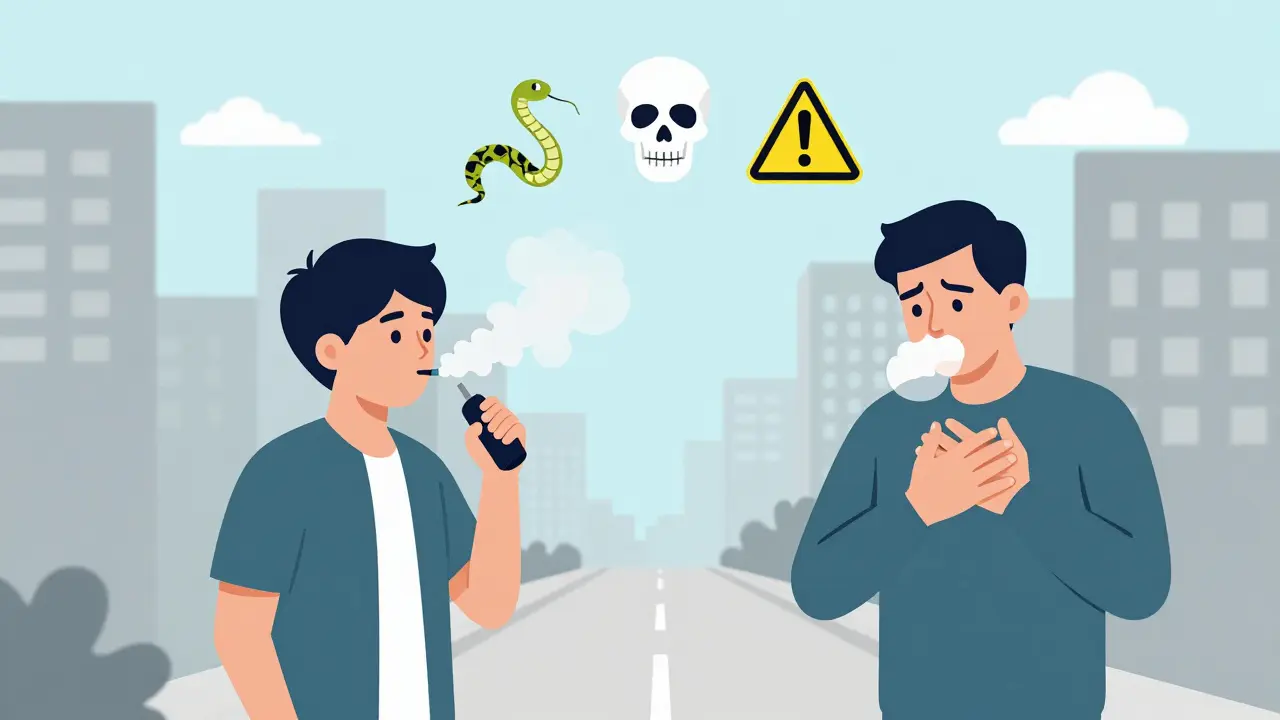
Yes, in one narrow sense: vaping doesn’t produce tar or the thousands of chemicals found in burning tobacco. That’s why some public health groups say it’s "less harmful" than smoking. But "less harmful" doesn’t mean "safe."
Let’s be clear: if you’re a current smoker, switching to vaping might reduce your exposure to some toxins. But if you’ve never smoked, vaping introduces new risks you didn’t have before. The CDC says breathing in vape aerosols can worsen asthma and bronchitis. The American Lung Association warns it can cause irreversible lung damage.
And here’s the catch: vaping often leads to smoking. Studies show teens who vape are three times more likely to start smoking cigarettes within a year. The nicotine addiction is the same. The brain doesn’t care if the nicotine comes from a cigarette or a vape pen. It just wants more.
Symptoms You Shouldn’t Ignore
You don’t need to be hospitalized to know vaping is hurting you. Many users develop symptoms slowly:
- Persistent cough that won’t go away
- Shortness of breath during light activity
- Chest tightness or pain
- Frequent bronchitis or pneumonia
- Reduced ability to exercise
These aren’t "just a cold." They’re signs your lungs are under stress. If you vape and have any of these symptoms, see a pulmonary specialist. Early intervention can prevent permanent damage.
Can Your Lungs Recover?
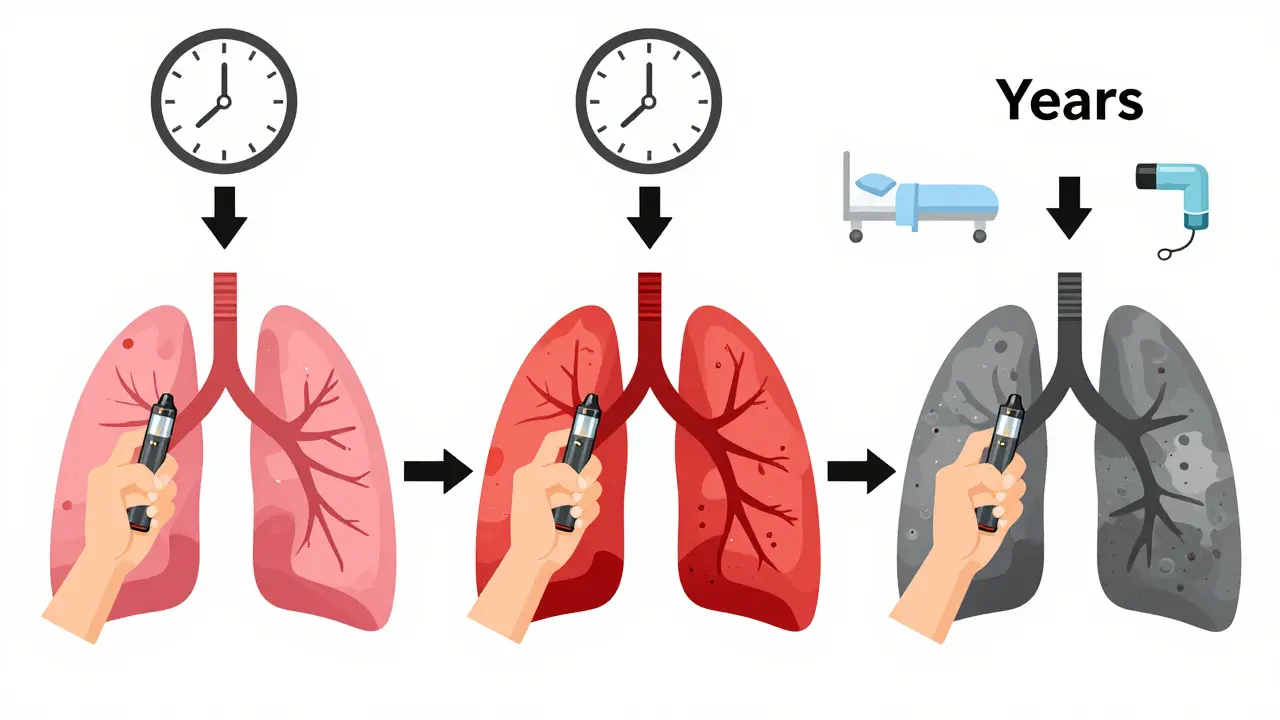
Good news: some damage is reversible. If you quit vaping, inflammation can start to reduce within weeks. Lung function may improve. But not all damage heals. Scarring from chronic irritation, changes in lung cell structure, and weakened immune defenses may stay with you for life.
There’s no guaranteed timeline for recovery. It depends on how long you vaped, how often, and what chemicals you were exposed to. But quitting is the only way to stop further harm. And the sooner you quit, the better your chances.
What Should You Do?
If you vape and want to protect your lungs:
- Stop completely. There’s no safe level of vaping when it comes to lung health.
- Don’t switch back to cigarettes. Quit nicotine entirely. Use proven methods like counseling or FDA-approved nicotine replacement therapy.
- Get checked. If you’ve vaped for more than a few months, ask your doctor for a lung function test.
- Stay away from black-market vapes. Even if you think you know what’s in them, you don’t.
There’s no such thing as a healthy vape. The science is clear: vaping isn’t harmless. It’s not a clean alternative. It’s a direct path to lung damage - and the damage adds up over time.
Is vaping safer than smoking?
Vaping is less harmful than smoking traditional cigarettes because it doesn’t involve burning tobacco, which releases thousands of toxic chemicals and tar. But that doesn’t mean it’s safe. Vaping still exposes your lungs to harmful chemicals like formaldehyde, acrolein, heavy metals, and ultrafine particles. It also increases the risk of lung inflammation, COPD, and respiratory infections. For non-smokers, vaping introduces new health risks they wouldn’t otherwise face.
Can vaping cause COPD?
Yes. A 2025 NIH study found that current e-cigarette users have a 48% higher risk of developing COPD compared to non-users. The risk increases with how often and how long someone vapes. While smoking is still the leading cause of COPD, vaping is now recognized as an independent risk factor. The inflammation and lung damage from vaping chemicals can lead to airflow obstruction over time, even in people who’ve never smoked.
What is EVALI and should I be worried about it?
EVALI stands for E-cigarette or Vaping Use-Associated Lung Injury. It was a nationwide outbreak in 2019 that hospitalized over 2,800 people and caused 68 deaths. Most cases were linked to THC vape cartridges contaminated with vitamin E acetate. While strict regulations have reduced this specific threat, EVALI proved that unregulated vaping products can cause life-threatening lung damage. Even legal vapes contain chemicals that irritate lung tissue, so the risk of serious injury remains.
Does vaping affect non-users nearby?
Yes. Secondhand vaping aerosol contains nicotine, ultrafine particles, and toxic chemicals like formaldehyde and acrolein. These can be inhaled by bystanders, especially in enclosed spaces. Children and people with asthma or lung conditions are particularly vulnerable. Unlike cigarette smoke, vape aerosol doesn’t linger as long, but it still poses a health risk to those around the user.
Can quitting vaping improve lung health?
Yes. Within weeks of quitting, lung inflammation begins to decrease. Many people notice improved breathing and less coughing within 1-3 months. Lung function can improve, especially if vaping was recent. However, long-term damage like scarring or weakened immune defenses may not fully reverse. The sooner you quit, the better your chances of recovery. No amount of vaping is worth the risk to your lungs.
There’s no magic trick, no hidden benefit, no safe way to vape. If you’re using it to quit smoking, you’re trading one problem for another. If you’re using it because it’s trendy, you’re risking your lungs for a habit that’s far from harmless. Your lungs don’t lie. If they’re hurting, it’s not just in your head. It’s real. And it’s preventable.