
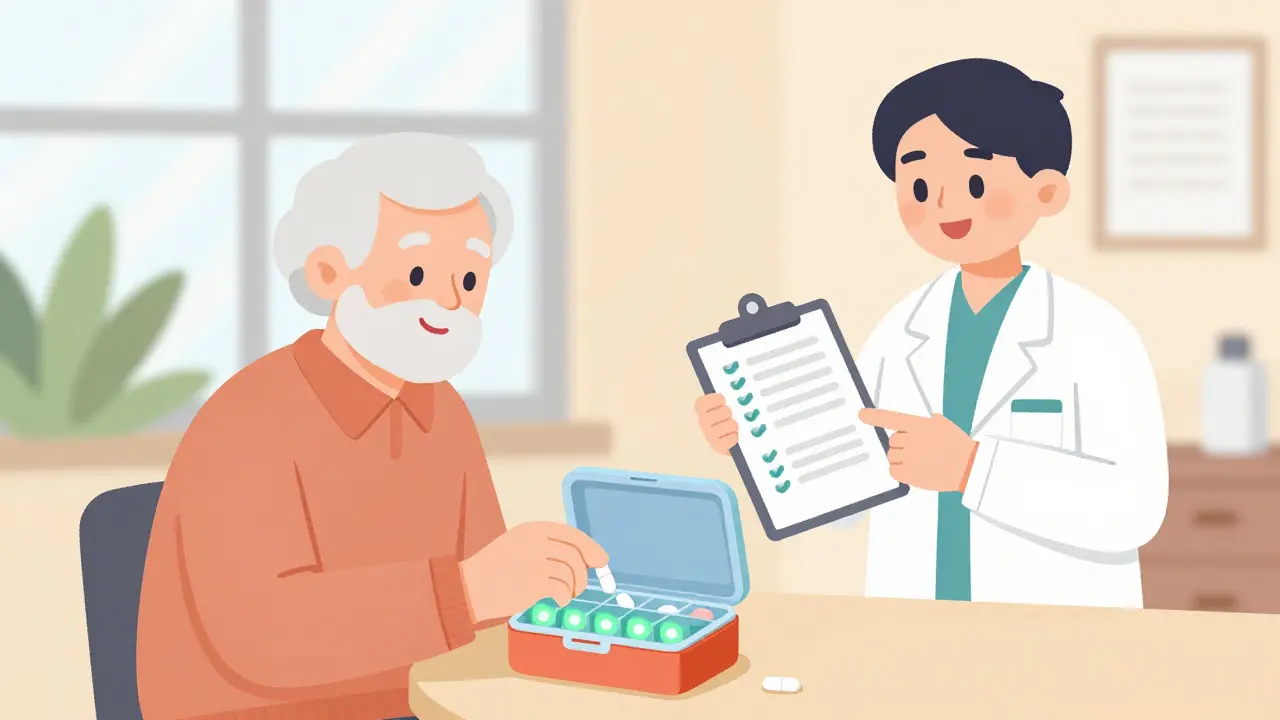
When you pick up a generic prescription, you’re saving money-often 80% less than the brand-name version. But here’s the catch: people stop taking generic meds way more often than brand-name ones. Why? Because they don’t come with reminders, support apps, or patient coaches. That’s where adherence tracking comes in. Digital tools are now stepping in to fill the gap, helping patients stay on track with their daily pills without relying on memory or luck.
Why Generic Medications Need Special Attention
Generics make up 90% of all prescriptions in the U.S., but only about half of patients take them as directed after six months. For chronic conditions like high blood pressure, diabetes, or asthma, missing even a few doses can lead to hospital visits, complications, or worse. The problem isn’t that generics don’t work-they do. It’s that patients don’t feel the same urgency or support with generics as they do with branded drugs, which often come with free reminder services, loyalty programs, or nurse hotlines.Without digital tools, adherence is measured by refill patterns. But that’s flawed. Someone might refill a prescription early because they ran out, not because they’re taking it consistently. Or they might refill it late because they forgot, not because they stopped treatment. That’s why real-time tracking matters.
How Digital Adherence Tools Work
These tools go beyond simple phone alerts. They use smart packaging, sensors, and cloud software to record exactly when a pill is taken. Here’s how some of the most common systems function:- Smart pill bottles like those from MEMS AS® have electronic caps that log each time the bottle is opened. They send data to a cloud platform, which then generates reports for pharmacists or doctors.
- Connected pillboxes like Tenovi use LED lights (red for missed, green for taken) and cellular connectivity to track multiple medications at once. They send alerts if a dose is skipped.
- Electronic blister packs from Wisepill Technologies track when each compartment is punched out. The data is sent via Wi-Fi or cellular to a dashboard.
- Video monitoring systems like VDOT require patients to record themselves taking medication. While accurate, they’re invasive and have high dropout rates.
- Integrated pharmacy dashboards like McKesson APS use refill data to predict adherence risk and flag patients who need outreach.
Most of these systems sync with smartphones (iOS 12+ or Android 8+), connect to electronic health records (EHRs) like Epic and Cerner, and use FHIR APIs to share data securely. But not all are created equal.
Comparing the Top Systems
| Tool | Accuracy | Cost | Best For | Limitations |
|---|---|---|---|---|
| MEMS AS® | 100% (clinical trials) | $150-$300/month (clinic use) | Clinical research, pharmaceutical trials | Too complex for everyday patients; no patient-facing app |
| Tenovi Pillbox | 92-95% | $149 device + $29.99/month | Patients on 3+ daily meds (e.g., hypertension, diabetes) | Battery drains fast; cellular gateway needs frequent charging |
| Wisepill Electronic Blister Packs | 88-90% | $50-$100 per pack (reusable device) | Long-term chronic conditions with fixed dosing | Requires manual loading; not ideal for variable dosing |
| McKesson APS Dashboard | 75-80% (estimated from refills) | $99-$299/month (pharmacy subscription) | Pharmacies tracking bulk patient adherence | Relies on refill data, not actual ingestion; misses early refills |
| VDOT (Video Monitoring) | 95% | Varies by provider | High-risk patients (e.g., TB, transplant meds) | 30% drop-out due to privacy concerns; time-consuming |
For most people taking generics, the Tenovi Pillbox offers the best balance of accuracy, ease of use, and patient engagement. But if you’re a pharmacy trying to monitor hundreds of patients, McKesson APS gives you a broad view without needing physical devices.
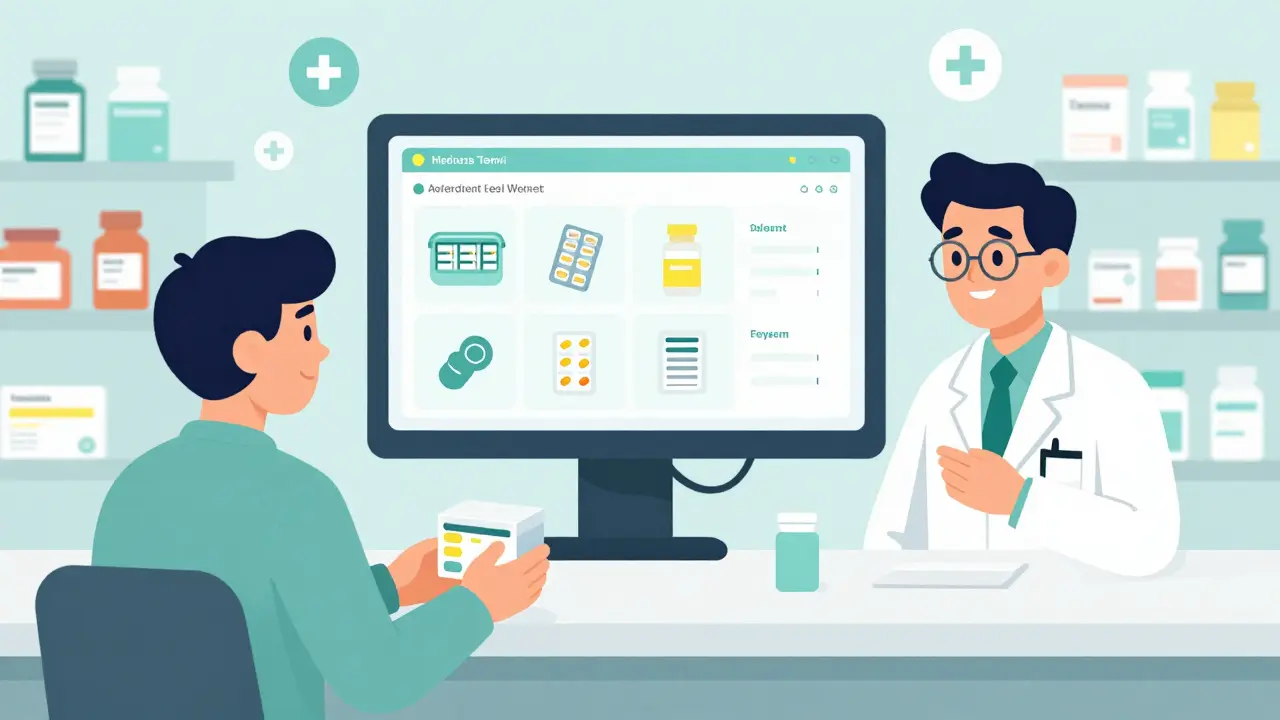
What Doesn’t Work (And Why)
There are over 2,000 medication reminder apps on the App Store. Most are useless. A 2022 study found only seven met basic quality standards for usability, data privacy, and clinical relevance. Why? Because they just send alerts. No one checks if the pill was actually taken. No one tracks the dose. No one shares data with providers.Another problem: many tools assume patients are tech-savvy. But for older adults on five or more meds, setting up a Bluetooth device or downloading an app can be overwhelming. One pilot study found 36% of users stopped using their smart pillbox after just two months because it was too bulky or complicated to charge.
And then there’s the data issue. Some platforms claim to track adherence but only use refill records. That’s like guessing whether someone ate dinner because they bought groceries. Real adherence tracking needs direct observation-whether through sensors, video, or physical interaction with the packaging.
Real-World Results
The numbers speak for themselves. In a 2022 study of asthma and COPD patients using digital tools after the pandemic surge, adherence jumped by 15% compared to traditional methods. That’s not a small win-it’s the difference between managing a condition and ending up in the ER.One pharmacy in Wisconsin used Tenovi Pillboxes for 87 patients on hypertension generics. After six months, adherence rose from 51% to 79%. Hospital visits for heart-related issues dropped by 40%. The cost? About $18,000 for devices and service. The savings? Over $200,000 in avoided care.
But success isn’t automatic. A 2023 AHRQ case study showed that patients who got a 3-minute chat with their pharmacist before getting a tracker were 35% more likely to stick with it. That human touch matters. A tool alone won’t fix behavior. It needs to be paired with education, follow-up, and trust.
What’s Next for Adherence Tracking
The market is growing fast. By 2030, the global adherence tech market could hit $8 billion, with generics driving two-thirds of that growth. New developments are coming:- AI risk prediction: CVS Health is testing machine learning models that scan past adherence patterns to flag patients at risk-before they stop taking meds.
- EHR integration: Tenovi now connects directly to 12 major EHR systems, letting doctors see adherence data during appointments.
- Regulatory clarity: The FDA released draft guidance in early 2023 to standardize how these tools are tested and validated.
- Payer incentives: Medicare Advantage plans now tie reimbursement to adherence scores. A 1-point increase in adherence can mean $1.2 million more in revenue per 100,000 members.
Still, big hurdles remain. Only 38% of Medicare Advantage plans cover these tools. Most independent pharmacies can’t afford them. And patients worry-63% say they’re uncomfortable sharing their pill-taking habits with anyone.
How to Get Started
If you’re a patient:- Ask your pharmacist: "Do you offer any tools to help me remember my generics?"
- Look for systems that don’t require constant phone use. A physical pillbox with lights is often easier than an app.
- Try one for 30 days. If it feels like a chore, it won’t work.
If you’re a pharmacy or clinic:
- Start with McKesson APS or similar dashboards to identify high-risk patients.
- Pair that with a pilot of Tenovi or Wisepill for 20-30 patients on chronic meds.
- Train staff to spend 3 minutes at pickup asking: "Do you ever forget your pills?" That simple question opens the door.
The goal isn’t to turn patients into data points. It’s to help them live better, longer, without the fear of their meds slipping through the cracks. Digital tools aren’t magic-but when they’re chosen right, they make all the difference.
Are digital adherence tools covered by insurance?
Most insurance plans, including Medicare Advantage, do not yet cover smart pillboxes or tracking devices. Only 38% of Medicare Advantage plans reimburse for remote therapeutic monitoring as of late 2022. Some private insurers cover them for high-risk patients with specific conditions like heart failure or epilepsy, but it’s rare. Patients usually pay out-of-pocket, though some pharmacies offer rental programs or subsidies.
Can these tools track multiple medications at once?
Yes. Systems like Tenovi Pillbox and Wisepill are designed for polypharmacy. Tenovi can track up to six different medications in one device, with separate LED indicators and scheduled alerts for each. MEMS AS works with multi-dose blister packs. But basic reminder apps usually only handle one medication at a time, which makes them ineffective for complex regimens.
Do these tools work for elderly patients?
They can, but only if chosen carefully. Elderly patients struggle with apps, small screens, and complex setups. Physical devices with large buttons, LED lights, and automated alerts (like Tenovi) perform better than smartphone apps. A 2022 study found that 68% of patients over 70 preferred a pillbox with visual cues over phone notifications. Pairing the device with a weekly call from a pharmacist increases long-term use by over 40%.
Is my data safe if I use an adherence tracker?
It depends. Clinical-grade systems like MEMS AS and Tenovi use HIPAA-compliant encryption and store data on secure servers. Consumer apps often don’t. A 2022 study found 78% of medication apps failed to explain how data was used or shared. Always ask: "Who sees my pill-taking data?" and "Can I opt out?" If the answer is vague, walk away. Your adherence data should be private-unless you choose to share it with your doctor.
What’s the cheapest way to improve adherence?
The cheapest and most effective method? A pharmacist-led 3-minute check-in during pickup. A 2023 AHRQ study showed this simple step improved adherence by 22% across all age groups. No tech needed. Just asking: "Do you ever skip your meds?" and listening. For patients who need more, a $50 Wisepill blister pack or a $149 Tenovi device is a solid next step-but never skip the human conversation first.

shannon kozee
March 22, 2026 AT 10:55Pharmacist asked her at pickup if she ever forgot meds. That one question changed everything.
trudale hampton
March 22, 2026 AT 17:07And yeah, the human touch matters too. My pharmacist called him weekly. Just to check in. Not to nag. To care.
Solomon Kindie
March 23, 2026 AT 11:16next thing you know the FDA will mandate biometric scans before you take your ibuprofen
its not about adherence its about control and the pharma industry just found a new way to monetize your daily routine
Natali Shevchenko
March 24, 2026 AT 08:54These tools? They’re bandaids on a hemorrhage. We need universal access, affordable meds, and healthcare that doesn’t treat patients like invoices. A pillbox won’t fix that. But maybe it’s a start. A small, blinking, LED-lit start.
Nicole James
March 24, 2026 AT 21:11They don't want me healthy. They want me monitored. And when I'm flagged as 'non-adherent'... guess who gets dropped from coverage? Don't be fooled. This isn't help. It's a trap wrapped in LED lights.
Nishan Basnet
March 25, 2026 AT 01:06Maybe the real innovation isn’t in the tech-it’s in the humanity. That 3-minute chat? That’s the gold standard. No app needed. Just someone who remembers your name.
Jackie Tucker
March 25, 2026 AT 01:10At least the $50 Wisepill blister pack lets you feel like a lab rat with extra steps. Bravo. Someone get this man a Nobel Prize for solving the problem of ‘people forgetting to take pills’ with a $300/month subscription.
Thomas Jensen
March 25, 2026 AT 05:51So now we just ask. Every time. 'You taking your meds?'
That’s all it takes. No tech. Just a human voice.
matthew runcie
March 25, 2026 AT 08:22Also-pharmacist chats work. Always. Just ask. Listen. Don’t lecture.
Shaun Wakashige
March 26, 2026 AT 20:31