
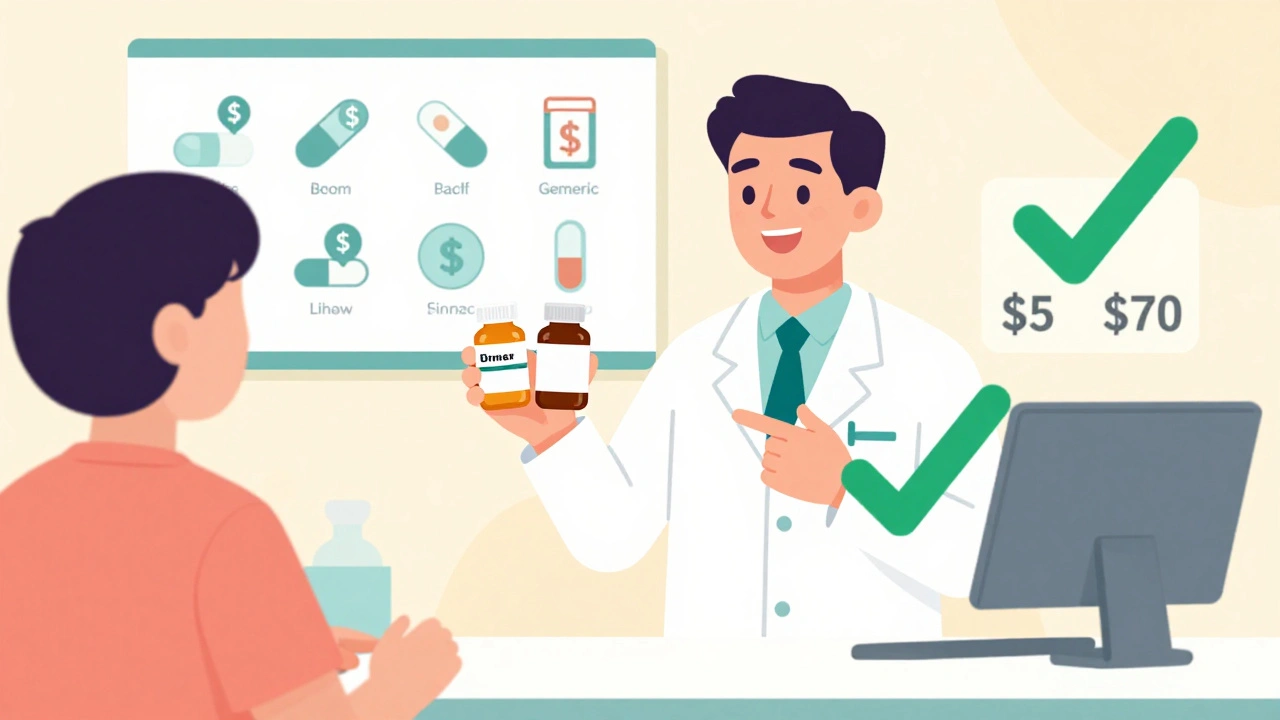
Workplace wellness programs aren’t just about gym memberships and mindfulness apps. The real game-changer? Pharmacists helping employees choose generic medications. It’s not a small detail-it’s one of the most effective, underused tools to cut costs, improve health, and keep people working. And it’s happening right now in offices, factories, and hospitals across the country.
Why Generics Matter More Than You Think
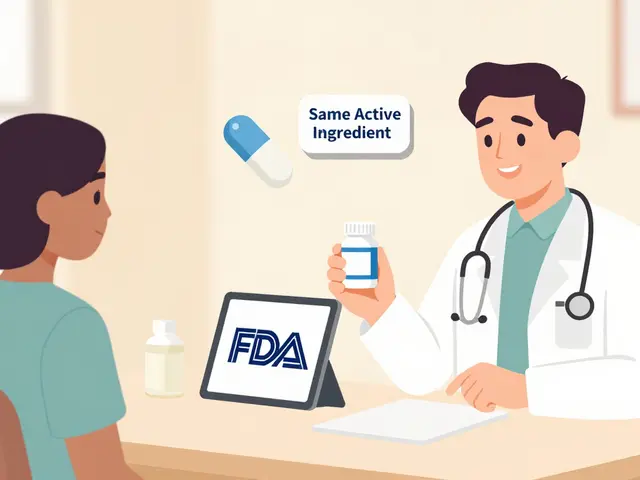
Most people think generics are cheaper because they’re lower quality. That’s not true. A generic drug has the same active ingredient, dose, strength, and safety profile as the brand-name version. The FDA requires it. The only differences? The color, shape, or inactive fillers-and the price. A generic ibuprofen costs a fraction of Advil. Lisinopril for high blood pressure? Same thing. The generic version saves patients hundreds per year. In the U.S., 90% of prescriptions filled are for generics. But they make up only 22% of total drug spending. That gap? That’s where pharmacists step in. They’re the ones who know which generics are available, which ones are therapeutically equivalent, and which ones actually work for a specific patient. Without them, employees might stick with expensive brands out of habit, fear, or confusion.The Pharmacist’s Unique Edge in Workplace Wellness
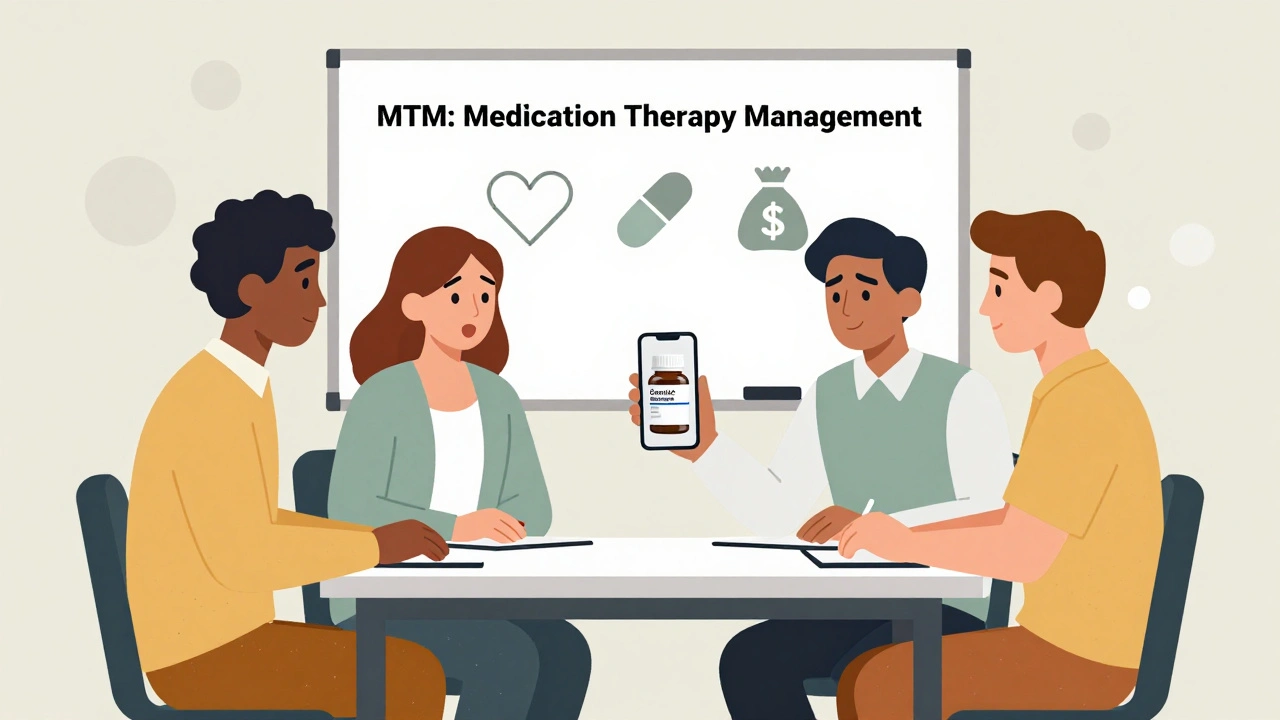
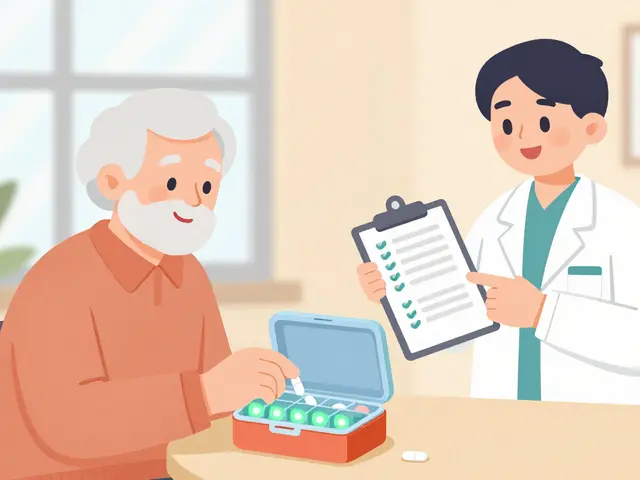
Pharmacists are the only healthcare professionals who see every medication a patient takes. They don’t just fill prescriptions-they review them. In workplace wellness programs, that means they sit down with employees and ask: “What are you taking? Why? Is it working? Is it costing you too much?” This is called Medication Therapy Management (MTM). It’s not a sales pitch. It’s a clinical service. Pharmacists check for duplicates, interactions, and unnecessary drugs. Then they ask: “Is there a generic alternative that’s just as safe and effective?” The results? PBMs that include pharmacist-led MTM see 15-20% higher medication adherence rates. That’s huge. The CDC says poor adherence causes 125,000 deaths every year in the U.S. and costs the system up to $300 billion. A pharmacist catching a patient who stopped taking their blood pressure med because it was too expensive? That’s not just saving money. It’s saving lives.How Pharmacists Actually Talk Patients Into Generics
It’s not enough to say, “This is cheaper.” People need to understand why it’s safe. Pharmacists use simple, real-world examples:- “The generic version of your cholesterol pill is made by the same company that makes the brand name. It’s literally the same tablet, just without the fancy packaging.”
- “I take a generic for my thyroid. My doctor prescribed it. My insurance covers it. And my labs haven’t changed.”
- “The FDA requires generics to be absorbed in your body within 80-125% of the brand. That’s tighter than the tolerance for different batches of the brand-name drug.”
What Employers Are Doing Right
Employers aren’t just hoping employees will choose generics. They’re building systems around it. Most large companies now use three-tier prescription drug plans:- Tier 1: Generics (copay $5-$10)
- Tier 2: Preferred brands (copay $30-$50)
- Tier 3: Non-preferred brands (copay $70+)
Where It Falls Short-and Why
Not every pharmacist can switch a brand to a generic. Laws vary by state. In 49 states, pharmacists can substitute generics automatically-if they’re listed as therapeutically equivalent in the FDA’s Orange Book. But in some places, they need prior approval from the prescriber. That delays the switch. Sometimes by days. That defeats the whole point. And not every doctor is on board. Some still believe brand names are “better.” But studies show pharmacists correctly identify appropriate substitutions in 98.7% of cases when following protocol. The problem isn’t skill-it’s communication. Hospital pharmacists often focus more on clinical outcomes than cost. Community pharmacists? They’re the ones who see the real-world impact: patients skipping doses because they can’t afford the brand. That’s why community pharmacists are leading the charge in workplace wellness.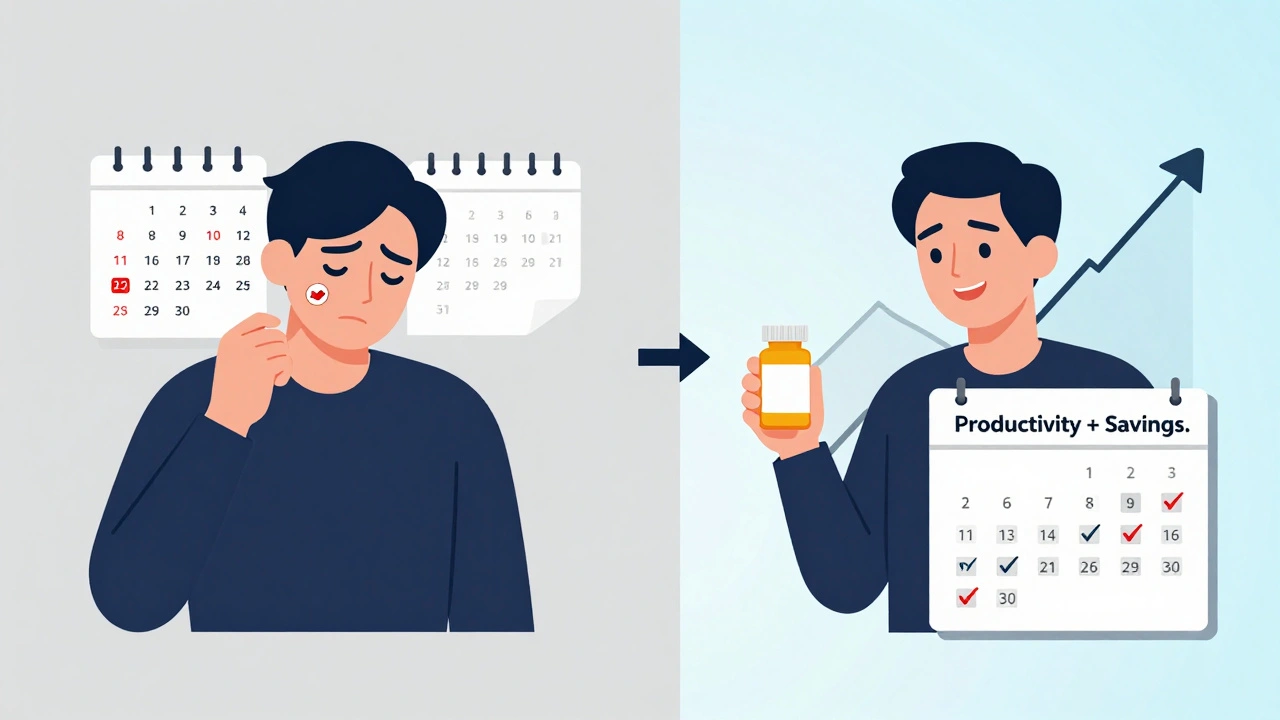
What Pharmacists Need to Succeed
To make this work, pharmacists need more than good intentions. They need:- Access to employee health data (with privacy safeguards)
- Training in pharmacoeconomics and benefit design
- Standardized educational materials about the ANDA approval process
- Time to do consultations-15 minutes per patient, not 3
The Future Is Already Here
By 2027, the American Pharmacists Association predicts 85% of large employer wellness programs will include pharmacist-led medication optimization. Why? Because the ROI is undeniable. For every $1 spent on pharmacist services, employers save $7.20 in medical costs. That’s not a guess. It’s from a peer-reviewed economic study. That money comes from fewer ER visits, fewer hospitalizations, and fewer missed workdays. And with the 2024 PBM Transparency Act forcing insurers to reveal hidden markups, employers are waking up. They’re no longer okay with paying $200 for a brand-name drug when the generic costs $12. They want transparency. They want results. And they’re turning to pharmacists to deliver both.What You Can Do Today
If you’re an employer: Ask your benefits provider if they include pharmacist consultations in your wellness program. If not, push for it. It’s the most cost-effective health intervention you’re not using. If you’re an employee: When you get a new prescription, ask your pharmacist: “Is there a generic? Is it safe? Can you explain why?” Don’t assume it’s too expensive. Ask. If you’re a pharmacist: Start talking. Not just about dosing. Talk about cost. Talk about real life. Show your own generic prescriptions. Tell your stories. People trust people-not pamphlets. Workplace wellness isn’t about yoga mats and fruit bowls. It’s about making sure people can afford to take their medicine every day. That’s where pharmacists make the difference.Are generic medications really as safe as brand-name drugs?
Yes. The FDA requires generic drugs to have the same active ingredient, strength, dosage form, and route of administration as the brand-name version. They must also meet the same strict standards for purity, stability, and bioequivalence-meaning they’re absorbed in your body at the same rate and to the same extent. Generics are tested in labs and clinical trials just like brand-name drugs. The only differences are in inactive ingredients (like color or filler) and price.
Why do some people still prefer brand-name drugs?
Many people believe brand-name drugs work better because of marketing, past experiences, or misinformation. Some think generics are made in lower-quality factories, but that’s not true-many generics are made in the same facilities as brand-name drugs. Others worry about side effects changing, but studies show side effect profiles are nearly identical. Pharmacists help by sharing real examples: “I take a generic for my blood pressure. My labs are stable. So can you.”
Can pharmacists switch my prescription to a generic without my doctor’s approval?
It depends on your state’s laws. In 49 states, pharmacists can substitute a generic if it’s listed as therapeutically equivalent in the FDA’s Orange Book. But some states require the prescriber to approve the switch, especially if the original prescription says “dispense as written.” In those cases, pharmacists can still recommend the change and contact the doctor on your behalf-but they can’t force it.
How do pharmacists know which generics are equivalent?
They use the FDA’s Orange Book, which lists all approved generic drugs and their therapeutic equivalence ratings. Pharmacists also rely on their training, computer systems that flag substitution options, and drug databases like Micromedex or Lexicomp. They don’t guess-they verify. And they only substitute when the generic is proven to work the same way.
Do workplace wellness programs really save money with pharmacist-led generic promotion?
Yes. Studies show employers save $7.20 for every $1 invested in pharmacist-led medication management. Savings come from fewer hospitalizations, fewer emergency visits, and lower drug costs. One company saw a 23% drop in prescription spending after adding on-site pharmacists. And because employees take their meds more consistently, productivity improves too.
What’s the difference between a generic and an authorized generic?
An authorized generic is the exact same drug as the brand-name version, just sold under a different label-often at a lower price. It’s made by the same company that makes the brand, in the same factory, with the same ingredients. The only difference? The packaging and the price. Pharmacists often recommend these because they’re the closest thing to the brand-without the brand markup.

Jamie Clark
December 12, 2025 AT 20:49Let’s be real-this isn’t about generics. It’s about power. Pharma corporations built entire empires on fear. They convinced people that if it’s not branded, it’s trash. And pharmacists? They’re the ones who finally broke the spell. This isn’t healthcare reform. It’s cognitive liberation. Stop letting corporations dictate your biology.
Keasha Trawick
December 14, 2025 AT 14:21OMG I LOVE THIS. 🤯 So like, imagine your blood pressure med is basically a clone of Advil but without the marketing budget? Like, same active ingredient, same FDA stamp, same damn science-but it costs $4 instead of $120? And the pharmacist? She’s not just a pill dispenser, she’s a clinical detective with a heart. I had one show me her own metformin bottle and say, ‘I’m still here, baby.’ I cried. Like, actually cried. This is the kind of care that doesn’t need a PowerPoint. It needs a human.
Webster Bull
December 16, 2025 AT 08:21Pharmacists are the real MVPs. No cap. They’re the only ones who actually talk to you. Not the doctor who rushes in for 6 mins. Not the nurse who just scans your card. The pharmacist. They see the whole picture. And yeah, generics? They’re the unsung heroes. Just sayin’.
Deborah Andrich
December 17, 2025 AT 05:07My cousin was on brand-name insulin for years until her pharmacist switched her to generic. She saved $1,200 a year. Her diabetes didn’t get worse. She didn’t die. She got a new pair of shoes. That’s it. Stop acting like this is some radical idea. It’s basic math and basic medicine. Why are we still arguing this?
Tommy Watson
December 17, 2025 AT 16:20lol so now pharmacists are doctors? next they’ll tell us the guy at walgreens can fix your broken leg. this whole thing is just a ploy to make people take cheap drugs so big pharma can keep raking in cash on the back end. i dont trust it. and why is everyone so obsessed with generics? sounds like a cult to me.
Karen Mccullouch
December 19, 2025 AT 11:40AMERICA IS BEING POISONED BY THESE GENERIC DRUGS!! 🇺🇸💥 They’re made in CHINA and INDIA with dirt and rat hair! I read it on a forum! My friend’s uncle took a generic and his eyeballs turned purple! THIS IS A GOVERNMENT PLOT TO MAKE US WEAK!! 🤬💊
Rawlson King
December 21, 2025 AT 01:39Interesting. But you ignore the fact that bioequivalence thresholds allow for a 20% variance in absorption. That’s not trivial. In patients with narrow therapeutic indices-like warfarin or levothyroxine-that variance can be clinically significant. This is not a panacea. It’s a statistical convenience with real human risk. The data is cherry-picked. The narrative is oversimplified. And the pharmacist’s role? Often under-resourced and overburdened. This isn’t empowerment. It’s cost-shifting.
Emily Haworth
December 22, 2025 AT 04:17Wait… so you’re telling me the same company that makes the brand also makes the generic?? 😱 Like… they’re literally the same pill?? But they charge 10x more?? And the FDA lets them?? 🤔 That’s why I don’t trust ANYTHING anymore. Big Pharma, the FDA, the government… it’s all one big lie. I only take supplements I grow in my backyard. 🌿💊 #WakeUp