

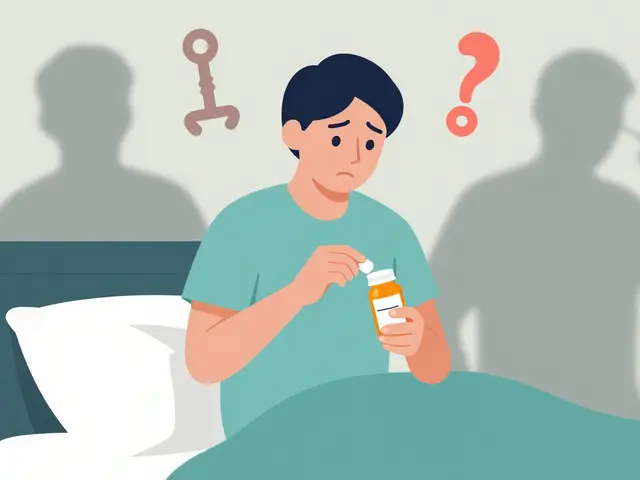
Switching from a brand-name drug to its generic version should be simple - same active ingredient, same effect, lower price. But for some people, it’s not that straightforward. You might start taking the generic version of your blood pressure pill, antidepressant, or thyroid medicine and suddenly feel off. More nausea. Worse sleep. Even a weird headache. You didn’t change your dose. You didn’t change your routine. So why do you feel different?
It’s not the medicine - it’s what’s around it
The active ingredient in your generic pill is identical to the brand-name version. That’s required by law. But everything else? That’s where things change. The fillers, coatings, dyes, and preservatives - called inactive ingredients or excipients - are not regulated to be the same. These aren’t just random additives. They’re essential for the pill to work right. They help it hold its shape, dissolve at the right time, or taste less bitter. But they can also trigger reactions in sensitive people.Take lactose, for example. It’s in about 40% of all oral medications. If you’re lactose intolerant - and about 36% of Americans are - that tiny amount of milk sugar in your generic antidepressant could cause bloating, gas, or diarrhea. You might think it’s your diet. But it’s the pill. Same with dyes. Red #40 or Yellow #5 in some pills can cause headaches or rashes in people who are sensitive. Sulfites? They’re in some injectables and can trigger asthma flare-ups in 3-10% of asthmatics. These aren’t rare. They’re common enough that pharmacists now routinely ask if you have allergies when filling prescriptions.
Why do generics look so different?
Ever notice how your generic version of a pill looks nothing like the brand-name one? That’s not an accident. Brand-name companies hold trademarks on the shape, color, and size of their pills. So generics have to look different. That’s why your blue pill from last month is now a white oval. But here’s the catch: changing the look often means changing the inactive ingredients too. Different binders. Different coatings. Different fillers. Even if the active ingredient is the same, the way your body absorbs it can shift slightly.The FDA says generics must deliver the same amount of medicine into your bloodstream as the brand-name drug - within 80% to 125% of the original. That’s a wide range. Most generics land within 4% of the brand, so it’s usually fine. But for drugs where the difference between working and overdosing is razor-thin - like warfarin, levothyroxine, or digoxin - even a small shift matters. A 2021 study in JAMA Internal Medicine found that while 94.7% of people saw no difference when switching, 1% had to go back to the brand because their condition got worse. That’s not a lot. But for those people, it’s everything.
Real stories: What patients actually experience
People don’t always report these changes to their doctors. They assume it’s stress, aging, or bad luck. But online forums tell a different story. On Reddit, a thread about switching to generic sertraline had over 200 comments. Many said the generic version caused more nausea and dizziness. One person wrote: “I’ve been on brand-name Lexapro for years. Switched to generic escitalopram and my anxiety spiked. Went back to brand - calm returned in three days.” Another shared: “I’ve been on generic Synthroid for six months. My TSH levels jumped from 2.1 to 7.8. My doctor said it was ‘just a fluctuation.’ I switched back to brand - TSH dropped to 1.9 in four weeks.”These aren’t isolated cases. A 2022 Consumer Reports survey of 1,200 people found that 4% had to switch back to brand-name drugs after experiencing side effects or reduced effectiveness. The most common triggers? Lactose, artificial dyes, and sulfites. And it’s not just pills. Chewable tablets often contain aspartame - a problem for people with phenylketonuria. Liquid medicines sometimes use benzoates as preservatives, which can irritate sensitive stomachs.

When should you worry?
Most people switch to generics without a single issue. In fact, 89% of people in the Consumer Reports survey noticed no difference. But if you’re on a medication with a narrow therapeutic index - meaning the dose has to be exact - you need to pay attention. That includes:- Levothyroxine (for thyroid)
- Warfarin (blood thinner)
- Digoxin (for heart failure)
- Phenytoin (for seizures)
- Cyclosporine (for organ transplants)
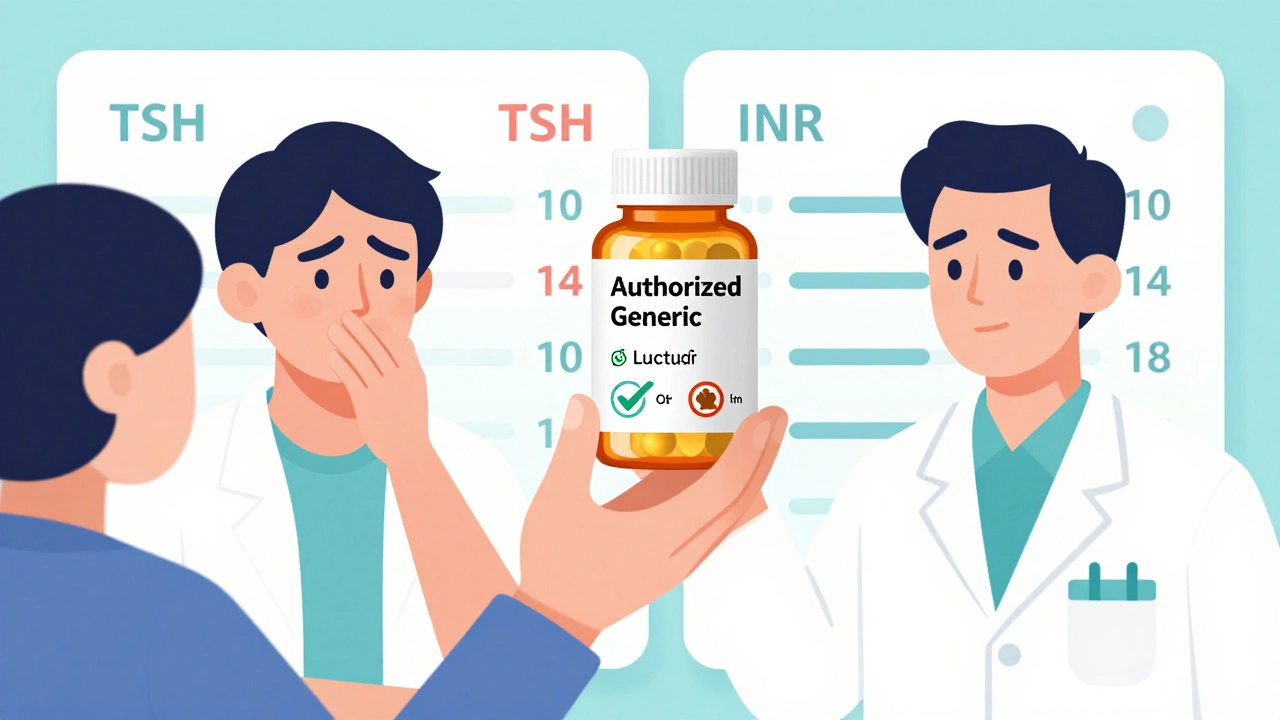
For these, even small changes in how the drug is absorbed can affect your health. If you’ve been stable for months and suddenly feel worse after a switch, don’t brush it off. Track your symptoms. Keep a simple log: date, medication, how you felt, any new side effects. Bring it to your doctor. Ask: “Could this be the inactive ingredients?”
What you can do right now
You don’t have to accept feeling off just because it’s a generic. Here’s what works:- Check the ingredient list. Every pill bottle has a list of inactive ingredients. Look for lactose, dyes (like FD&C Red No. 40), sulfites, aspartame, or benzoates. If you know you’re sensitive to any of these, ask your pharmacist for a version without them.
- Ask for an authorized generic. These are made by the original brand company but sold under a generic label. They use the exact same inactive ingredients as the brand. They’re cheaper than brand-name but identical in formulation. About 15% of generics on the market are authorized.
- Don’t switch back and forth. If you switch from brand to generic, then back to brand, then to another generic - your body gets confused. Stick with one version for at least 4 weeks before deciding if it’s working.
- Talk to your pharmacist. Pharmacists see this all the time. They can tell you which generic brands use lactose-free fillers or dye-free coatings. They can even order special formulations if needed.
The bigger picture: Why generics matter
It’s easy to focus on the few who have trouble. But don’t lose sight of the big win: generics save lives by making medicine affordable. In the U.S., generics make up 90% of all prescriptions but cost only 23% of what brand-name drugs do. A year’s supply of Lipitor (atorvastatin) used to cost $370. Now, the generic is $4. That’s not a marketing gimmick. That’s a lifeline for people on fixed incomes, seniors, and families choosing between medicine and groceries.The FDA is starting to take inactive ingredients more seriously. In 2023, new rules required clearer labeling of common allergens on drug packaging. By 2025, most generic manufacturers plan to offer “allergen-free” versions of top medications. The FDA is also expanding its Inactive Ingredient Database - a free public tool that will let you look up every excipient in every approved drug. Soon, you’ll be able to search “lactose-free sertraline” and see exactly which brands don’t contain it.
Bottom line: It’s not you. It’s the filler.
If you feel different after switching to a generic, you’re not imagining it. You’re not weak. You’re not crazy. You’re one of the 1-2% of people who react to the non-active parts of the pill. The good news? You have options. You can ask for a different generic. You can ask for the authorized version. You can ask your pharmacist to check the ingredients. You don’t have to suffer just because it’s cheaper.Medicine isn’t one-size-fits-all. Your body reacts to more than just the active ingredient. And that’s okay. The system works for most. But if it doesn’t work for you - speak up. Your health matters more than the cost savings.
Can inactive ingredients really make a difference in how a generic medication works?
Yes. While the active ingredient is identical, inactive ingredients like fillers, dyes, or coatings can affect how quickly the drug dissolves or is absorbed. For most people, this doesn’t matter. But for those with sensitivities - like lactose intolerance or dye allergies - or those on narrow therapeutic index drugs (like levothyroxine or warfarin), even small changes can cause noticeable side effects or reduced effectiveness.
Why do generic pills look different from brand-name ones?
Brand-name companies hold trademarks on the color, shape, and size of their pills. To avoid legal issues, generic manufacturers must make their versions look different. That often means changing the inactive ingredients too - like using a different dye or binder - even if the active ingredient stays the same.
Are generics as safe as brand-name drugs?
Yes. The FDA requires generics to meet the same strict standards for quality, strength, purity, and effectiveness as brand-name drugs. The active ingredient is identical. Most people experience no difference. The main safety concern is not the active ingredient - it’s the inactive ones, which can trigger allergies or intolerances in a small percentage of users.
What should I do if I think my generic medication isn’t working?
Don’t stop taking it. Track your symptoms for 2-4 weeks: note changes in mood, energy, side effects, or lab results. Then talk to your doctor or pharmacist. Ask if the inactive ingredients could be the issue. Request a different generic version or ask about an authorized generic - which uses the same formula as the brand-name drug but costs less.
Which inactive ingredients are most likely to cause problems?
The most common culprits are lactose (in 40% of pills), artificial dyes like Red #40 or Yellow #5, sulfites (in injectables), aspartame (in chewable tablets), and benzoates (in liquids). If you have known allergies or intolerances - like celiac disease, phenylketonuria, or asthma - check the ingredient list before switching to any new generic.
Can I ask my pharmacy to use a specific generic brand?
Yes. Pharmacies often stock multiple generic versions of the same drug. If you had a bad reaction to one, ask your pharmacist to switch to a different manufacturer’s version. Many can order less common generics if needed. You can also ask for an authorized generic - made by the original brand company - which matches the brand’s inactive ingredients exactly.

Lucinda Bresnehan
December 2, 2025 AT 17:29I switched to generic levothyroxine last year and my TSH went from 1.8 to 6.9. I thought I was just stressed or eating too much soy. Turns out, the generic had lactose and I’m borderline intolerant. My pharmacist had no idea until I asked. Now I get the authorized generic-same pill, no dairy, same price. Don’t assume it’s all in your head.
Also, the color change freaked me out. I’ve been taking a blue pill for 8 years. One day it’s white and oval? I thought I was losing my mind.
Nnaemeka Kingsley
December 3, 2025 AT 18:59Man, i never knowed dis stuff. I take generic blood pressure med and sometimes feel dizzy. Thought i was just lazy. But now i think maybe its the dye or sumtin. Gonna check the bottle next time. Thanks for explainin.
Kshitij Shah
December 3, 2025 AT 20:37Oh wow. So the reason I feel like a zombie after switching to generic sertraline is because of… corn starch? Not my brain? Not my trauma? Not my bad life choices? Just… filler? I’m simultaneously relieved and deeply offended that my mental health is being sabotaged by a binder.
Also, who decided Red #40 was a good idea for antidepressants? Is this a candy company’s side hustle?
Sean McCarthy
December 5, 2025 AT 01:05There is no such thing as "inactive" ingredients. That is a misnomer. Every component in a pharmaceutical formulation has a biological effect. The FDA's 80%-125% bioequivalence window is a legal fiction. It is not a safety standard. It is a cost-cutting loophole. And people who say "it's all in your head" are either uninformed or willfully ignorant. This is not a debate. This is pharmacology.
Jaswinder Singh
December 6, 2025 AT 12:34You people are so dramatic. I’ve taken generic everything for 15 years. No issues. Stop making this a thing. If you can’t handle a pill changing color, maybe you shouldn’t be taking pills at all. Your anxiety is making you sick, not the lactose. Get a grip.
Bee Floyd
December 7, 2025 AT 15:28I used to think generics were just cheaper versions of the same thing. Then I started getting weird rashes after switching my cholesterol med. Turns out, it had FD&C Yellow #5. I had no idea I was sensitive to it. Now I ask my pharmacist for the dye-free version every time. It’s not a big deal. Just say the words: "Do you have a version without artificial dyes?"
Pharmacists are your secret weapon. Use them.
Jeremy Butler
December 7, 2025 AT 19:50It is axiomatic that the human organism is a complex, adaptive system wherein pharmacokinetic variance may be induced by excipient heterogeneity. The regulatory paradigm, predicated upon bioequivalence thresholds, fails to account for individual epigenetic and immunological variability. Consequently, the presumption of therapeutic equivalence is not merely statistically permissible-it is philosophically negligent.
One must question the ontological status of "generic" when the very substrate of bioavailability is subject to arbitrary formulation shifts.
Courtney Co
December 7, 2025 AT 22:45Wait so you’re saying my panic attacks after switching to generic Lexapro weren’t because I’m a mess? They were because of a dye? I’ve been blaming myself for years. I cried for three days. I thought I was broken. But it was the pill? Oh my god. I need to call my doctor right now. I’m so mad. I’m so relieved. I’m so tired. I need a hug. Can someone hug me? I’ve been alone with this for too long.
Shashank Vira
December 9, 2025 AT 13:05How quaint. You Americans treat your medications like artisanal coffee. In India, we take whatever the pharmacy gives us. If you feel strange, it’s because you’re weak. Or perhaps your karma is out of alignment. This obsession with excipients is a symptom of Western overindulgence. We don’t have time to read pill labels. We have children to feed.
Eric Vlach
December 10, 2025 AT 23:21My mom’s on warfarin and they switched her generic and her INR went crazy. We didn’t catch it for weeks. She almost bled out. Don’t ignore this stuff. Talk to your pharmacist. Ask for the same maker every time. Write it on your prescription. Don’t let them swap it without telling you.
And yeah, check the ingredients. Lactose is everywhere. Even in your vitamins.
Souvik Datta
December 12, 2025 AT 02:05This is why I always say: knowledge is power. Most people don’t know what’s in their pills. They trust the system. But the system doesn’t care about your body-it cares about profit margins. The fact that we’re only now seeing allergen labeling is shameful. But progress is happening. You’re not alone. And you’re not crazy. You’re awake. And that’s the first step.
Next time you get a new prescription, open the bottle. Read the tiny print. Ask your pharmacist: "What’s in this?"
That’s how change starts.
Priyam Tomar
December 13, 2025 AT 01:03Everyone’s acting like this is some groundbreaking revelation. Newsflash: the FDA has known about excipient sensitivity since the 1980s. The problem isn’t the system-it’s you. You’re too lazy to read the label. Too entitled to ask for a different version. Too emotional to accept that medicine isn’t magic. Get over it. Your body is fine. Your attitude isn’t.