

When you pick up a prescription for insulin or a biologic drug like Humira, you might not realize the pharmacy could swap it out for a different version without telling you. That’s only allowed if the biosimilar has been labeled interchangeable by the FDA. This isn’t just a technical detail-it’s a major shift in how patients access life-changing treatments, and it’s happening right now in the U.S. But here’s the catch: not all biosimilars are created equal. Only a small number have this special status, and even then, whether you get swapped depends on where you live.
What Makes a Biosimilar ‘Interchangeable’?
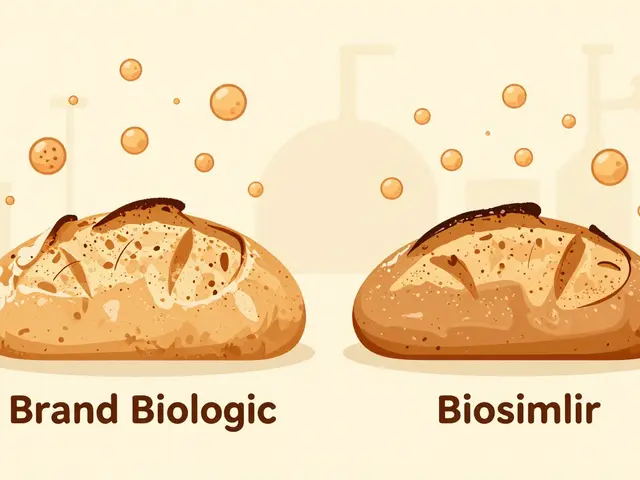
Biosimilars are copies of complex biologic drugs-medicines made from living cells, like antibodies or hormones. Unlike small-molecule generics (think generic ibuprofen), you can’t just swap them like Lego blocks. Their structure is too intricate. That’s why the FDA created a separate category: interchangeable biosimilars. This isn’t a better version of a biosimilar. It’s not more effective or safer. It just means the FDA has confirmed you can switch back and forth between the original drug and the biosimilar multiple times without increasing risk or losing effectiveness.
To earn that label, a company must prove it with real-world switching studies. The FDA requires at least two switches-say, from Humira to its biosimilar, then back to Humira-using the same patient group. They measure things like how the drug moves through the body, immune responses, and whether side effects spike. Only if the data shows no meaningful difference after those switches does the FDA grant interchangeability. As of November 2023, out of 41 approved biosimilars, only 10 have this designation. The first was Semglee, an interchangeable insulin, approved in July 2021. The first interchangeable monoclonal antibody biosimilar, Cyltezo (for adalimumab), got the nod in August 2023.
Why This Matters for Patients and Costs
Biosimilars typically cost 15% to 30% less than the original biologic. That’s huge when you’re talking about drugs that can run $2,000 to $5,000 a month. Interchangeability removes a major barrier: the need for a doctor’s approval every time a switch happens. In states that allow automatic substitution, pharmacists can swap the brand-name drug for the interchangeable biosimilar without calling the prescriber. That means faster access, fewer delays, and lower out-of-pocket costs for patients.
Real-world data backs this up. A 2023 study in JAMA Health Forum found that states with automatic substitution laws saw 18.7% higher use of biosimilars for insulin. Semglee, the first interchangeable insulin, grabbed 17.3% of the market within six months-nearly double the uptake of non-interchangeable biosimilars at the same stage. Patients are noticing the difference. One person on a psoriasis forum said switching from Humira to Hyrimoz saved them $800 a month with no loss in symptom control.
The Patchwork of State Laws
Here’s where it gets messy. Even if the FDA says a biosimilar is interchangeable, your pharmacist might not be allowed to swap it automatically. That’s because each state sets its own rules. As of 2023, 40 states let pharmacists substitute interchangeable biosimilars without asking the doctor first. But six states, including Arkansas and Mississippi, only allow substitution if it saves the patient money. Four states-Alabama, Indiana, South Carolina, and Washington-require the prescriber to approve the switch every time. Washington D.C. falls in the middle, allowing substitution only under cost-saving conditions.
Pharmacists are stuck in the middle. A 2022 survey by the National Community Pharmacists Association found 67% of independent pharmacists were confused about state-specific rules. One pharmacist on Reddit wrote: “In California, I have to check if it’s cheaper. In Arizona, I don’t. My pharmacy system doesn’t tell me the difference.” That kind of inconsistency makes it hard for national chains to train staff and for patients to know what to expect.

What Pharmacists Must Do When Substituting
If you live in a state that allows automatic substitution, your pharmacist still has responsibilities. In Arizona, for example, they must: notify you in writing that a substitution was made, record the exact product and manufacturer dispensed, send a copy of that record to your doctor within five business days, and keep those records for seven years. All 50 states and D.C. let doctors block substitution by writing “dispense as written” on the prescription or using a DAW code. But the wording for those instructions varies by state, adding another layer of complexity.
Insurance plans also play a role. About 78% of commercial health plans require automatic substitution for interchangeable biosimilars when state law allows it. That means even if your doctor doesn’t want you switched, your insurer might force it. That’s why patient notification is so important. A 2022 National Psoriasis Foundation survey found that while 63% of patients were happy with their biosimilar, 28% were upset they weren’t told about the switch. One patient reported an allergic reaction after being switched to Hadlima without warning-turns out they were sensitive to a non-active ingredient.
How This Differs from Generics and Other Countries
Think of generics like aspirin. They’re chemically identical to the brand name. Swap them anytime. Biosimilars aren’t identical-they’re highly similar. That’s why the FDA treats them differently. The U.S. is the only country with a formal “interchangeable” designation. In the European Union, pharmacists can’t substitute biosimilars without the prescriber’s okay. Canada lets Health Canada label biosimilars as interchangeable, but provinces decide whether to allow substitution. Japan requires extra clinical data but doesn’t use the term “interchangeable.”
That’s why U.S. patients have more access to automatic substitution-but also more confusion. Other countries prioritize doctor oversight. The U.S. prioritizes market competition and cost savings. Both have trade-offs.
Controversies and the Road Ahead
Not everyone agrees on how far to go. The Biosimilar Red Tape Elimination Act, introduced in 2022, wants to scrap the switching studies entirely and make all FDA-approved biosimilars automatically interchangeable. Supporters, like the Biosimilars Council, say it would speed up savings. Critics, including PhRMA, warn it could risk patient safety. The FDA maintains that all approved biosimilars-interchangeable or not-are just as safe and effective as the original. The difference is only about substitution rules.
Doctors are also divided. Some, like Dr. Gary Morrow from the Association for Accessible Medicines, say interchangeability is essential to unlock savings in the $300 billion biologics market. Others, like Dr. Kevin Winthrop, worry about treatment persistence. A study in JAMA Dermatology showed psoriasis patients switched to biosimilars were 20.3% more likely to stop treatment than those who stayed on the original drug. Why? Maybe because of side effects. Maybe because of anxiety over switching. Or maybe because they weren’t properly informed.

What Patients Should Know
If you’re on a biologic drug, here’s what you need to do:
- Ask your doctor if your prescription is eligible for a biosimilar.
- Find out if your state allows automatic substitution.
- Ask your pharmacist: “Is this an interchangeable biosimilar? Will you substitute it without asking my doctor?”
- Request notification if a switch happens. You have a right to know what you’re taking.
- Track how you feel after any switch. Report new side effects immediately.
Don’t assume your pharmacist will tell you. A 2023 survey showed many patients weren’t notified. And don’t confuse “biosimilar” with “interchangeable.” Only 10 out of 41 approved biosimilars have that label. If you’re switched to a non-interchangeable biosimilar, your doctor must approve it.
Where the System Is Heading
By 2025, 70% of the top 20 biologic drugs will face biosimilar competition. Interchangeability will become even more important. Payers are pushing for it. Pharmacies are training staff. Patients are asking questions. The FDA is considering streamlining the switching study process. But until state laws align and patient education improves, the system will stay fragmented.
The goal is simple: get more people access to affordable, effective biologics. But the path there isn’t smooth. It’s a mix of science, law, money, and human trust. Understanding where you stand-whether you’re in Arizona or Alabama, whether your drug is interchangeable, whether you’ve been told about the switch-could mean the difference between saving money and losing control of your treatment.
Can any biosimilar be automatically substituted for the original drug?
No. Only biosimilars that have received an official "interchangeable" designation from the FDA can be substituted automatically by a pharmacist. As of late 2023, only 10 out of 41 approved biosimilars have this status. All other biosimilars require a prescriber’s approval before substitution, even if they’re FDA-approved as biosimilar.
Is an interchangeable biosimilar safer or more effective than a regular biosimilar?
No. Both interchangeable and non-interchangeable biosimilars meet the same FDA standards for safety, purity, and potency. The interchangeability label only means the FDA has confirmed you can switch back and forth between the biosimilar and the original drug multiple times without increased risk. It does not mean the drug is better.
Why do some states block automatic substitution even if a biosimilar is FDA-interchangeable?
Each state has its own pharmacy laws that govern substitution. Some states require prescriber approval to protect patient continuity of care. Others allow substitution only if it reduces patient cost. A few require detailed notification rules. This patchwork exists because the federal government sets the approval standard, but states control how pharmacists dispense medications.
Can a pharmacist substitute one biosimilar for another?
No. FDA interchangeability only applies to switching between a biosimilar and its specific reference product-not between two different biosimilars. For example, if you’re on Cyltezo (an interchangeable biosimilar of Humira), your pharmacist cannot switch you to another Humira biosimilar like Hyrimoz without your doctor’s approval, even if both are interchangeable. Each biosimilar must be treated as a unique product.
What should I do if I’m switched to a biosimilar without being told?
Contact your pharmacist immediately to confirm what product you received. Then call your doctor to discuss whether the switch is appropriate for you. If you experience new side effects or reduced effectiveness, report them. You have the right to be informed about medication changes, and your doctor can write "dispense as written" on future prescriptions to prevent future substitutions.
How can I find out if my drug has an interchangeable biosimilar?
Check the FDA’s official Biosimilars Product Information database, which lists all approved biosimilars and their interchangeability status. You can also ask your pharmacist or doctor. Many patient advocacy groups, like the Arthritis Foundation and the Psoriasis Foundation, offer free guides that list interchangeable options for common biologics like insulin, Humira, and Enbrel.
Next Steps for Patients and Providers
If you’re a patient: Keep a list of all your biologic medications and note whether they’re brand-name or biosimilar. Ask your pharmacist to confirm the product name and manufacturer each time you refill. If you’re switched, ask why-and whether it’s an interchangeable product. Use patient resources from trusted organizations to understand your options.
If you’re a provider: Make sure your electronic prescribing system can flag interchangeable biosimilars. Educate your patients about the difference between biosimilar and interchangeable. Use "dispense as written" only when clinically necessary-not just to avoid change. Stay updated on your state’s substitution laws, which change often.
Interchangeability isn’t magic. It’s a tool. Used right, it saves money and improves access. Used carelessly, it erodes trust. The system is evolving. Patients who understand it will have the most control over their care.


Sean McCarthy
December 1, 2025 AT 07:23The FDA says interchangeable means you can swap back and forth but nobody tells you when it happens. That's not freedom that's a trap.
Kay Lam
December 2, 2025 AT 13:09I've been on Humira for six years and got switched to Hyrimoz without a word. I didn't notice a difference in symptoms but I started having weird joint stiffness that went away when I asked my pharmacist to switch me back. They said it was 'probably coincidence' but I know better. The system doesn't care if you feel off as long as the lab numbers look fine. You're not a patient you're a cost center. And now I have to check every single refill like I'm playing a game of medical whack-a-mole. No one warned me about this. No one. And the worst part? My insurance pushed it through because it saved them $300 a month. I'm not mad at the pharmacist. I'm mad at the whole damn machine.
Matt Dean
December 3, 2025 AT 14:57Of course the big pharma lobby is screaming about safety. They don't want biosimilars to work. If patients save money they stop buying the $6000-a-month brand name. That's the real story here. Interchangeable doesn't mean unsafe. It means profitable for someone else.
Dennis Jesuyon Balogun
December 4, 2025 AT 11:27In Nigeria we don't even have access to the original biologics, let alone biosimilars. The FDA's bureaucratic dance around interchangeability feels like a luxury problem. Meanwhile, people here die because insulin costs more than a month's rent. This isn't innovation. It's a Western privilege debate wrapped in regulatory jargon. Real progress would be making the original drugs affordable globally, not debating who gets to swap the cheap version in Arizona.
Eric Vlach
December 5, 2025 AT 09:33My pharmacist in Oregon substituted my insulin last month and sent me a printed notice with the lot number and manufacturer. She even called my doctor to confirm. That's how it should be done. Not all states have that culture but it's possible. The problem isn't the science. It's the lack of standardized communication. We can fix this with better training and clearer labeling. It's not rocket science just common sense.
Adrian Barnes
December 5, 2025 AT 23:41Let's be brutally honest. The FDA's interchangeable designation is a marketing ploy disguised as science. They're giving pharmaceutical companies a gold star so they can charge less while still making billions. The switching studies are tiny. They use 100 patients over 6 months. Real-world use involves millions over decades. You think your body won't react differently after 10 switches? That's not science. That's corporate wishful thinking. And now pharmacists are forced to play Russian roulette with your immune system because some bean counter decided cost savings trump patient autonomy.
Lydia Zhang
December 7, 2025 AT 11:47So what. I got switched. I'm fine.
Souvik Datta
December 8, 2025 AT 14:36Imagine if your car manufacturer swapped out the engine with a copy that works 95% as well and told you it's the same. You'd want to know. You'd want to test it. You'd want to see the data. But here we are trusting our bodies to a system that doesn't even require the pharmacist to say a word. It's not about fear. It's about dignity. You're not a number. You're not a line item. You're a human being who deserves to be informed. And if your state doesn't protect that then your state is failing you.
Priyam Tomar
December 10, 2025 AT 08:24Everyone's acting like this is new. It's not. We've been swapping generics for decades. Why is this different? Because the drugs are expensive and someone wants to profit from the fear. Biosimilars are not inferior. The FDA approves them. The science is solid. Stop being paranoid. The real issue is insurance companies forcing switches without patient consent. That's the villain here not the biosimilar.
Walker Alvey
December 10, 2025 AT 08:24Oh look the government finally found a way to make healthcare worse by adding more paperwork. Next they'll require a notarized form before you can breathe. Interchangeable? More like interchangeable with confusion and liability. I'm sure the FDA's 100-patient study will prevent all future lawsuits. Right.
Grant Hurley
December 10, 2025 AT 22:30Just got switched to Semglee last month. Saved me $700. Felt the same. My doctor said it was fine. My pharmacist told me about it. No drama. Maybe this whole debate is just noise from people who don't actually need these meds. For the rest of us? It's just cheaper medicine. Chill.
Shashank Vira
December 12, 2025 AT 09:35The tragedy of modern medicine is not the lack of innovation. It is the erosion of the sacred bond between physician and patient. When a pharmacist becomes the silent arbiter of your biological fate - without consent, without context, without ceremony - we have ceased to treat illness. We have commodified identity. The FDA's interchangeable label is not a scientific triumph. It is the final bow of the pharmaceutical-industrial complex. A performance of efficiency dressed in the robes of progress. And we, the patients, are the audience who forgot to applaud - because we were too busy trying not to die.