Most people think a generic drug is just a cheaper version of a brand-name medication. While that's usually true, there is a specific middle ground that often gets overlooked: the Authorized Generic is a medication that is chemically identical to the brand-name version, including all inactive ingredients, but is marketed without the brand name on the label. It's essentially the same drug, made by the same company or under their license, but sold at a lower price point. For a pharmacist, knowing when to steer a patient toward an authorized generic rather than a standard generic can be the difference between a treatment that works and one that causes unexpected side effects.
The Big Difference Between Authorized and Standard Generics
To understand when to recommend these, you first have to understand what makes them special. A standard generic requires an Abbreviated New Drug Application (ANDA) and must prove bioequivalence. This means it has the same active ingredient, but the fillers, dyes, and binders-the inactive ingredients-can be different. For most patients, this doesn't matter. For others, it's a dealbreaker.
An authorized generic, however, skips the "similar enough" phase because it is the brand drug. Because it's the exact same formulation, it doesn't even get its own separate entry in the Orange Book; it's automatically considered therapeutically equivalent. Think of it as a brand-name drug in a plain white box. It offers the reliability of the original product with a price tag that's much easier on the wallet.
Three Clinical Scenarios Where Authorized Generics are Best
There are times when "generic" isn't good enough. If you're seeing a patient struggle with a standard substitution, an authorized generic is your best tool. Here are the three primary times you should suggest them:
- Allergies and Intolerances: Some patients have severe reactions to inactive fillers. For example, a patient with celiac disease might react to gluten-containing fillers in a standard generic, or someone with a strict vegan diet might need to avoid gelatin. Since an authorized generic uses the exact same inactive ingredients as the brand, it's a safe harbor for patients who have already tolerated the brand-name version.
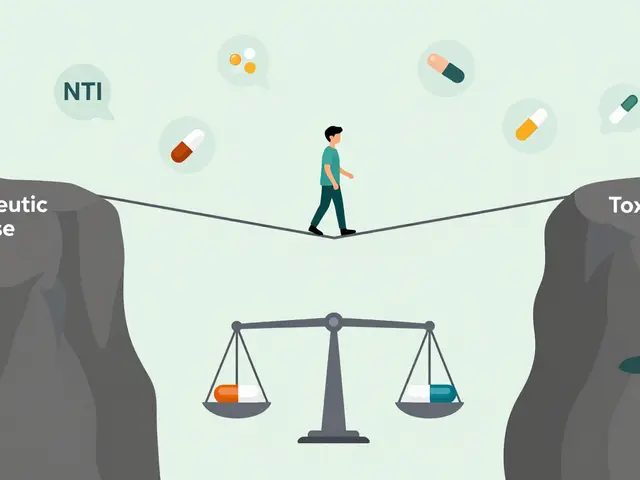
- Narrow Therapeutic Index (NTI) Drugs: Some medications have a very thin line between a dose that works and a dose that is toxic. This is common with Warfarin, a blood thinner used to prevent clots, Levothyroxine, a thyroid hormone replacement, or Phenytoin, an anti-seizure medication. FDA evaluations show that switching from brand to a regular generic can cause therapeutic issues for 3-5% of patients. Authorized generics eliminate this risk because the blood concentration remains consistent with the brand.
- Complex Release Forms: Modified-release or extended-release medications can be tricky. Sometimes, a standard generic's delivery system doesn't mimic the brand's release profile perfectly. If a patient reports that their "24-hour" generic feels like it wears off after 18 hours, an authorized generic provides a more reliable delivery mechanism.
Spotting Authorized Generics in Your Inventory
You won't always see "Authorized Generic" written in big letters on the box. To identify them, you need to look at the National Drug Code (NDC) is a unique three-segment number that identifies a drug product, its manufacturer, and the package size. . While the active ingredient and strength will match the brand, the labeler code will be the giveaway. Instead of a traditional generic manufacturer, you'll see the brand company (like Pfizer or Merck) or a known licensee like Prasco Laboratories, a company that specializes in bringing authorized generics to market.
It's also a good habit to check the FDA's quarterly updated list. As of late 2023, there were around 257 active authorized generics. While that's only about 5% of all available generics, they are often the most critical 5% for high-risk patients.
| Feature | Brand Name | Authorized Generic | Standard Generic |
|---|---|---|---|
| Active Ingredient | Identical | Identical | Identical |
| Inactive Ingredients | Original Formula | Identical to Brand | May Vary |
| Manufacturing Source | Brand Company | Brand Company/Licensee | Generic Manufacturer |
| Cost | Highest | Lower (20-80% off brand) | Lowest (80-85% off brand) |
| Orange Book Listing | Reference Listed Drug | Not listed separately | Listed as Therapeutically Equivalent |
Handling the Switch: Legal and Regulatory Steps
Substitution laws vary by state, but the general rule in the majority of the U.S. (roughly 42 out of 50 states) is that you can interchange a brand-name prescription with an authorized generic as long as the doctor didn't write "do not substitute." Since the FDA considers them identical, you aren't jumping through the same therapeutic equivalence hoops as you would with a standard generic.
However, you still have to play by the rules. Always document the substitution in your billing system. Using a modifier like "DA" (drug substitution not otherwise specified) helps keep your records clean. Also, keep in mind that some states still require you to notify the prescriber for any substitution, regardless of whether it's a standard generic or an authorized one. When in doubt, a quick call to the doctor's office prevents a headache later.
The "Wait, This Looks Different" Conversation
This is where most pharmacists run into trouble. Even though the medicine inside is identical, an authorized generic might be a blue pill while the brand was white. If a patient opens their bottle and sees a different color, they might think they got the wrong drug and stop taking it. A 2022 study in the Journal of Managed Care & Specialty Pharmacy found that 27% of patients quit their therapy after an unexpected change in pill appearance. That number drops to just 8% if the pharmacist explains the change beforehand.
When counseling, be direct: "This pill is the exact same medicine and formulation as the brand name, but it's coming in a different color to save you money." Mention the cost savings specifically. Authorized generics usually save patients 20-80% compared to the brand, which is way more than the 10-15% you usually see from patient assistance programs. This makes the pill color change a much easier trade-off for the patient to accept.
Insurance Hurdles and PBM Realities
The biggest roadblock isn't the patient or the doctor-it's the Pharmacy Benefit Manager (PBM), a third-party administrator of prescription drug programs. . PBMs can be unpredictable. In a surprising number of cases-about 63% according to Health Affairs research-PBMs categorize authorized generics as "brand name" products in their formularies instead of "generics."
This means that even though the drug is functionally a generic, the patient might be charged a brand-name co-pay. Before you tell a patient they'll save a fortune, run the claim. If the co-pay is too high, you may need to contact the insurance company or the doctor to justify the switch based on the patient's sensitivity to other generics.
Are authorized generics safer than standard generics?
It's not about "safety" in general, but about specific patient needs. Both are FDA-approved. However, authorized generics are "safer" for patients with specific allergies to inactive fillers or those taking narrow therapeutic index drugs where even tiny variations in formulation can cause problems.
Do authorized generics appear in the Orange Book?
No, they generally don't have their own separate entries because they are considered identical to the brand-name drug. They are automatically deemed therapeutically equivalent by the FDA.
How do I know if a drug is an authorized generic?
The best way is to check the FDA's quarterly updated list of authorized generic drugs or verify the NDC labeler code to see if it belongs to the brand manufacturer or a licensed partner like Prasco.
Will my patient save money with an authorized generic?
Usually, yes. They typically cost 20-80% less than the brand name. However, you must check the PBM formulary, as some insurance plans treat authorized generics as brand-name drugs for co-pay purposes.
What should I tell a patient if the pill looks different?
Explain that while the color or shape has changed, the active and inactive ingredients are chemically identical to the brand name. Proactively mentioning this prevents medication non-adherence.
Next Steps for Pharmacy Practice
If you're looking to implement this more strategically in your pharmacy, start by auditing your NTI medication list. Identify patients on drugs like levothyroxine or warfarin who have complained about instability after a generic switch. These are your primary candidates for authorized generics.
Next, build a better relationship with your wholesalers. Some authorized generics have limited distribution channels. For instance, if you only use McKesson, you might miss out on certain Prasco products that are primarily distributed through AmerisourceBergen or Cardinal Health. Expanding your sourcing ensures you can actually provide the recommendation when the clinical need arises.